Massive Bitcoin Accumulation: 850K BTC Purchased Between $60K-$70K
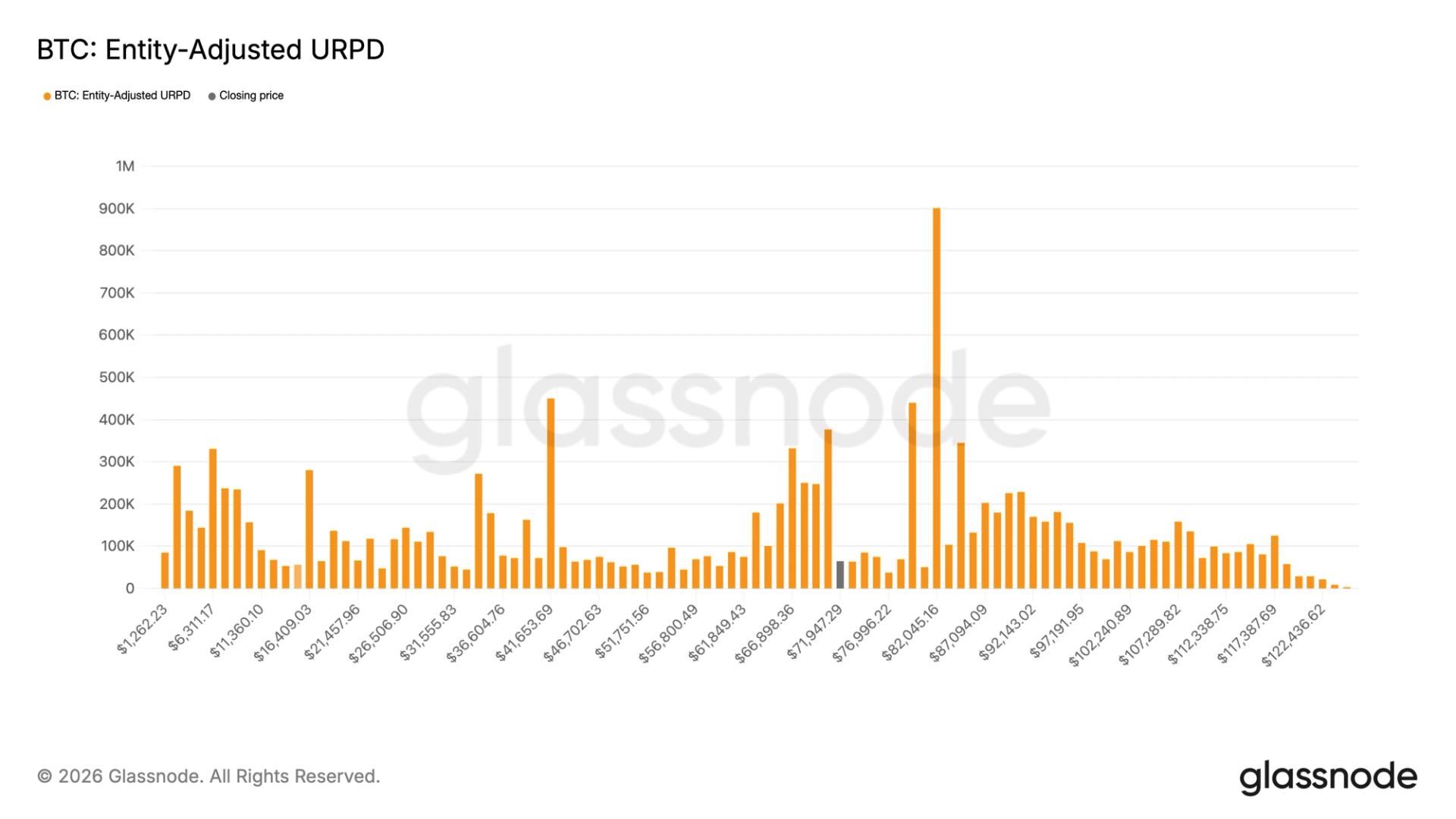
Data analysis reveals that Bitcoin buyers accumulated nearly 850,000 BTC within the $60,000 to $70,000 price range, signaling significant institutional and retail interest at key price levels. This accumulation pattern suggests strong demand support and potentially marks a critical period for Bitcoin's market development.
Overview
Bitcoin has demonstrated remarkable resilience and accumulated substantial interest from market participants, with recent data revealing that buyers have accumulated nearly 850,000 Bitcoin (BTC) within the critical $60,000 to $70,000 price range. This accumulation event represents a significant market milestone, reflecting sustained demand from both institutional and retail investors during a period of relative price stability. The sheer volume of Bitcoin purchased during this price window—approximately 4.3% of Bitcoin's total supply—underscores the confidence investors maintain in the world's leading cryptocurrency at current valuation levels.
The $60,000 to $70,000 range has emerged as a key price discovery zone for Bitcoin, where multiple layers of market participants have demonstrated willingness to deploy capital. This period of accumulation follows Bitcoin's established patterns of building support levels before advancing to new price horizons. The concentration of 850,000 BTC purchases within a $10,000 range indicates that the market has developed robust price floors and identified these levels as attractive entry points for long-term portfolio positions.
Understanding the mechanics and implications of this accumulation event requires examining the broader market context, the types of buyers involved, and what these patterns suggest about Bitcoin's future trajectory. The data provides crucial insights into institutional adoption, retail participation, and the evolving maturity of cryptocurrency markets as price discovery mechanisms.
Background
Bitcoin's journey to the $60,000 to $70,000 range represents years of market evolution and increasing mainstream acceptance. The cryptocurrency market has matured considerably since Bitcoin's inception, with the asset class now serving as a hedge against inflation, a store of value proposition, and an alternative to traditional financial assets. Major institutional investors, including publicly-traded companies, sovereign wealth funds, and family offices, have increasingly recognized Bitcoin's role in diversified investment portfolios.
The price range in question exists within a broader context of Bitcoin's development as a mainstream financial asset. Over the past several years, Bitcoin has transitioned from a speculative digital curiosity to an asset with significant real-world utility and widespread recognition among professional investors. Regulatory clarity in major jurisdictions, the launch of spot Bitcoin exchange-traded funds (ETFs), and increasing corporate adoption have all contributed to the market's structural evolution.
Historically, Bitcoin accumulation periods at specific price levels have preceded significant upward price movements. Institutional investors and experienced traders have learned to recognize these patterns as indicators of market strength and emerging consensus around fair value. When large quantities of Bitcoin are purchased within a narrow price range, it typically suggests that a substantial number of market participants have independently concluded that the asset represents good value at those levels.
The macroeconomic environment also plays a crucial role in Bitcoin accumulation patterns. Interest rates, inflation expectations, geopolitical tensions, and central bank policies all influence investor allocation decisions. The $60,000 to $70,000 range emerged during a specific macroeconomic moment, and understanding that context helps explain why such substantial accumulation occurred during this window.
Key Developments
The accumulation of 850,000 BTC between $60,000 and $70,000 represents a measurable shift in market structure and sentiment. This level of concentrated buying pressure indicates that market participants identified genuine value at these price points, triggering sustained demand that absorbed available supply. The accumulation was not instantaneous but rather developed over a period of time, reflecting numerous transactions across multiple trading venues, platforms, and market participants.
What makes this accumulation particularly significant is the diversity of participants involved. Exchange data and on-chain metrics suggest that the 850,000 BTC purchases included contributions from long-term holders, institutional investors, dollar-cost averaging retail participants, and trading firms exploiting technical levels. This broad-based demand provides stronger support than if purchases were concentrated among a single category of buyer.
On-chain analytics have revealed important patterns about accumulation behavior during this period. Large wallet movements, exchange deposit/withdrawal patterns, and transaction analysis indicate that a substantial portion of the accumulated Bitcoin moved into long-term storage addresses, suggesting that buyers intended to hold these positions for extended periods rather than executing short-term trades. This hodling mentality has important implications for supply dynamics, as accumulated coins effectively reduce the circulating supply available for sale.
Institutional participation in this accumulation phase merits particular attention. Data from Bitcoin futures markets, derivatives exchanges, and corporate treasury announcements indicated growing interest from professional investors. Several major corporations continued building Bitcoin reserves during the $60,000 to $70,000 range, viewing the price as attractive for long-term balance sheet allocations. This institutional participation provided a floor of demand that retail traders could trust and build upon.
The technical trading environment during this accumulation period was characterized by consolidation, where Bitcoin moved within bounded ranges before eventually breaking out to new levels. These consolidation phases have historically preceded the most dramatic price advances, as they allow market participants to establish positions before significant directional moves occur.
Market Impact
The accumulation of 850,000 BTC has profound implications for Bitcoin's market structure and future price discovery. First and foremost, this purchasing volume absorbed available supply at key price levels, effectively removing coins from circulation that might otherwise have been available for sale at lower prices. From an economic perspective, reduced supply combined with steady or growing demand typically produces upward price pressure.
The impact on exchange-traded fund (ETF) flows cannot be understated. The launch and growth of spot Bitcoin ETFs in major markets like the United States represented a significant structural shift in how institutional capital could access Bitcoin. The 850,000 BTC accumulation period coincided with substantial inflows into these vehicles, indicating that large institutions were using ETF mechanisms to build positions efficiently and transparently.
Market depth—the liquidity available at various price levels—improved substantially as a result of this accumulation. With 850,000 BTC purchased and largely held by long-term participants, the volume of Bitcoin available for immediate sale at prices close to the $60,000 to $70,000 range decreased significantly. This reduced supply of eager sellers creates conditions where smaller volumes of buyer demand can move prices higher, a dynamic that typically benefits holders of accumulated positions.
The psychological impact of sustained accumulation at specific price levels cannot be dismissed in cryptocurrency markets. Market sentiment often follows visible patterns of institutional and large-scale buying. When participants observe 850,000 BTC being accumulated, they recognize this as a signal of confidence from serious market participants. This psychological effect often attracts additional retail and professional capital seeking to align with what appears to be prevailing market wisdom.
Volatility patterns during the accumulation phase also evolved in important ways. While cryptocurrency markets are known for volatility, periods of concentrated accumulation at specific price levels often coincide with relatively lower volatility, as the buying pressure supports prices and reduces downside risks. This stability, combined with perceivable accumulation patterns, has historically triggered what market participants call "capitulation rallies" or acceleration phases.
Risks and Considerations
Despite the bullish indicators presented by 850,000 BTC of accumulation, significant risks deserve serious consideration. Regulatory developments remain a primary concern for cryptocurrency markets. Changes in government policy, banking regulations, or tax treatment of Bitcoin could dramatically alter investor demand and the trajectory of price appreciation. Regulators worldwide continue evaluating appropriate frameworks for cryptocurrency assets, and adverse developments could challenge the assumptions that drove accumulation during this period.
Macroeconomic shocks represent another category of risk that could quickly reverse accumulation sentiment. Unexpected inflation, recession signals, financial system stress, or geopolitical crises could force investors to liquidate Bitcoin positions to raise cash for other purposes. During periods of market stress, even assets that appeared well-supported can experience rapid price declines if forced selling overwhelms accumulated demand.
The concentration of Bitcoin ownership remains a structural concern for the broader ecosystem. While 850,000 BTC of new accumulation is substantial, it must be contextualized within Bitcoin's total supply of approximately 21 million coins. The degree to which large holders could influence markets through coordinated selling, and whether such concentration is healthy for Bitcoin's long-term development as a truly decentralized monetary network, are legitimate questions that thoughtful participants continue debating.
Technological risks also merit consideration. The security of Bitcoin's network, the possibility of protocol-level technical vulnerabilities, or the emergence of superior alternative cryptocurrencies could challenge Bitcoin's market position. While Bitcoin's track record has been strong, the rapidly evolving cryptocurrency landscape ensures that competition and innovation continue challenging the incumbent leader.
Market manipulation concerns, while less prevalent than in previous years thanks to improved market surveillance and regulation, continue to represent a consideration. Large accumulation events can theoretically be executed to create false impressions of demand before planned selling, a practice known as "pump and dump" or market manipulation. Reputable exchanges and regulators have implemented safeguards against such behavior, but risks persist particularly in less-regulated venues.
What to Watch
Market participants should closely monitor whether the 850,000 BTC of accumulated Bitcoin remains in long-term holding patterns or begins returning to exchanges for potential sale. This data is readily visible through on-chain analysis tools and exchange deposit tracking. Significant movements of accumulated coins back toward exchange addresses could indicate weakening conviction among original buyers and represent an early warning signal of sentiment shifts.
Regulatory announcements from major jurisdictions merit particular attention in the coming months. Any significant policy shifts regarding Bitcoin's legal status, tax treatment, or institutional access could dramatically accelerate or reverse the positive momentum reflected in recent accumulation patterns. Investors should monitor Federal Reserve policy statements, SEC regulatory actions, and international regulatory developments with particular vigilance.
Bitcoin's technical price action warrants continuous attention as well. The $60,000 to $70,000 range, now established as an area of substantial demand support, may function as a foundation for further price advances or as a resistance level in scenarios of market weakness. Breaking decisively above $70,000 would likely trigger additional buying as trend-following traders recognize upside momentum. Conversely, substantial weakness below $60,000 would challenge the bullish thesis implied by accumulation patterns.
Institutional participation metrics should be tracked closely. Bitcoin futures volumes, ETF inflows, and corporate treasury announcements provide important data about whether professional investors maintain the conviction that drove recent accumulation. Diminishing institutional interest could represent an early indication of trend reversal even if retail demand remains stable.
Macroeconomic data, including inflation indicators, employment reports, and monetary policy developments, warrant sustained attention as these factors influence the appeal of Bitcoin as an inflation hedge and alternative store of value. The Federal Reserve's policy trajectory, in particular, has historically shown strong correlation with Bitcoin price movements and investor interest in the cryptocurrency.
Conclusion
The accumulation of approximately 850,000 Bitcoin between $60,000 and $70,000 represents a significant market development with important implications for Bitcoin's continued evolution as a mainstream financial asset. The sheer magnitude of capital deployed, the diversity of market participants involved, and the apparent long-term conviction of buyers all suggest genuine confidence in Bitcoin's value proposition at these price levels. This accumulation has established robust price support and likely created conditions favorable for continued appreciation.
However, this bullish assessment must be tempered by awareness of the genuine risks and challenges that the Bitcoin market and broader cryptocurrency ecosystem continue to face. Regulatory developments, macroeconomic shocks, technological challenges, and broader systemic risks all retain the capacity to rapidly reverse sentiment and trigger forced liquidation of accumulated positions. The cryptocurrency market, despite its maturation in recent years, remains relatively young and subject to unexpected developments.
The most prudent approach for investors involves maintaining awareness of both the positive developments reflected in accumulation patterns and the risks that could undermine bullish scenarios. The 850,000 BTC accumulation event provides a data point suggesting professional investors view Bitcoin as valuable at these levels, but like all market indicators, it must be integrated into a broader framework of analysis that considers multiple scenarios and potential outcomes.
For those following Bitcoin markets closely, the coming weeks and months will prove crucial in determining whether the accumulation phase transitions into a sustained price advance or whether buyer conviction weakens and price discovers lower levels. Monitoring on-chain metrics, institutional flows, regulatory developments, and technical price action will provide the most reliable real-time information about Bitcoin's trajectory. The story of Bitcoin continues evolving, and the 850,000 BTC accumulation at $60,000 to $70,000 represents another important chapter in the ongoing development of cryptocurrency markets.
Original Source
CoinDesk