Rakuten's XRP Integration Drives Token Surge Toward $1.38
Japan's e-commerce giant Rakuten has integrated XRP into its payment infrastructure, triggering a significant price rally that pushes the token toward $1.38. The integration marks a watershed moment for mainstream adoption of the Ripple-backed cryptocurrency in a major developed market.
Overview
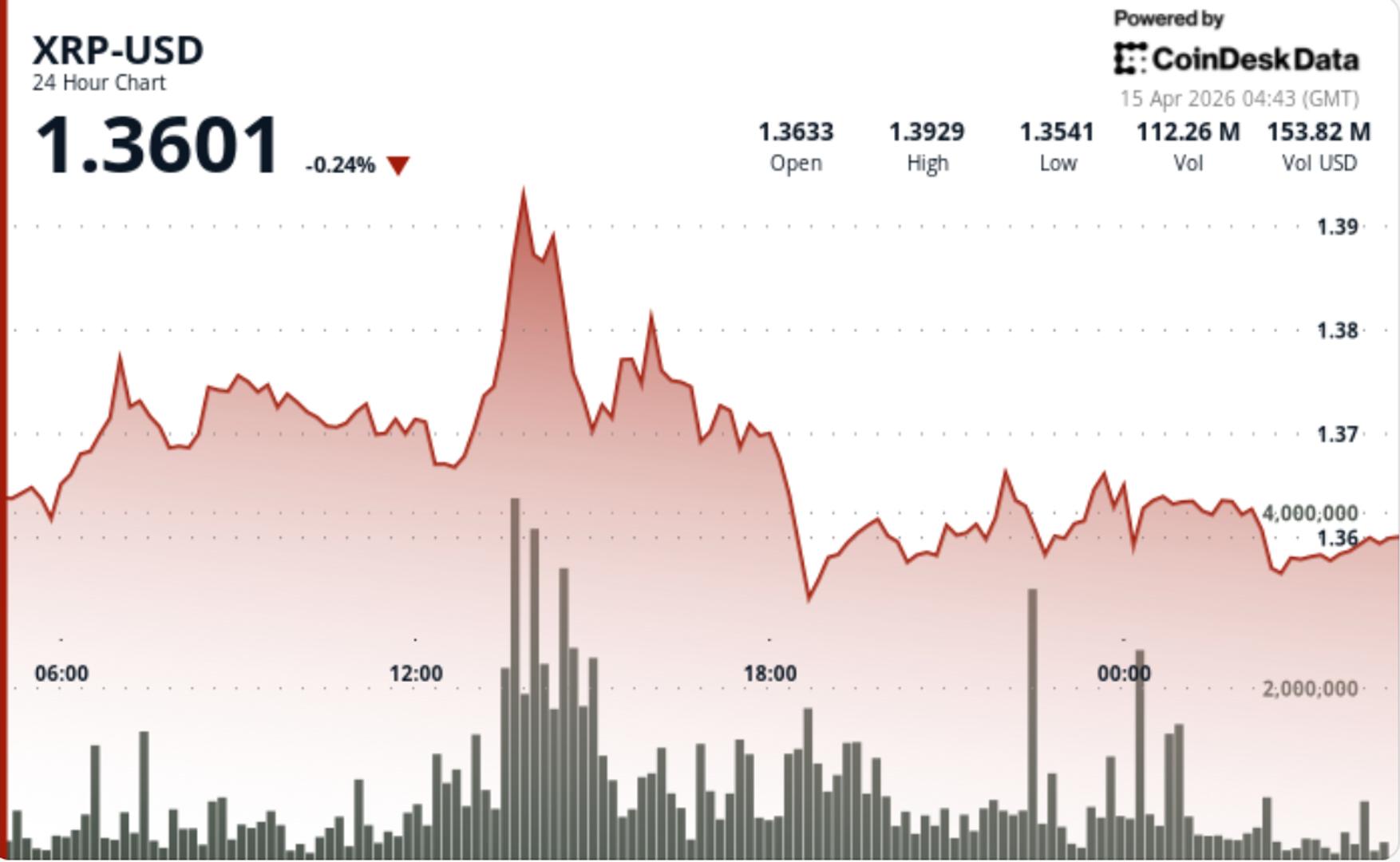
XRP, the native cryptocurrency of the Ripple network, achieved notable price momentum on April 15, 2026, climbing steadily toward the $1.38 level following an announcement that would reshape the token's real-world utility narrative. Japan's Rakuten Inc., one of Asia's largest e-commerce and financial services platforms with over 1.5 billion members across its ecosystem, formally integrated XRP into its payment processing infrastructure. This development represents a watershed moment for blockchain adoption in mainstream commerce, demonstrating that cryptocurrency can transition from speculative asset to functional payment mechanism within enterprise-scale operations.
The integration comes at a critical juncture for XRP's market narrative. For years, the token faced regulatory headwinds, particularly following the U.S. Securities and Exchange Commission's 2020 lawsuit against Ripple Labs. Despite legal uncertainties and periods of significant price volatility, XRP maintained a dedicated user base and continued to find adoption in cross-border payment corridors. Rakuten's announcement signals that institutional confidence in XRP's technology and use case has matured considerably, with major corporations now viewing the token as a viable component of modern payment infrastructure rather than a speculative digital asset.
Market analysts quickly recognized the significance of this development. The price action moving toward $1.38 represents a meaningful recovery from previous consolidation levels and suggests growing investor confidence in XRP's medium-term prospects. Beyond immediate price implications, the Rakuten integration raises important questions about the future of cryptocurrency adoption, the competitive landscape between digital payment systems, and the evolving regulatory environment for blockchain-based commerce in developed economies.
Background
Ripple's journey from concept to mainstream enterprise technology has been marked by consistent focus on solving real problems in the payments industry. When Ripple Labs introduced the XRP Ledger and the XRP token in 2012, the cryptocurrency ecosystem remained largely nascent and speculative. However, Ripple positioned itself differently from other cryptocurrency projects, emphasizing cross-border payments, settlement speed, and cost reduction rather than ideological principles of decentralization. This pragmatic approach attracted banking institutions and payment processors seeking technological innovation within their risk tolerance parameters.
The XRP token itself serves specific functions within the Ripple ecosystem. It provides liquidity pools for corridors where direct trading pairs don't exist, facilitates transaction fees on the XRP Ledger at minimal cost, and acts as a settlement mechanism for payment channels. Unlike many other cryptocurrency projects that relied primarily on speculative investment to drive adoption, XRP's value proposition was always grounded in practical utility. However, realizing this vision required navigating complex regulatory frameworks, winning trust from conservative financial institutions, and demonstrating reliability at scale.
Rakuten's corporate profile and history provide crucial context for understanding the significance of this integration. Founded in 1997 by Hiroshi Mikitani, Rakuten has evolved from an online marketplace into a diversified conglomerate operating across e-commerce, digital financial services, mobile telecommunications, and credit card operations. The company serves a massive customer base across multiple countries, with particularly strong presence in Japan, Southeast Asia, and North America. Rakuten's evolution into financial services demonstrates the company's strategic vision of creating an integrated ecosystem where commerce and payments occur seamlessly.
The Japanese market itself has demonstrated notably progressive attitudes toward cryptocurrency adoption compared to many Western jurisdictions. Japan's Payment Services Act, which came into effect in 2017, established regulatory frameworks for cryptocurrency exchanges while maintaining consumer protection standards. This thoughtful regulatory approach created an environment where established corporations could experiment with blockchain technology without excessive legal uncertainty. Rakuten, as one of Japan's leading technology companies, has consistently positioned itself at the forefront of adopting emerging technologies that enhance customer value.
Previously, Rakuten had engaged with blockchain technology through various pilots and experimental initiatives. The company operated a cryptocurrency exchange and had explored blockchain applications across its ecosystem. This integration of XRP, however, represents something more ambitious: moving from experimental exploration to production-level integration with meaningful transaction volume potential. Such a step requires extensive technical integration, regulatory compliance work, and internal organizational alignment across departments managing payments, customer experience, risk, and compliance.
Key Developments
The technical specifications of Rakuten's XRP integration reveal a sophisticated approach to production deployment. Rakuten has integrated XRP into its core payment infrastructure, enabling customers to settle transactions using the digital asset across multiple merchant partners within its ecosystem. The integration utilizes the XRP Ledger's fast settlement capabilities—typically completing transactions in 3-5 seconds compared to traditional payment networks requiring days—while maintaining the security guarantees that blockchain technology provides.
Implementation details indicate that Rakuten has structured the integration to minimize friction for end users. Rather than requiring customers to understand blockchain mechanics, Rakuten presents XRP as simply another payment option within its existing payment selection interfaces. This user-experience design decision is crucial: it treats cryptocurrency as a commodity input to a service rather than as a technical curiosity. Customers choosing to pay with XRP experience largely identical workflows to credit card or bank transfer payments, suggesting sophisticated integration work beneath the consumer-facing interface.
From Ripple's perspective, the Rakuten integration represents validation of its On-Demand Liquidity (ODL) service and underlying technology. ODL, which powers cross-border payments for institutions like SBI Remit and MoneyMatch, has grown significantly in transaction volumes and corridors supported. The Rakuten deal extends this model into consumer-facing commerce, demonstrating that institutional-grade technology can effectively serve mass-market applications. Ripple reportedly worked closely with Rakuten's technical and compliance teams over an extended period to engineer an integration meeting both companies' standards.
The regulatory pathway that enabled this integration deserves specific attention. Rakuten worked with Japanese financial regulators to structure the integration in compliance with the Payment Services Act and other applicable frameworks. This collaboration demonstrated that technology companies and regulators can work constructively when both parties approach implementation thoughtfully. The integration's design incorporates appropriate AML/KYC (anti-money laundering and know-your-customer) controls, transaction monitoring systems, and consumer protection mechanisms that align with regulatory expectations.
Geographic expansion implications follow logically from the Rakuten announcement. Rakuten operates in multiple countries, including the United States, United Kingdom, France, Germany, Spain, Italy, Netherlands, Canada, Brazil, Mexico, and South Korea. Each market presents distinct regulatory contexts, but the Japanese precedent establishes that with proper compliance structures, XRP integration is achievable across sophisticated developed markets. Rakuten has indicated intentions to expand XRP payment options to additional geographic markets over time, pending regulatory approvals in each jurisdiction.
Market Impact
The immediate price reaction driving XRP toward $1.38 reflects several analytical perspectives on what the Rakuten integration means for XRP's market positioning. First, the development demonstrates a tangible use case that increases XRP's utility beyond speculative trading. In cryptocurrency markets, announcements that expand real-world usage and transaction volume typically drive sustained price appreciation because they address a fundamental criticism of many digital assets: that they lack practical applications justifying valuations.
Second, the integration signals institutional confidence in XRP's technology and regulatory future. Rakuten is not a speculative venture capital firm; it is an established corporation with substantial regulatory obligations and risk management requirements. For such an organization to integrate XRP indicates that its legal and technical teams have concluded the asset meets appropriate standards. This signals to other potential institutional adopters that XRP deserves serious evaluation.
Third, the development addresses one of cryptocurrency's persistent challenges: volatility and merchant acceptance. Rakuten's integration immediately creates demand for XRP from its 1.5 billion members, with a portion of transaction volume likely to be settled in the digital asset. This transactional volume potentially reduces price volatility by providing a consistent base level of demand unrelated to speculative trading. Similarly, merchants within Rakuten's network now have integrated tools to accept XRP, reducing friction that has historically limited cryptocurrency adoption.
Broader market implications extend to the competitive dynamics between payment networks. The integration subtly repositions XRP against established payment systems like Visa, Mastercard, and SWIFT. By demonstrating that blockchain-based settlement can integrate effectively with major consumer-facing platforms, Rakuten's integration potentially accelerates evaluation of alternative payment technologies across other major platforms and corporations. Companies like Amazon, Alibaba, and Shopify might face board-level discussions about whether they should offer cryptocurrency payment options, particularly if adoption continues expanding.
The regulatory signal from Japan also carries broader implications. Japan's balanced approach to cryptocurrency regulation—combining clear legal frameworks with pragmatic support for innovation—positions the country as a potential leader in blockchain commerce development. Other developed nations observing Japan's experience may update their regulatory strategies, potentially opening additional markets to XRP and other blockchain payment technologies. This regulatory arbitrage could accelerate adoption in jurisdictions perceived as more accommodating to blockchain innovation.
Investor sentiment shifts are evident in XRP trading patterns and sentiment indicators in the crypto community. Social media discussion, retail trading activity, and institutional asset flows have all reflected increased positive sentiment following the announcement. These indicators suggest that the market views the Rakuten integration as a genuinely significant development rather than a speculative trading opportunity that will fade quickly. Such sustained sentiment often precedes further price appreciation as institutional investors gradually increase allocations to assets with demonstrable use cases.
Risks and Considerations
Despite the enthusiasm surrounding the Rakuten integration, several important risks and considerations deserve serious analysis. First, regulatory uncertainty persists despite the Japanese framework's clarity. The integration operates successfully within Japan's regulatory environment, but international expansion faces variable regulatory treatment across different countries. Some jurisdictions remain hostile to cryptocurrency integration with consumer-facing applications, and political changes could shift regulatory calculus in currently supportive markets. A significant regulatory setback in a major economy could substantially impact XRP's utility thesis and price.
Second, the integration's actual transaction volumes remain unknown. Announcements of payment integration do not automatically translate to high adoption rates by consumers or merchants. Cryptocurrency remains a minority payment choice, and psychological, technical, and economic factors may limit actual usage despite technical availability. If Rakuten's integration achieves only negligible transaction volumes, the market impact could prove temporary, with prices subsequently declining as initial enthusiasm wanes.
Third, technological risks remain relevant. The XRP Ledger has operated reliably for over a decade, but decentralized networks always carry some risk of technical failures, security vulnerabilities, or unforeseen scaling challenges that could disrupt integrated applications. Although the probability of such events is low, the consequences could be significant, particularly if failures occur during high-transaction-volume periods or security incidents affect customer funds.
Fourth, competitive risks deserve consideration. Other payment technologies including traditional blockchains (Bitcoin, Ethereum), stablecoins (USDC, USDT), and potential central bank digital currencies (CBDCs) offer alternative paths to digital payment integration. Rakuten's choice of XRP represents an endorsement of Ripple's technology and business approach, but this does not guarantee XRP will emerge as the dominant technology across the broader payments landscape. Technological evolution, regulatory decisions, or superior competitors could eventually marginalize XRP despite current momentum.
Fifth, the regulatory and reputational history of Ripple Labs itself deserves acknowledgment. The company's ongoing legal disputes, particularly with the SEC, have created uncertainty about XRP's regulatory classification. While recent developments have been favorable to Ripple, definitive legal clarity remains pending. Additional adverse regulatory rulings or legal developments could substantially impact XRP's viability as an integrated payment token.
Sixth, macroeconomic and geopolitical factors could disrupt the integration's trajectory. Economic downturns, financial crises, or geopolitical tensions affecting Japan or global trade could reduce transaction volumes, merchant participation, or consumer demand for cryptocurrency payment options. Rakuten's integration occurs within a specific economic and geopolitical context that may not persist indefinitely.
What to Watch
Market participants should monitor several key metrics and developments to assess whether the Rakuten integration represents a sustainable shift in XRP's market position or a temporary sentiment catalyst. First, actual transaction volumes on the XRP Ledger should demonstrate measurable increases attributable to Rakuten integration. Public data about XRP Ledger transaction volumes and values can provide insight into whether the integration drives meaningful blockchain activity. Tracking these metrics over subsequent quarters will reveal whether initial interest translates to sustained adoption.
Second, regulatory developments in major economies deserve attention. Announcements of cryptocurrency-friendly or cryptocurrency-hostile regulatory frameworks in major markets like the United States, European Union, and China could substantially impact XRP's utility and investment sentiment. Specific regulatory decisions about stablecoins, payment technology oversight, and cryptocurrency classification will shape the operating environment for initiatives like Rakuten's integration.
Third, announcements of similar integrations by other major corporations would provide important signals about whether Rakuten's move represents isolated boldness or the beginning of broader institutional adoption of blockchain payment technology. If major e-commerce platforms, payment processors, or financial services companies announce XRP integrations or similar blockchain-based payment initiatives within 12-24 months, it would validate the longer-term trend thesis.
Fourth, Ripple's litigation outcomes, particularly any resolution of SEC disputes, could meaningfully impact XRP's trajectory. A favorable legal resolution would substantially reduce regulatory uncertainty and potentially accelerate adoption by risk-averse institutions. Conversely, adverse legal developments could undermine confidence and limit future integrations despite the Rakuten precedent.
Fifth, technical developments on the XRP Ledger and broader blockchain ecosystem should be monitored. Improvements in scalability, privacy features, or cross-chain interoperability could enhance XRP's utility proposition. Conversely, technical vulnerabilities or performance issues could undermine confidence.
Sixth, geopolitical developments affecting Japan, particularly regarding financial technology policy or international trade, could influence Rakuten's expansion of the integration or regulatory receptiveness to blockchain payment technologies. Japan's approach to blockchain innovation may become increasingly important to global cryptocurrency adoption as other nations look to the Japanese model.
Conclusion
Rakuten's integration of XRP into its payment infrastructure represents a meaningful inflection point in cryptocurrency's evolution from speculative asset to functional payment technology. The integration demonstrates that established, regulated corporations in major developed economies can effectively incorporate blockchain-based assets into production payment systems while maintaining appropriate compliance and risk management standards. This validation from one of Asia's leading technology companies carries implications far beyond Rakuten itself.
The price movement toward $1.38 reflects rational market recognition of this development's significance. XRP has always possessed a stronger utility narrative than many cryptocurrency assets, grounded in real cross-border payment use cases through Ripple's institutional relationships. Rakuten's consumer-facing integration extends this narrative into mass-market commerce, potentially expanding XRP's addressable market substantially. However, realizing this potential requires sustained consumer and merchant adoption, favorable regulatory treatment, and continued technological reliability.
The coming months and years will reveal whether the Rakuten integration catalyzes broader institutional adoption of blockchain payment technologies or remains a notable but limited case study. Industry participants, regulators, and investors should monitor transaction volumes, regulatory developments, and competing initiatives carefully. The integration succeeds or fails ultimately based on whether customers and merchants find genuine value in blockchain-based payments compared to alternative systems.
What remains clear is that blockchain technology has reached a maturity level where major corporations view integration seriously rather than dismissively. Rakuten's move validates what technology advocates have long argued: blockchain can solve real problems in payments and commerce. Whether XRP specifically becomes the dominant token in blockchain-based commerce, or whether it remains one option among several, the Rakuten integration marks the point at which blockchain payment technology transitioned from experimental to implemented within mainstream platforms.
Original Source
CoinDesk