Bitcoin Stalls as Declining Open Interest Casts Doubt on Rally Momentum
Bitcoin's recent rally faces sustainability questions as open interest metrics show weakness, signaling potential lack of conviction among traders. Declining futures positioning suggests underlying fragility in the cryptocurrency's current price action and raises concerns about the staying power of recent gains.
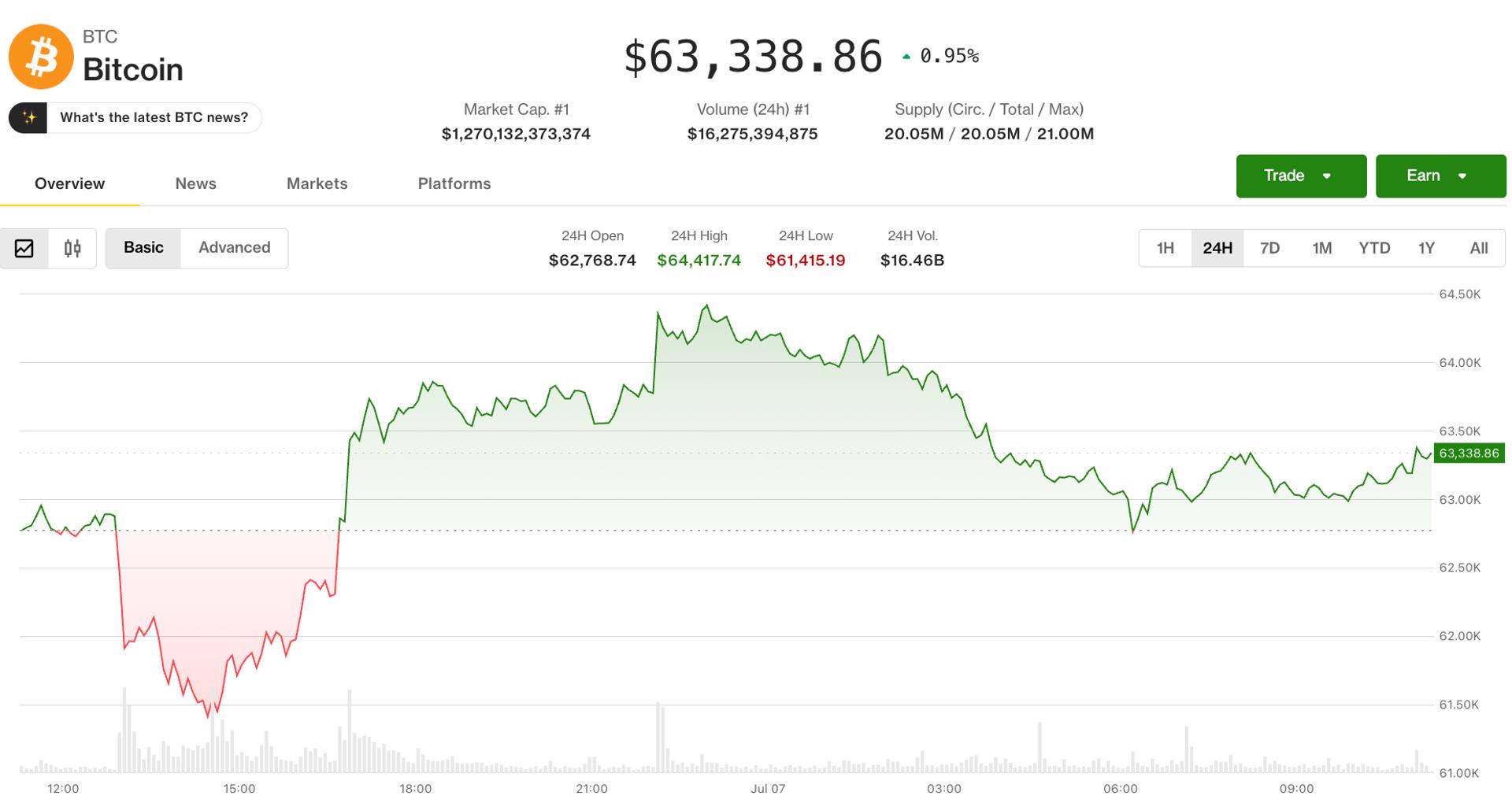
Overview
Bitcoin's recent price momentum has begun to falter, presenting a cautionary tale for rally optimists. While the flagship cryptocurrency has achieved notable gains in recent weeks, a critical technical metric—open interest in futures markets—reveals a troubling narrative beneath the surface. Open interest, which measures the total number of outstanding derivatives contracts, has declined notably despite Bitcoin maintaining its price levels. This divergence between price stability and declining leverage positions suggests that the rally may lack the fundamental support necessary for sustained upward momentum, raising fundamental questions about whether current gains can persist in the near term.
The decline in open interest comes at a particularly sensitive moment in Bitcoin's market cycle. Historically, periods of rising open interest accompany strong rallies as new capital enters leveraged positions to capitalize on price appreciation. Conversely, falling open interest during price stagnation often signals that traders are reducing risk exposure, closing positions, and withdrawing from the market. This pattern, currently unfolding in Bitcoin's trading landscape, presents a cautionary signal for investors betting on a continuation of recent gains and suggests a possible inflection point where institutional and retail conviction may be wavering.
This technical divergence has sparked renewed debate within the cryptocurrency investment community about the validity of current price levels. Market analysts are increasingly questioning whether Bitcoin's current positioning represents genuine fundamental strength or merely the residual momentum of earlier gains. The answer to this question carries significant implications not only for Bitcoin but for the broader cryptocurrency ecosystem, which often takes directional cues from the largest digital asset in the space.
Background
To understand the current predicament facing Bitcoin, one must first appreciate the mechanics of futures markets and the role that open interest plays in signaling market health. Bitcoin futures contracts, whether perpetual or dated instruments, allow traders and investors to establish leveraged positions without directly holding the underlying asset. These instruments have become fundamental to modern cryptocurrency trading, attracting institutional players, hedge funds, and retail speculators seeking to amplify returns through leverage.
Open interest serves as a critical barometer of market sentiment and the degree of leverage embedded in the market. When open interest rises in tandem with price increases, it indicates that new capital is entering the market to drive prices higher. This scenario—often termed a "capitulation rally" or "conviction move"—typically exhibits greater staying power because it reflects broad participation and fresh demand at higher price levels. Conversely, when prices rise on declining open interest, it suggests that the rally is being driven by existing participants moving their positions rather than new capital entering the market. This distinction is crucial for assessing rally sustainability.
Historical context provides instructive parallels. Bitcoin has experienced multiple rallies in its history where price appreciation coincided with expanding open interest, creating self-reinforcing dynamics where price strength attracted new leverage and further price appreciation. The 2017 bull market featured this characteristic, as did portions of the 2020-2021 cycle. In contrast, rallies built on declining open interest have frequently proven ephemeral, eventually giving way to sharp reversals as leverage is unwound and remaining traders exit positions.
The current cycle represents Bitcoin's performance following the cryptocurrency's recent price recovery from lower levels. Following a period of consolidation and weakness, Bitcoin mounted a recovery that brought prices to levels not seen in several months. This rally initially attracted significant attention and media coverage, with optimists extrapolating the move into predictions of sustained uptrends and new all-time highs. However, the inability of open interest to expand alongside price gains has dampened some of this enthusiasm and prompted more critical examination of rally fundamentals.
Key Developments
Recent data from major cryptocurrency derivatives exchanges reveals the contraction in Bitcoin futures open interest with striking clarity. Across platforms including CME Futures (the exchange most closely monitored by institutional participants) and other major venues, the aggregate open interest in Bitcoin futures has compressed significantly over the past weeks despite Bitcoin prices holding relatively steady. This compression indicates that the total notional value of leveraged bets on Bitcoin has declined, suggesting deliberate position reduction by market participants.
Concurrently, Bitcoin's price action has stalled in a defined range, with the asset struggling to achieve meaningful directional breakthroughs. While prices have avoided significant declines, the lack of upside momentum contrasts sharply with the earlier recovery phase. Technical resistance levels that Bitcoin approached during the initial rally have proven sticky, with multiple rejection attempts suggesting that sellers are becoming increasingly willing to accept current price levels. This price stalling, combined with declining leverage, creates a concerning dynamic where the market appears to be running out of momentum.
Datapoints from major exchanges also reveal shifts in funding rates—the mechanism through which perpetual futures traders pay or receive compensation based on their leverage positions. Historically tight funding rates (indicating tight leverage) have normalized, suggesting that traders are no longer aggressively long Bitcoin at high leverage multiples. This normalization of funding rates parallels the open interest decline and suggests that market participants have deliberately reduced their risk exposure to Bitcoin price movements.
Analyst commentary from major cryptocurrency research firms and trading desks has begun to reflect these technical deteriorations. Many observers have noted that while Bitcoin's price action remains non-catastrophic, the underlying structure of the market suggests weakening conviction. Some analysts have explicitly cautioned that the combination of stalled price action and declining open interest historically precedes more significant corrections, warning that traders should exercise heightened caution with new long positions.
Market Impact
The divergence between Bitcoin's price maintenance and declining open interest carries significant implications for various market participants. For leveraged long traders—individuals and funds betting on higher prices through margin or futures positions—declining open interest suggests that the window for profitable exits may be closing. As the number of outstanding contracts shrinks, liquidity available at current price levels may diminish, potentially resulting in wider spreads and higher slippage for traders seeking to establish or close positions.
For institutional investors evaluating Bitcoin as a portfolio allocation, the technical divergence presents a mixed signal. On one hand, price stability suggests that Bitcoin is not experiencing acute stress or forced liquidations. On the other hand, the inability of new capital to participate in the rally—as evidenced by declining open interest—raises questions about Bitcoin's broader appeal at current valuation levels. Some institutional observers have interpreted declining open interest as a signal that short-term speculative interest is waning, which they view as constructive for eventual sustainable rallies built on genuine conviction rather than leverage-fueled speculation.
The broader cryptocurrency market has also reflected sensitivity to Bitcoin's technical posture. Many altcoins maintain correlation relationships with Bitcoin, and declining Bitcoin open interest has coincided with mixed performance across alternative cryptocurrency assets. Traders allocating between Bitcoin and alternative assets often use Bitcoin's technical strength as a signal for broader market appetite for risk, and the current divergence has reportedly led some to reduce their exposure to the cryptocurrency sector generally.
Volume metrics across major trading venues have provided additional confirmation of the cautious sentiment pervading the market. Trading volume has declined as open interest has contracted, indicating reduced participation across the board. Lower volume combined with stalled prices creates an environment vulnerable to sharp moves in either direction, as liquidity provision has potentially diminished and relatively modest order flows could trigger outsized price movements.
Risks and Considerations
The current technical configuration carries several identifiable risks that market participants should carefully monitor. The most acute risk is a negative feedback loop where declining open interest triggers sufficient selling pressure to break key support levels, which in turn catalyzes broader liquidations and accelerates the unwinding of remaining leverage. Historically, such episodes have triggered sharp declines that reverse weeks or months of accumulated gains in mere days, inflicting significant losses on leveraged traders caught by the move.
A secondary risk pertains to loss of narrative momentum. Cryptocurrency markets are heavily influenced by sentiment and narrative, and the technical divergence between price and open interest creates a story that market commentators can weaponize to argue for caution. If influential voices in the cryptocurrency media and analyst community coalesce around the narrative that Bitcoin's rally is unsustainable, this consensus could become self-fulfilling as it discourages new participation and encourages risk reduction among existing participants.
There is also risk of external catalyst shock. While Bitcoin's current technical setup is vulnerable, the cryptocurrency market also remains sensitive to macroeconomic developments, regulatory news, and broader financial market movements. A negative catalyst could exploit Bitcoin's weakened technical position and trigger sharper declines than would occur in a market with robust open interest and leverage positioning. Conversely, sufficiently positive news could attract new capital and reverse the open interest decline, providing oxygen to the flagging rally.
However, it is important to note that declining open interest is not uniformly bearish in all contexts. Some analysts argue that declining leverage is actually constructive for long-term price appreciation, as it reduces the risk of destabilizing liquidation cascades and sets the stage for more stable, sustainable rallies built on genuine demand rather than leverage-driven speculation. From this perspective, the current configuration may represent healthy deleveraging that precedes a stronger, more durable advance.
What to Watch
Market participants should closely monitor several key metrics and levels in the coming weeks. Bitcoin's price action relative to technical support levels remains paramount. Key support zones that have repeatedly provided buying interest in recent months should be observed; a failure to hold these levels would confirm that selling pressure is intensifying. Conversely, a decisive break above recent resistance would suggest that new capital is finally entering the market and potentially reversing the open interest decline.
Second, open interest itself must be monitored for signs of stabilization or renewal. If open interest stabilizes at current levels and Bitcoin consolidates, this could represent a transitional period where the market digests recent gains before attempting another advance. Alternatively, if open interest begins expanding again, this would signal that traders are regaining confidence and positioning for further upside, potentially validating higher prices.
Third, investors should watch funding rates and liquidation levels across major exchanges. Extreme funding rates (very positive or very negative) can signal that traders are positioning for major moves. Liquidation levels visible on order books can indicate where cascading sells might occur if support breaks, or where buying could concentrate if resistance breaks upward.
Fourth, monitoring macroeconomic developments and regulatory news is essential. Changes in interest rate expectations, central bank policy, or cryptocurrency-specific regulation could provide either tailwinds or headwinds to Bitcoin regardless of current technical positioning. Major news developments in these domains could rapidly shift the calculus regarding Bitcoin's medium-term prospects.
Finally, observers should track sentiment indicators and derivative positioning across major financial platforms. Options markets, in particular, can reveal whether professional traders are increasing hedges (suggesting caution) or expanding directional bets (suggesting confidence). These sentiment shifts often precede major price moves.
Conclusion
Bitcoin's current situation exemplifies a critical principle in technical market analysis: price alone does not tell the complete story. While Bitcoin has maintained its recent gains and avoided catastrophic declines, the concurrent decline in open interest suggests that market structure is weakening and that the foundation supporting current prices may be narrowing. The combination of stalled price action and declining leverage creates a technically vulnerable configuration that raises legitimate questions about the rally's staying power.
For investors and traders, the current environment demands heightened vigilance and careful risk management. The probability of sustaining further upside appears diminished absent a reversal in the open interest trend, while the probability of significant drawdowns has increased given the technical setup. This configuration is neither decisively bearish nor irreversibly bullish, but rather represents a critical inflection point where the market's next move will likely prove directional and consequential.
The coming weeks will reveal whether Bitcoin can stabilize open interest and establish the foundation for a sustainable advance, or whether declining leverage proves harbinger of sharper declines ahead. Until that question is resolved through price action and derivative data, prudent market participants should approach the current configuration with appropriate caution, maintaining disciplined risk management and avoiding overconfidence in the rally's persistence. The technical evidence, while not conclusive, leans toward a market vulnerable to further weakness without clear signs of fresh capital participation. Investors would be wise to respect this signal and adjust positioning accordingly.
Original Source
CoinDesk