Bitcoin Slips as Fed Rate Hike Bets Surge Ahead of Inflation Data
Bitcoin declined as traders increased July Fed rate hike expectations following economic indicators, signaling a potential pause in monetary easing. The move reflects broader market sensitivity to inflation data and central bank policy shifts affecting cryptocurrency valuations.
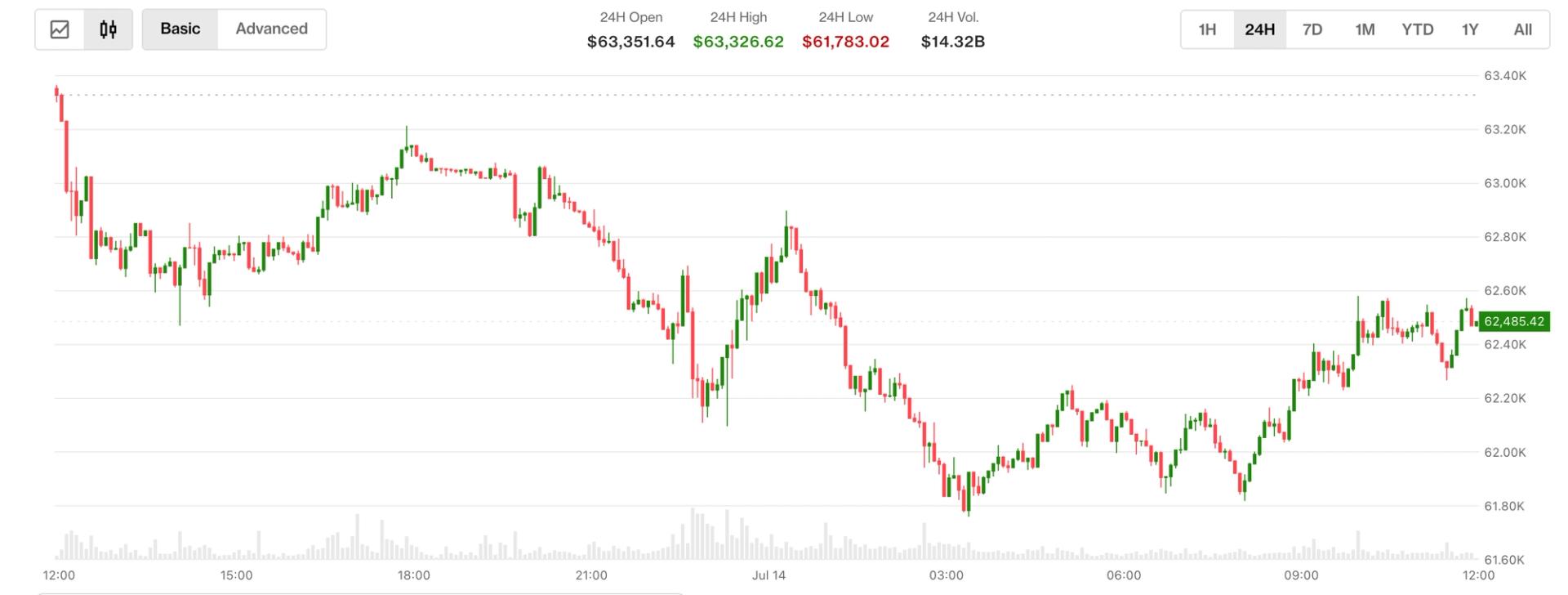
Overview
Bitcoin experienced a notable pullback as market participants reassessed the likelihood of a Federal Reserve rate increase in July, with traders amplifying their bets on tighter monetary policy ahead of a critical inflation report. The cryptocurrency's decline mirrors the broader risk-off sentiment gripping global markets as investors grapple with the implications of sticky inflation and the potential for extended periods of elevated interest rates. This dynamic highlights the increasingly complex relationship between macroeconomic factors and digital asset valuations, as cryptocurrency markets have become increasingly correlated with traditional financial instruments and central bank policy expectations.
The timing of Bitcoin's weakness is particularly significant, arriving on the eve of major economic data releases that could reshape expectations for monetary policy trajectories. Traders and investors are reassessing their positions across multiple asset classes, with Bitcoin serving as a barometer for risk appetite and inflation expectations. The cryptocurrency's recent performance underscores how sensitive digital assets have become to shifts in real-world monetary conditions and the broader financial environment.
This market dynamic represents a maturing phase for cryptocurrency markets, where digital assets are no longer viewed as purely speculative instruments divorced from traditional economics. Instead, Bitcoin and other cryptocurrencies are now deeply embedded in the tapestry of global financial markets, responding to the same macroeconomic forces that drive equities, bonds, and currencies.
Background
The [Fed](https://www.federalreserve.gov)'s Monetary Policy Trajectory
The Federal Reserve's monetary policy stance has been a central preoccupation for financial markets throughout 2026, as policymakers navigate the complex challenge of maintaining financial stability while managing persistent inflation pressures. After an aggressive campaign of interest rate increases in 2022 and 2023, the Fed had shifted toward a more accommodative stance, prompting expectations among some market participants that rate cuts could be imminent. However, recent economic data has complicated this narrative, suggesting that inflation remains more stubborn than initially anticipated.
The possibility of a July rate increase represents a significant reversal of market expectations, which had been pricing in continued easing or at least extended periods of rates remaining at current levels. This pivot reflects data suggesting that inflation has not declined as rapidly as some Fed officials had hoped, with particular concerns about core inflation measures that strip out volatile energy and food prices. The Fed's dual mandate—to achieve price stability and maximum employment—has become increasingly challenging as the labor market remains robust, keeping wage pressures elevated.
Market participants have been parsing Fed communications with exceptional care, looking for any indication of the central bank's next move. Fed officials have maintained a somewhat hawkish tone in recent weeks, cautioning against complacency regarding inflation and emphasizing the importance of data-dependence in policy decisions. This environment of uncertainty has made financial markets more volatile, as investors recalibrate their portfolios in response to shifting probabilities for monetary policy outcomes.
The Inflation Data Question
Inflation remains the elephant in the room for global financial markets. While headline inflation rates have declined from their 2022 peaks, the path of disinflation has been uneven and slower than many economists initially projected. Core inflation, which excludes volatile food and energy components, has proven particularly sticky, reflecting tight labor markets, strong consumer demand, and residual supply-chain issues. The upcoming inflation report is expected to provide crucial guidance on whether these trends are continuing or if disinflation is accelerating.
If the inflation report comes in hotter than expected, it would likely reinforce market expectations for higher rates for longer, potentially even supporting the case for additional tightening. Conversely, a cooler-than-expected reading could restore confidence that inflation is on a sustainable downward trajectory, potentially easing pressure on the Fed to maintain elevated rates. For Bitcoin and other risk assets, the stakes of this data release are particularly high, as inflation expectations have become a primary driver of asset valuations across markets.
The relationship between inflation and Bitcoin has evolved significantly over time. While Bitcoin was originally conceived as a hedge against currency debasement and inflation, its recent price movements have been more heavily influenced by near-term real interest rates and expectations for monetary policy. When real rates—the nominal rate minus inflation expectations—rise, Bitcoin becomes less attractive relative to risk-free assets like Treasury securities, as investors can achieve positive real returns without taking on the volatility associated with cryptocurrency holdings.
Key Developments
Market Repricing of Rate Expectations
The surge in trader bets for a July Fed rate hike represents a significant repricing of monetary policy expectations, reflecting a fundamental shift in how market participants view the economic outlook. Futures markets now assign meaningful probability to rate increases that seemed unlikely just weeks earlier, suggesting that recent economic data has been more hawkish than consensus expectations. This repricing has been rapid and consequential, with financial markets adjusting across multiple asset classes simultaneously.
Bitcoin's decline coincides with this broader repricing process, as investors reduce exposure to risk assets in favor of higher-yielding, lower-volatility alternatives. The inverse relationship between real interest rates and Bitcoin valuations has become increasingly apparent, as the cryptocurrency struggles when the opportunity cost of holding non-yielding assets rises. This dynamic reflects the maturation of cryptocurrency markets and their integration into broader portfolio management frameworks.
Traders are employing various hedging strategies and tactical adjustments in response to the shifting rate landscape. Options markets are showing elevated volatility, suggesting significant uncertainty about near-term outcomes and the potential for sharp moves in response to data releases or Fed communications. This elevated uncertainty benefits volatility sellers and option spreaders, but creates challenging conditions for directional investors attempting to position for the next major move in Bitcoin prices.
Bitcoin's Macro Sensitivity
Bitcoin's recent weakness underscores the cryptocurrency's increasing sensitivity to macroeconomic variables, a marked change from earlier years when Bitcoin's price movements were driven primarily by factors specific to the crypto ecosystem. The cryptocurrency now exhibits significant correlation with growth-sensitive risk assets like technology stocks and volatile credit instruments, suggesting that investors are treating Bitcoin as part of their broad risk allocation rather than as an uncorrelated hedge.
This shift in Bitcoin's role within investor portfolios has important implications for long-term valuations. While some cryptocurrency advocates argue that Bitcoin's fundamental value proposition as digital gold remains intact, the reality is that near-term price movements are heavily influenced by macroeconomic expectations and real interest rate dynamics. As long as investors' risk appetites are driven by Fed policy and inflation expectations, Bitcoin's price will likely continue to move inversely with real rates.
Recent analysis from major financial institutions has increasingly emphasized Bitcoin's macro correlation, challenging earlier narratives that positioned the cryptocurrency as a diversification tool uncorrelated with traditional assets. This recalibration has meaningful implications for portfolio construction and risk management, as investors recognize that adding Bitcoin exposure does not provide the diversification benefits that were previously believed.
The Crypto Market Reaction
Beyond Bitcoin, the broader cryptocurrency market has experienced pressure as investors reassess risk-on positioning across digital assets. Alternative cryptocurrencies that had benefited from risk-on sentiment have generally underperformed more significantly than Bitcoin, reflecting a typical pattern where investors rotate from higher-risk to lower-risk assets during periods of rising uncertainty. Stablecoin volumes have remained relatively stable, suggesting that holders are maintaining some optionality rather than completely exiting the space.
DeFi protocols and yield farming strategies have come under pressure as investors reconsider the risk-reward profile of locking capital into illiquid or counterparty-dependent arrangements when risk-free rates are rising. The opportunity cost of deploying capital into higher-yielding DeFi strategies has declined as Treasury yields have increased, making traditional fixed-income alternatives more competitive. This dynamic is likely to persist as long as rate expectations remain elevated.
NFT markets have similarly experienced headwinds, as investor capital retreats from speculative digital asset categories during periods of macroeconomic uncertainty. The broader picture suggests that cryptocurrency markets as a whole are entering a more challenging period, characterized by elevated macro uncertainty and reduced retail enthusiasm for speculative positioning.
Market Impact
Portfolio Rebalancing Across Asset Classes
Bitcoin's decline is part of a broader rebalancing effort across global investment portfolios, as investors adapt to changing interest rate expectations and inflation forecasts. Traditional risk assets like equities have also experienced weakness, reflecting the reality that higher rates constrain the present value of future corporate earnings. The correlation between Bitcoin and equities has remained elevated, suggesting that macro factors are driving asset prices across traditional and digital markets simultaneously.
For institutional investors managing large portfolios, this environment creates opportunities and challenges. The opportunity lies in identifying temporary dislocations and rebalancing into assets that have become oversold relative to their fundamental value. The challenge lies in navigating significant uncertainty about near-term macro trends, with inflation data and Fed decisions potentially driving sharp moves in either direction. Risk management becomes critical in such environments, as tail risks have increased materially.
Retail investors holding Bitcoin and other crypto assets face a particularly difficult environment. Many retail investors entered the crypto space during bull markets, purchasing assets with limited consideration for macro factors or real interest rates. As Bitcoin declines in response to Fed policy expectations, these investors are forced to confront the reality that their holdings are sensitive to the same macroeconomic forces that drive traditional markets. Capitulation by retail investors could drive Bitcoin lower in the short term, though it would also identify potential longer-term buying opportunities.
Volatility and Trading Dynamics
The elevated uncertainty around inflation data and Fed policy is creating elevated volatility across cryptocurrency markets. Options markets are pricing in significant expected moves for Bitcoin around the inflation data release, suggesting that traders expect sharp price action regardless of the outcome. This volatility creates opportunities for sophisticated traders and market makers, but generates challenges for investors seeking stable asset valuations.
Technical analysis suggests that Bitcoin could be testing important support levels, with potential for further downside if key levels are breached. Conversely, if Bitcoin stabilizes and begins to recover, significant resistance levels could constrain upside moves. The technical setup is creating a challenging environment for trend-following traders, as the direction and magnitude of the next major move remain uncertain.
Liquidity in Bitcoin spot markets remains generally adequate, though the elevated uncertainty has created some instances of wider bid-ask spreads and potentially rapid price swings during periods of thin liquidity. Traders operating in Bitcoin derivatives markets are managing significant counterparty and leverage risks, as elevated volatility can quickly wipe out positions taken with borrowed funds.
Risks and Considerations
Inflation Risk
The most immediate risk facing Bitcoin and broader financial markets is that the upcoming inflation report comes in significantly hotter than expected. A surprise increase in inflation would immediately validate the case for higher rates for longer, potentially driving Bitcoin to much lower levels as investors reprice real interest rate expectations. Such a scenario could also trigger a broader market selloff, with equities, bonds, and credit instruments all moving lower simultaneously in what traders call a "risk-off" environment.
Inversely, there is also a risk that inflation data comes in much cooler than expected, potentially sparking a sharp rally across risk assets as investors become confident that inflation is indeed declining sustainably. In such a scenario, real rates could decline, making Bitcoin's non-yielding status less costly in opportunity-cost terms. This tail risk is important to monitor, as it represents potential for significant upside if the data surprises to the downside.
Inflation expectations have been remarkably sensitive to incoming data in recent years, as investors have become less confident in their ability to forecast price trends. This sensitivity means that even modest surprises in inflation data can drive significant market moves. Bitcoin's sensitivity to inflation expectations suggests that the cryptocurrency will be particularly volatile around data releases and Fed communications.
Fed Policy Uncertainty
There remains substantial uncertainty about the Fed's exact policy trajectory, despite recent suggestions of possible rate increases. Fed officials have emphasized their data-dependent approach, meaning that their decision-making process is inherently reactive and dependent on incoming economic information. This creates a moving target for market participants, as expectations about future Fed moves shift with each new data release.
The risk exists that the Fed's policy path could be more hawkish than current market expectations suggest, particularly if inflation proves more persistent than anticipated. Alternatively, the Fed could surprise markets with a more dovish stance if economic data deteriorates or financial conditions tighten sharply. Either outcome could generate significant volatility in Bitcoin and other risk assets, as investors reprice expectations for monetary policy and real interest rates.
Communication and forward guidance from the Fed have become increasingly important for financial markets, as investors attempt to anticipate future policy moves rather than simply reacting to actual policy changes. However, Fed communication is often ambiguous and subject to interpretation, creating room for disagreement among market participants about the likely path of policy.
Geopolitical and Structural Risks
Beyond monetary policy, Bitcoin faces various structural and geopolitical risks that could influence valuations independently of interest rate expectations. Regulatory developments in major jurisdictions could significantly impact Bitcoin's adoption and utility, potentially affecting longer-term valuations. Similarly, geopolitical tensions or unexpected economic shocks could trigger broad-based market selloffs that disproportionately affect risk assets like Bitcoin.
The structural relationship between Bitcoin and monetary aggregates has been questioned by some analysts, who argue that the cryptocurrency's supply is now growing too slowly relative to global monetary aggregates to serve effectively as an inflation hedge. If this critique is valid, Bitcoin may need to be reframed as a volatile risk asset rather than a store of value, which could justify lower valuations and reduced portfolio allocations.
Community risks within the cryptocurrency ecosystem also merit attention. If major cryptocurrency exchanges or custodians face operational challenges or face regulatory pressure, confidence in the ecosystem could be shaken, potentially driving significant selling pressure across all digital assets.
What to Watch
Inflation Report Details
Investors should pay close attention to various subcategories within the inflation report, not just the headline numbers. Core inflation trends are particularly important, as they strip out volatile food and energy components and provide a clearer picture of underlying price pressure in the economy. Services inflation and wage growth data are also critical, as they influence Fed officials' assessment of inflation persistence.
Monthly trends in inflation will be important as well, as a pattern of declining monthly inflation rates would suggest that underlying momentum is indeed decreasing, while flat or rising monthly rates would suggest persistent price pressure. The distribution of price increases across different categories can also provide insights into whether inflation is broad-based or concentrated in specific sectors, which has implications for the Fed's policy response.
Market reaction to the inflation report will likely be swift and dramatic, with Bitcoin and other risk assets potentially moving sharply in either direction depending on how the data compares to consensus expectations. Investors should prepare for the possibility of significant price swings and position accordingly, particularly those with concentrated crypto holdings.
Fed Communications and Policy Signals
Fed officials are scheduled to provide various communications in the period leading up to the next policy meeting, and investors should monitor these communications closely for any signals about the central bank's likely policy moves. Changes in tone or emphasis by Fed officials could provide useful signals about the probability of rate increases or cuts in the coming months.
Fed Chair comments and prepared remarks are particularly important, as they often contain the most authoritative and carefully calibrated guidance about the central bank's policy thinking. Any shift in rhetoric about inflation or the labor market could significantly impact market expectations and Bitcoin valuations.
Macro Data Calendar
Beyond inflation, other economic data releases in coming weeks could influence Bitcoin valuations and Fed policy expectations. Employment reports, retail sales data, and consumer confidence readings will all provide additional information about the state of the economy and the likely path of monetary policy. A deterioration in labor market data could reduce the urgency for rate increases, while stronger-than-expected economic data could reinforce expectations for higher rates.
Technical levels for Bitcoin merit monitoring as well, as breaches of key support or resistance could trigger technical selling or buying that accelerates price movements in either direction. Monitoring sentiment among retail investors and traders can also provide useful insights about potential for capitulation or euphoria that could presage significant market moves.
Conclusion
Bitcoin's recent weakness reflects the cryptocurrency's increasing integration into global financial markets and its growing sensitivity to macroeconomic factors, particularly monetary policy expectations and inflation dynamics. The surge in trader bets for a July Fed rate hike highlights the critical importance of upcoming inflation data for determining the future path of monetary policy and, by extension, Bitcoin valuations.
The relationship between Bitcoin and real interest rates has become increasingly important in determining near-term price movements, at least in the current macroeconomic environment. As long as inflation remains elevated and the Fed maintains elevated interest rates, Bitcoin will likely face headwinds from a rising opportunity cost of holding non-yielding assets. A significant decline in inflation expectations or a reversal in Fed policy expectations could quickly restore investor appetite for Bitcoin and other risk assets.
Investors holding Bitcoin should carefully monitor upcoming economic data and Fed communications, as these factors are likely to remain the primary drivers of price movements in the near term. Positioning should reflect an assessment of the likelihood of different inflation outcomes and their implications for monetary policy. Those with concentrated crypto holdings should consider rebalancing and risk management, given the elevated uncertainty and volatility in the current environment.
The longer-term narrative around Bitcoin as digital gold or a hedge against currency debasement remains compelling for many investors, but near-term price movements are likely to remain heavily influenced by macro factors and real interest rate dynamics. Understanding this bifurcation between longer-term structural narratives and shorter-term tactical movements is critical for investors navigating Bitcoin markets in 2026.
Original Source
CoinDesk