Bitcoin Miners Pivot to AI: The Great Industry Transition Accelerates
Bitcoin miners are transitioning into AI infrastructure companies, liquidating BTC holdings to fund GPU acquisition and data center conversions. This shift reflects the convergence of energy-intensive computing needs and changing Bitcoin mining economics, with significant implications for both industries.
Overview
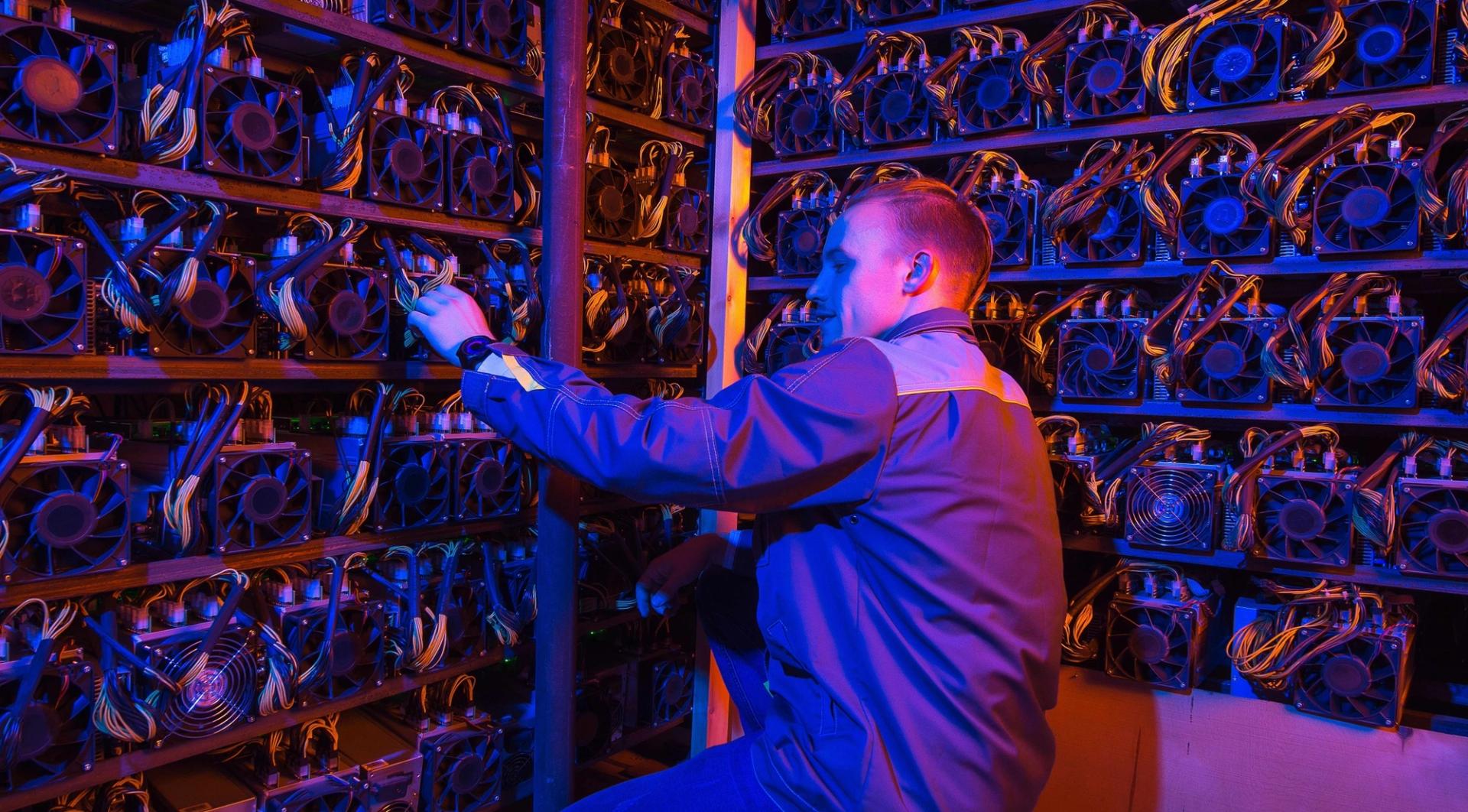
The bitcoin mining industry is undergoing a fundamental transformation as major operators pivot toward artificial intelligence infrastructure and data center operations. Rather than remaining locked into single-purpose ASIC mining hardware, established miners with substantial computational resources and energy procurement capabilities are repositioning themselves as AI companies. This transition involves significant Bitcoin liquidation to fund GPU acquisition, data center retrofitting, and entry into the lucrative but capital-intensive AI compute market. The movement represents more than a temporary diversification strategy—it signals a permanent shift in how these companies see their core competency and competitive advantage.
The scale of this pivot is notable. Major mining operations with annual revenues exceeding hundreds of millions of dollars are making multi-year, multi-billion-dollar commitments to AI infrastructure. These companies view their existing competitive advantages—abundant electrical capacity, cooling infrastructure, real estate, and operational expertise—as directly transferable to running large-scale GPU clusters for AI model training and inference. By selling accumulated Bitcoin holdings, miners are converting their stored value into the hardware and infrastructure needed to compete in a market that analysts project could reach trillion-dollar valuations within the decade.
This transition also reflects a cold economic calculation about bitcoin mining's future. As the network matures, mining rewards decrease through halving events, competition intensifies, and operational costs remain stubbornly high. For many miners, the AI transition offers superior long-term returns and a hedge against continued mining industry consolidation. The move simultaneously addresses supply chain constraints in the AI industry, where demand for GPU capacity vastly outstrips available supply from manufacturers like NVIDIA, creating a secondary market where alternative suppliers command premium pricing.
Industry observers view this shift as both inevitable and accelerating. The convergence of several factors—including Bitcoin's maturation, AI's explosive growth, energy cost parity between mining and AI operations, and the massive capital requirements of both industries—has created conditions where miners' assets and expertise command extraordinary value in the AI market. What began as a few high-profile pivots has become an industry-wide reorientation.
Background
Bitcoin mining has operated for over fifteen years as a specialized, capital-intensive industry focused entirely on securing the Bitcoin network through proof-of-work consensus. Miners accumulate Bitcoin through block rewards and transaction fees, traditionally holding these tokens as reserves and inflation hedges. The business model became increasingly mature and commoditized, with competition driven primarily by electricity costs, hardware efficiency, and scale. Major mining operations built vast data centers in jurisdictions with cheap, abundant electricity—Iceland, regions of North America with hydroelectric power, and select areas with industrial-scale geothermal energy generation.
The energy infrastructure built for Bitcoin mining is extraordinary in scale. A single large-scale mining operation might consume megawatts of continuous electrical capacity—comparable to small cities. These operations also developed sophisticated cooling systems, power distribution networks, and 24/7 operational expertise. The total Bitcoin network now consumes electricity estimated at 150-200 terawatt-hours annually, comparable to entire nations. This infrastructure, however, was optimized entirely for running ASIC (application-specific integrated circuit) processors whose sole function is computing SHA-256 hashes for blockchain validation.
The artificial intelligence revolution, meanwhile, created a hardware shortage crisis that persists in 2026. Training advanced large language models, computer vision systems, and generative AI applications requires GPU clusters with performance characteristics far beyond what existed before 2022. NVIDIA, the primary GPU manufacturer, cannot produce chips fast enough to meet demand. Customers—cloud providers, research institutions, and technology companies—wait months or years for delivery of GPU systems. This supply constraint has created extraordinary pricing power for anyone who can supply AI compute capacity.
The intersection of these two industries became apparent by 2024-2025. Bitcoin miners possessed the three most valuable inputs for AI infrastructure: electrical capacity, cooling infrastructure, and operational expertise in managing large-scale distributed computing systems. Meanwhile, AI companies desperately needed GPU computing capacity and were willing to pay premium prices to acquire it. The economic logic became irresistible: convert mining infrastructure to support GPUs, sell Bitcoin holdings to finance GPU acquisition, and enter the AI compute market at premium valuations and margins.
Maturation of the Bitcoin mining industry also reduced the appeal of staying purely focused on mining. Bitcoin's price trajectory, while generally bullish long-term, provides no guaranteed returns to mining operations that must spend constant capital on electricity, hardware, and operations. Mining profitability fluctuates dramatically with Bitcoin price movements, global electricity costs, and network difficulty adjustments. Surviving mining businesses have consolidated into a few large operators and countless smaller competitors struggling with razor-thin margins. The AI transition offered these companies a chance to apply their assets and expertise to an industry with structurally different economics—where demand vastly exceeds supply, customers are desperate for capacity, and pricing power remains strong.
Regulatory pressure on Bitcoin mining also contributed to this pivot. Several jurisdictions have moved to restrict or ban cryptocurrency mining due to environmental concerns and electricity grid strain. As regulatory uncertainty increased, miners with flexibility saw advantage in diversifying away from pure mining operations. AI infrastructure, while also energy-intensive, carries less regulatory risk and reputational baggage than cryptocurrency mining, making it politically safer for major operations.
Key Developments
The first major wave of bitcoin miner pivots occurred in 2024-2025, with Core Scientific, Marathon Digital Holdings, and other large operators announcing AI infrastructure initiatives. Marathon Digital, one of the largest public Bitcoin mining companies, announced plans to build specialized AI data centers and convert existing mining facilities to support GPU clusters. The company began liquidating portions of its Bitcoin holdings—reserves accumulated over years of mining—to fund GPU purchases and infrastructure upgrades. This move was quickly echoed by competitors who recognized the financial opportunity and competitive threat.
Specific examples of infrastructure conversion became increasingly visible in 2025-2026. Mining operations in Texas, Wyoming, and other US jurisdictions announced retrofits to accommodate thousands of H100 and newer-generation NVIDIA GPUs. These conversions required significant capital investment in power distribution systems, cooling infrastructure, and networking equipment optimized for AI training workloads—different from mining operations' requirements. Several private mining companies raised capital specifically for these transitions, often at valuations that implied successful transformation into significant AI infrastructure providers.
The Bitcoin liquidation accompanying these transitions created notable market effects. As miners converted holdings into GPU purchase orders and infrastructure investment, Bitcoin supply hitting exchanges increased modestly but measurably. Some Bitcoin market participants interpreted this as a potential negative signal—major long-term holders reducing positions. However, the broader narrative focused on the strategic nature of this liquidation: miners were converting one form of productive asset (Bitcoin held for future appreciation) into another (GPU-based AI computing infrastructure generating revenue today and tomorrow). This reframing helped institutional investors view miner pivots as value-creating transitions rather than panic liquidations.
By early 2026, the second wave of announcements began, with smaller mining operations announcing plans to join the pivot. A-tier mining companies that remained purely focused on Bitcoin faced increasing skepticism from investors about their long-term viability and returns. Meanwhile, companies announcing successful transitions into AI infrastructure began commanding valuations suggesting they were valued more as AI companies than as miners. This valuation arbitrage incentivized others to announce similar pivots, creating a feedback loop of industry-wide reorientation.
Several mining-to-AI companies also began announcing customer wins and revenue contracts. Stripe, Lambda Labs, and other AI infrastructure providers signed agreements to purchase or utilize capacity from ex-mining companies. These contracts, often multi-year and at premium pricing reflecting the AI compute shortage, provided validation that miners' infrastructure could successfully serve the market. Revenue visibility from AI operations also helped these companies access capital at more favorable terms than pure mining operations could achieve.
The strategic partnership announcements also began in 2026. Some ex-mining companies partnered with systems integrators, software providers, and enterprise AI companies to optimize GPU cluster performance for specific AI workloads. These partnerships positioned miners as end-to-end AI infrastructure providers rather than pure compute capacity suppliers, allowing them to capture higher margins and provide more valuable services to customers.
Market Impact
The transition of Bitcoin miners to AI infrastructure providers creates several cascading effects across both industries. First, it represents a strategic shift in Bitcoin market dynamics. With a portion of large Bitcoin holders liquidating positions to fund transitions, supply of held Bitcoin decreases over time—miners reduce holdings in the reserve strategy employed historically. This changes the market structure in subtle ways, as miners shift from being long-term holders to being operational holders, retaining only Bitcoin necessary for operations while converting excess to fiat currency and capital expenditures.
For the Bitcoin network, the transition of miners away from pure mining focus creates a subtle form of concentration risk. As mining becomes less attractive economically and operationally to diverse participants, and more concentrated among a shrinking number of specialized operations, the network could face increasing centralization challenges. Conversely, some new entrants might emerge in mining focused specifically on maximizing mining returns for investors less interested in AI operations, creating a bifurcated mining landscape with different operator profiles and incentive structures.
The AI infrastructure market receives substantial positive effects from miner pivots. The addition of thousands of GPUs to available compute capacity begins to address the critical supply shortage constraining AI development. While even with miners' contributions, total available GPU capacity remains vastly insufficient for all desired AI workloads, miner-operated clusters provide marginal supply that makes certain projects viable or less delayed. The competitive pressure on pricing is modest—miner operations often price capacity at or above cloud provider rates given their capital costs and the market opportunity—but availability effects are more substantial than pricing effects.
The valuation implications are significant for both industries. Bitcoin mining companies successfully pivoting to AI infrastructure see their market capitalizations rise sharply, as investors price in the larger addressable market and improved growth prospects of AI companies versus mature mining operations. This valuation premium incentivizes remaining pure-play miners to announce pivots, accelerating the industry shift. Meanwhile, publicly traded cloud infrastructure and AI service providers face competitive pressure as miner-operated capacity increases, potentially constraining their margin expansion in coming years.
Labor market effects are also emerging. AI infrastructure operations require different skill sets than pure mining—software engineers, machine learning infrastructure specialists, and systems optimization experts command premium salaries. Bitcoin miners transitioning to AI companies must hire these specialized roles, increasing labor costs in regions hosting major data centers and creating local employment effects. This also means miners must navigate cultural differences between mining operations' engineering profiles and AI infrastructure companies' technical requirements.
The transition also creates geographic shifts in infrastructure deployment. Bitcoin mining optimized for locations with cheapest electricity and minimal regulation, clustering heavily in APAC, Texas, and Iceland. AI infrastructure companies often prefer locations closer to customers, with dense fiber networks, local technical talent, and favorable regulatory environments—more aligned with major metropolitan areas and established tech hubs. This could lead to relative decline in mining-dependent regions and growth in AI infrastructure hubs, with economic implications for affected communities.
Equity markets and investors tracking cryptocurrency exposure also grapple with the transition. Companies providing mining equipment and software see declining demand as miners reduce operational focus on Bitcoin. Software and hardware providers serving AI infrastructure, conversely, see opportunities. NVIDIA and other GPU manufacturers see indirect benefit as miners convert capital into GPU purchases—expanding the total addressable market and extending their supply constraints into new customer segments.
Risks and Considerations
The transition from mining to AI infrastructure carries substantial execution risk for participating companies. Converting specialized mining infrastructure to support GPU clusters requires not just capital expenditure on hardware but also deep technical expertise in GPU cluster optimization, network design, and AI workload management. Miners' existing expertise in distributed systems and 24/7 operations transfers partially but incompletely to these new requirements. Companies underestimating the complexity of this transition risk capital deployment failures, underutilized infrastructure, and inability to retain customers due to operational shortcomings.
Market demand risk is also material. Current demand for GPU capacity vastly exceeds supply, creating opportunity for miners entering the market. However, NVIDIA's production capacity will eventually expand, cloud providers' GPU offerings will improve, and alternative GPU suppliers (Intel, AMD) will enter the market with more competitive products. The premium pricing and capacity shortage that make AI infrastructure so attractive today could compress within 3-5 years as supply normalizes. Miners betting on multi-decade revenue streams from AI infrastructure must grapple with eventual commoditization of basic compute capacity and the need to move upmarket to higher-margin services to justify capital investments.
Bitcoin mining ecosystem health represents another consideration. As major mining operations pivot to AI and reduce Bitcoin-focused activity, the network loses computational power dedicated to securing the blockchain. While the network can tolerate some reduction in mining power through difficulty adjustment, a substantial exodus of major mining operations could create subtle vulnerabilities. The network would be secured by a different demographic of miners—potentially with different geographical distributions, less sophisticated operations, or different profit motivations—affecting its robustness characteristics.
Capital efficiency and opportunity costs warrant scrutiny. Bitcoin miners liquidating holdings at what could prove to be historically low prices if Bitcoin appreciates significantly in coming years incur enormous opportunity costs. A company selling 50,000 Bitcoin at $50,000 per coin (totaling $2.5 billion) to fund AI infrastructure faces extraordinary scrutiny if Bitcoin appreciates to $100,000+ per coin in subsequent years—a $2.5 billion+ opportunity cost. While AI infrastructure promises current revenue and operational returns, these must exceed Bitcoin's appreciation for the transition to create shareholder value.
Regulatory risks are asymmetric. Bitcoin mining, while controversial, operates within relatively clear regulatory frameworks in most jurisdictions. AI infrastructure, particularly infrastructure supporting advanced AI development, faces increasingly stringent regulatory scrutiny from governments concerned with AI safety, dual-use capabilities, and concentration of AI power. Miners building AI infrastructure enter a regulatory environment that is still forming and potentially becomes more restrictive. A jurisdiction could ban AI infrastructure development or impose strict operational requirements that miners failed to anticipate.
Employee retention and cultural transition present organizational challenges. Bitcoin mining operations are typically run by engineers and operators comfortable with hardware optimization, energy management, and systems reliability. AI infrastructure requires different profiles—machine learning engineers, AI researchers, and software specialists. Attracting and retaining this talent while managing cultural integration represents a genuine challenge. Several mining company pivots have already experienced departures of key executives uncomfortable with the strategic shift or preferring to remain in pure mining.
The risk of technology disruption also cannot be ignored. Current AI workloads depend on NVIDIA GPUs—H100, H200, and future generations. Alternative architectures—specialized AI processors, neuromorphic chips, photonic computing—could emerge and displace GPU-based infrastructure. Miners betting billions on GPU clusters would face catastrophic stranding if such displacement occurred. Additionally, AI algorithms' evolution could change compute requirements in ways that render miners' infrastructure suboptimal or obsolete.
What to Watch
Investors and market observers should monitor several key metrics to evaluate the success of miner pivots into AI infrastructure. First, track actual capacity deployment and utilization rates. Companies announcing AI infrastructure plans frequently face delays in GPU delivery, construction completion, and customer deployment. Real metrics—gigawatts of power consumption at AI facilities, number of deployed GPUs, customer utilization rates—provide objective data on whether companies are executing transitions or missing guidance. Announcements are cheap; actual deployed capacity is what matters.
Second, observe revenue realization and margins. Companies pivoting to AI infrastructure will begin recognizing revenue from AI operations in 2025-2026. This revenue's profitability relative to mining operations' margins will determine whether the transition creates value or destroys it. Margins above 40-50% would suggest mining pivots succeeded in capturing premium value; margins below 20% would suggest they simply entered a competitive commodity business without the unique assets they required.
Third, monitor Bitcoin prices and liquidation patterns. If Bitcoin appreciates substantially, miners' opportunity costs of liquidation become glaringly apparent, potentially triggering shareholder rebellion or strategic reversals. Conversely, if Bitcoin's price stagnates or declines, mining operations' reduced appeal becomes self-evident. Either way, Bitcoin price dynamics will reveal whether miners' hedging rationale for pivots was sound.
Fourth, track industry consolidation. Miners successfully pivoting should acquire or partner with weaker miners or AI infrastructure companies. If major pivots instead face financial distress or underperformance, we should expect failed pivots and consolidation by stronger peers. The trajectory of industry consolidation provides a live test of strategic success.
Fifth, observe customer diversification. Early AI infrastructure companies serving primarily cryptocurrency and research customers could face customer concentration risk if those markets contract. Successful pivots should demonstrate expansion into enterprise AI, cloud provider partnerships, and diverse customer bases. Customer wins with Fortune 500 companies or major cloud providers would validate that miners' infrastructure quality rivals alternatives.
Sixth, monitor regulatory developments. Emerging regulatory frameworks around AI infrastructure deployment, particularly around advanced AI model training, could significantly impact the value proposition of mining-based AI infrastructure providers. Favorable regulatory treatment would validate the pivot; regulatory constraints could impair returns substantially.
Seventh, track technology developments. Emergence of specialized AI processors, new cooling or power distribution technologies, or alternative computing paradigms could accelerate or impede the transition's viability. Miners with technology leadership in AI infrastructure optimization would differentiate; miners with outdated technology could face rapid obsolescence.
Conclusion
The transition of Bitcoin miners into AI infrastructure companies represents a significant structural shift in both industries. Driven by favorable economics, regulatory pressures, and the convergence of energy infrastructure requirements, established mining operations are converting accumulated Bitcoin holdings and existing infrastructure into a positioned place in the rapidly expanding AI compute market. This movement is neither temporary nor marginal—it represents the largest category of mining company pivoting their core business model and deploying capital at a multi-billion-dollar scale.
The transition offers several advantages. Miners bring operational expertise, electrical infrastructure, cooling systems, and capital resources that are directly applicable to AI infrastructure. The addressed market—AI compute—commands premium pricing and growth rates vastly exceeding Bitcoin mining's mature market characteristics. Success in this transition could create significant shareholder value, positioning former mining companies as meaningful players in the AI infrastructure landscape.
However, substantial risks accompany the opportunity. Execution challenges in technology transition, long-term demand uncertainty as competition increases and GPU supply normalizes, opportunity costs from Bitcoin liquidation, and regulatory risk all warrant serious consideration. Companies underestimating these challenges could face capital destruction and failure. The valuation enthusiasm surrounding AI infrastructure pivots could prove excessive if businesses fail to deliver expected returns or if competitive dynamics shift unfavorably.
The broader market implications are substantial. Bitcoin's supply structure changes as major holders convert holdings to fund infrastructure investment. The AI compute market expands materially, beginning to address the critical shortage constraining AI development. Mining-dependent regions face economic transition as operators reorient. Investors in both cryptocurrency and AI sectors face evolving competitive and financial dynamics as miners reshape themselves.
The coming 2-3 years will be decisive in determining whether mining-to-AI transitions create sustainable value or represent a sector-wide pivot into a less attractive market. Clear execution, market demand validation, customer diversification, and protection of shareholder returns will separate successful transitions from capital destruction. For the broader technology and investment sectors, this evolution presents an important test of how mature industries adapt to changing fundamentals and market opportunities. The outcome will inform both cryptocurrency's future and the infrastructure powering AI's explosive growth trajectory.
Original Source
CoinDesk