Bitcoin Hashrate Falls for First Time in 6 Years as Miners Shift to AI
Bitcoin's network hashrate declined in Q1 2026 for the first time in six years as miners redirect computational resources to more profitable AI infrastructure. The shift reflects a fundamental reallocation of mining capital as generative AI demand surges, reshaping the cryptocurrency mining landscape.
Overview
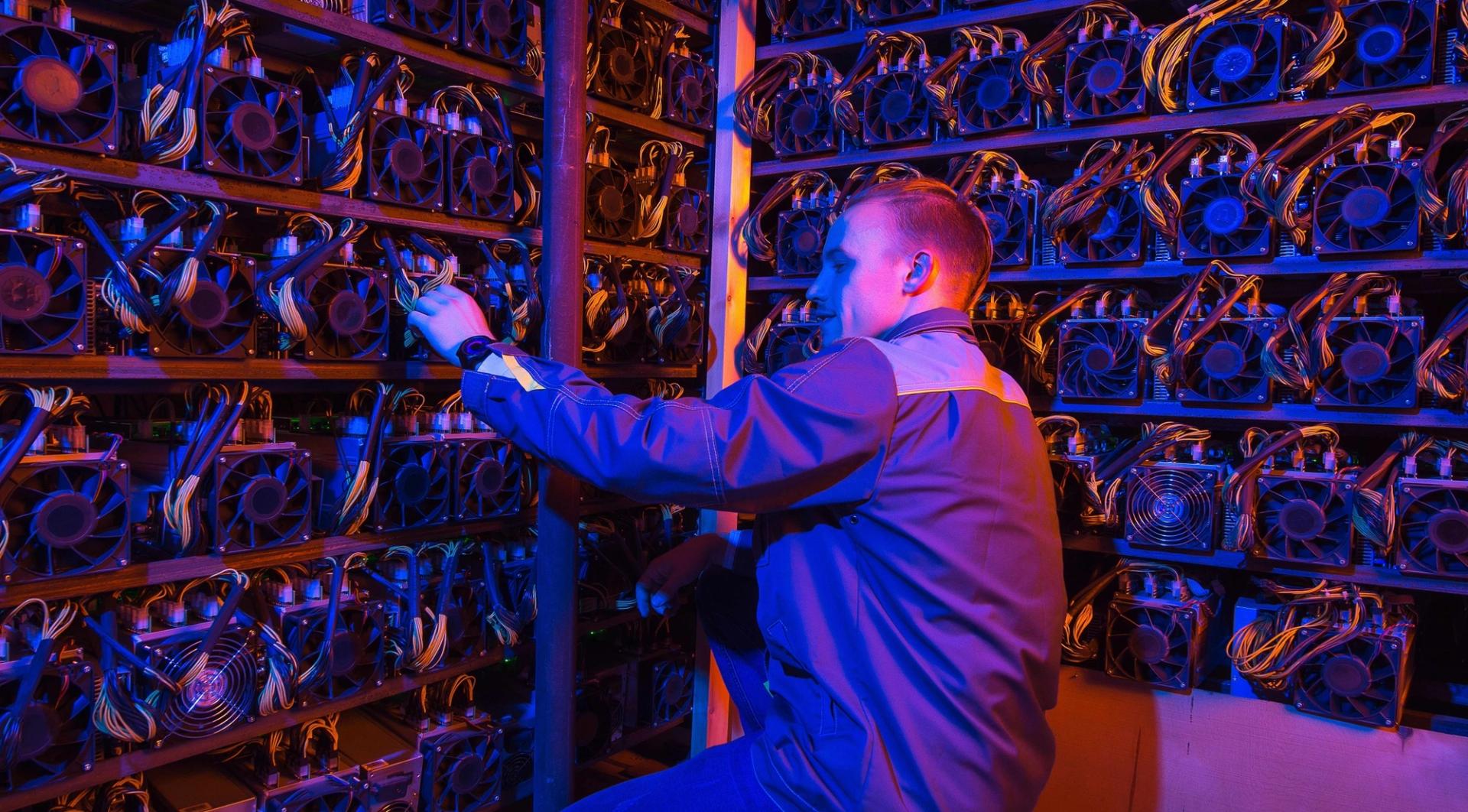
The cryptocurrency mining industry reached a critical inflection point in the first quarter of 2026 as Bitcoin's network hashrate declined for the first time in six years, marking a historic reversal in the network's computational arms race. This unexpected contraction stems from a significant reallocation of mining resources toward the rapidly expanding artificial intelligence sector, where computing power commands premium valuations. Mining operations that once competed fiercely to increase their share of Bitcoin's block rewards have begun systematically redirecting their most advanced GPU and ASIC hardware toward AI model training, inference services, and other machine learning infrastructure that generate higher returns on investment.
The pivot represents more than a temporary market fluctuation; it signals a structural shift in how the technology industry values computational resources. For the better part of a decade, miners viewed Bitcoin as the ultimate denominator of hash rate value, driving continuous investment in specialized mining hardware and facility expansion. The Q1 decline reveals that this assumption no longer holds universally. Large-scale mining operations with access to capital and operational expertise have begun calculating that AI infrastructure—whether deployed for large language models, neural networks, or enterprise machine learning services—offers superior risk-adjusted returns compared to traditional cryptocurrency mining.
This transition carries profound implications for Bitcoin's security model, the broader cryptocurrency ecosystem, and the competitive dynamics shaping the global AI infrastructure buildout. As hashrate declined, network difficulty adjusted downward, temporarily reducing the computational barrier to 51% attacks while simultaneously lowering the income requirements for marginally profitable mining operations. The interplay between these forces has created a complex market environment where miners face difficult strategic choices about capital allocation, facility location, and technology investment.
Background
Bitcoin's hashrate has served as a fundamental metric of network health and security since Satoshi Nakamoto's inception of the protocol in 2008. The measure represents the total computational power deployed across the network, aggregated from thousands of independent miners competing to solve cryptographic puzzles and validate transactions. For nearly two decades, hashrate exhibited nearly monotonic growth, with only temporary declines during bear market cycles or major market disruptions. This growth trajectory reflected both the increasing value of Bitcoin and the maturation of the mining industry, which transformed from a hobbyist pursuit into a sophisticated, capital-intensive business dominated by large-scale operations.
The mechanics of Bitcoin mining create powerful incentives for continuous hashrate growth. When Bitcoin's price increases, mining becomes more profitable at current difficulty levels, attracting new participants and capital investment. Existing miners upgrade to more efficient hardware and expand facility capacity to capture additional rewards. This competitive pressure drives both technological innovation in ASIC chip design and geographic arbitrage in facility location, as miners seek jurisdictions with abundant, cheap electricity. Over time, this dynamic pushed Bitcoin's total hashrate from terahashes to exahashes, with the network's computational power doubling roughly every 18-24 months during bull markets.
The mining hardware ecosystem evolved in parallel with network growth. Early miners used CPUs, then GPUs, before the industry standardized on application-specific integrated circuits (ASICs) optimized exclusively for SHA-256 hashing. Companies like Bitmain, Whatsminer, and others built billion-dollar businesses supplying next-generation mining chips with marginal efficiency improvements that translated into enormous operational advantages. The industry developed specialized supply chains, cooling solutions, and facility designs that made large-scale mining economically viable in remote locations with cheap hydroelectric or geothermal power.
This infrastructure-heavy model created significant switching costs and path dependencies. A mining operation that invested hundreds of millions of dollars in ASIC-specific facilities faced enormous barriers to redeploying assets elsewhere. The business model worked well as long as Bitcoin mining remained the highest-value use case for hash rate. Beginning in 2024, this assumption began eroding as artificial intelligence emerged as a competitor for the same underlying computational resources, particularly high-end GPUs and specialized accelerators.
Key Developments
The Q1 2026 hashrate decline emerged from several converging factors that shifted miner economics in fundamental ways. First, the sustained surge in AI infrastructure demand created unprecedented competition for computational resources. Major cloud providers, AI research institutions, and commercial AI companies engaged in what analysts termed "the great GPU shortage" of 2025-2026, bidding up the price of high-performance computing hardware. NVIDIA H100 and H200 GPUs, which theoretically could support either traditional AI workloads or be repurposed for cryptocurrency mining, commanded prices that reflected their superior value in AI applications.
Second, the relative economics of Bitcoin mining versus AI infrastructure shifted decisively in AI's favor. Bitcoin mining returns depend on three variables: hardware efficiency, electricity costs, and Bitcoin's price. By early 2026, Bitcoin's price had stabilized in the $65,000-$75,000 range after a volatile 2025. Meanwhile, AI model training and inference services offered higher margins and more predictable revenue streams. A data center operator could deploy identical GPU hardware toward training large language models, running inference services for enterprise customers, or participating in AI cloud marketplaces at substantially higher per-unit-compute returns than Bitcoin mining would provide.
Third, several large mining operations publicly announced strategic pivots toward AI infrastructure. Core Scientific, one of North America's largest public Bitcoin miners, restructured its operations to allocate 30% of capacity toward AI workloads starting in Q1 2026. Similar announcements came from other publicly traded miners attempting to demonstrate to investors that they understood the capital reallocation underway. These announcements created a signaling effect, validating the pivot for smaller, private operators who might have faced internal resistance from Bitcoin-focused stakeholders.
The environmental and regulatory context also contributed to the shift. Mining facilities that previously operated in relative obscurity faced increasing scrutiny from environmental organizations, grid operators, and policymakers concerned about energy consumption. Pivoting toward AI infrastructure offered a reputational advantage, particularly when framed as supporting technological progress rather than speculative cryptocurrency assets. Some mining operations in hostile regulatory environments used the AI pivot as cover to legitimize their operations or secure better utility rates from power providers who viewed AI infrastructure as economically valuable.
Difficulty adjustment mechanisms also played a role in the dynamics. As hashrate declined in Q1, network difficulty adjusted downward approximately 4-6%, reducing the computational barrier to mining new blocks. This adjustment temporarily improved profitability for remaining miners but created a competitive bottleneck. Smaller, less efficient operations that previously operated at the margin of profitability found themselves pushed below cost of operations. The difficulty adjustment compressed the period during which mining remained viable for marginal participants, accelerating the exit of inefficient capacity.
Market Impact
The hashrate decline triggered immediate and cascading effects across the cryptocurrency ecosystem and adjacent markets. Bitcoin's security model depends fundamentally on the computational difficulty of attacking the network. As hashrate declined, the theoretical cost of executing a 51% attack—gaining control of majority mining power to reverse transactions or prevent confirmations—decreased proportionally. While Bitcoin remained far from vulnerable to realistic attack scenarios given the distributed geographic and organizational nature of remaining miners, the decline represented a genuine, if manageable, degradation of network security.
For Bitcoin users and holders, the decline sparked anxiety about network integrity, particularly given the high-profile security incidents affecting other cryptocurrencies in 2025. Major cryptocurrency exchanges implemented modest additional security measures and some custody providers highlighted Bitcoin's security model as a relative advantage compared to proof-of-stake networks vulnerable to other attacks. The market priced in modest risk premiums, visible in widening bid-ask spreads during volatile trading periods, though no wholesale exodus from Bitcoin occurred.
The impact on mining stocks proved more significant. Shares of publicly traded miners including Marathon Digital, Riot Platforms, and Hive Blockchain declined 15-22% during the announcement period as investors recalculated earnings models. Analysts revised production forecasts downward and questioned the long-term competitiveness of Bitcoin mining relative to AI infrastructure. Some mining companies announced share buyback programs to support stock prices, while others highlighted their diversified strategies that included AI workloads. The equity market repriced Bitcoin mining companies as lower-margin, commodity-like operations competing against well-capitalized technology companies with superior access to capital.
For hardware manufacturers, the shift proved more positive. ASIC mining chip suppliers faced reduced demand for specialized Bitcoin hardware, but GPU manufacturers and AI accelerator designers experienced robust demand. Companies like NVIDIA benefited from the reallocation, as miners and infrastructure providers seeking to diversify away from Bitcoin mining purchased their cutting-edge processors. The shift accelerated commoditization of ASIC-specific hardware and reduced pricing power for specialized mining chip designers.
Electricity markets and grid operators experienced measurable impacts. Mining facilities in jurisdictions with abundant cheap power—Iceland, El Salvador, parts of Texas, and other locations with hydroelectric or stranded natural gas—operated at reduced capacity utilization. Electricity prices declined modestly in several regional markets as demand contracted. Conversely, this reduced competitive pressure for power resources, creating openings for other data center operators and industrial users seeking cheap electricity. Some grid operators welcomed the contraction after years of strain from expanding mining loads.
Risks and Considerations
While the hashrate decline appeared manageable in the short term, several risks warranted serious consideration. The most immediate concern involved network security dynamics. Bitcoin's difficulty adjustment mechanism normalizes hashrate changes over approximately two-week intervals. However, if the pivot toward AI infrastructure accelerated beyond current trends, hashrate could decline further, eventually creating scenarios where the network became vulnerable to coordinated attacks. Although current hashrate levels remained orders of magnitude beyond realistic attack capabilities, the directional risk represented a break from Bitcoin's historical security trajectory.
Second, the sustainability of the miner-to-AI transition remained uncertain. Mining represents a commodity business where participants compete primarily on electricity costs and hardware efficiency. AI infrastructure, by contrast, encompasses diverse applications with varying profitability profiles. Some AI infrastructure—particularly enterprise inference services for predictable workloads—offered stable returns. Other segments, particularly model training and development, carried substantial execution and commercialization risks. Miners pivoting to AI infrastructure without deep expertise in machine learning, software development, and go-to-market strategy faced significant operational challenges.
Third, the shift potentially represented a temporary market dislocation rather than permanent structural change. Bitcoin mining economics depend on the Bitcoin price. A significant price appreciation could reverse the incentive structure, making Bitcoin mining attractive relative to AI infrastructure once again. Conversely, AI infrastructure competition might drive down compute pricing, making AI workloads less profitable and triggering a reversion to Bitcoin mining. The long-term equilibrium remained uncertain given the rapidly evolving competitive landscape.
A fourth consideration involved geographic concentration risks. The pivot toward AI infrastructure seemed most pronounced among large-scale mining operations in North America and Europe with sophisticated management and access to capital. Smaller mining operations, particularly in developing economies that relied on Bitcoin mining as a source of foreign exchange and employment, lacked the capital or expertise to pivot toward AI infrastructure. This could concentrate mining power among a smaller set of larger, more sophisticated actors, potentially introducing new governance risks despite the temporary security concerns from lower hashrate.
Finally, regulatory uncertainty surrounded the long-term treatment of mining operations shifting toward AI infrastructure. Jurisdictions that previously welcomed Bitcoin mining for economic development and tax revenue now faced different policy questions around AI infrastructure. Some governments viewed AI advancement with strategic concern, creating regulatory friction for mining operations pivoting toward AI workloads. The regulatory environment remained in flux, potentially creating barriers or incentives that reversed prior hashrate trends.
Market Impact and Industry Response
The cryptocurrency industry responded to the hashrate decline with a mix of defensive and strategic initiatives. Industry advocates emphasized that the decline remained modest in absolute terms and that Bitcoin's security margins remained substantial. The Bitcoin Foundation and various mining associations published research highlighting network resilience and the improbability of realistic attack scenarios at current hashrate levels.
Some in the industry began advocating for modified security models or consensus mechanisms that might make Bitcoin mining more competitive relative to AI infrastructure. Proposals surfaced for alternative consensus mechanisms or hybrid models, though these faced substantial obstacles given Bitcoin's deeply embedded proof-of-work commitment and the difficulty of implementing consensus changes without broad stakeholder agreement. More pragmatically, industry participants focused on improving mining hardware efficiency and leveraging renewable energy advantages to maintain competitiveness.
Miners themselves diversified strategies beyond simply pivoting to AI infrastructure. Some mining operations invested in Bitcoin research and development, supporting software development and protocol improvements that might enhance network value. Others invested in renewable energy infrastructure, using their grid presence to support energy transition goals while improving their regulatory standing. A few mining operations experimented with alternative revenue streams including digital asset custody services, blockchain infrastructure provision, and consulting services for institutional investors entering cryptocurrency.
What to Watch
Several key metrics and developments warrant close monitoring as the miner-to-AI pivot progresses. First, Bitcoin's hashrate trajectory in Q2 and Q3 2026 will indicate whether the Q1 decline represents the beginning of a sustained trend or an anomalous period. Hashrate stabilization would suggest equilibrium between mining and AI infrastructure competition, while continued decline would signal accelerating reallocation. Mining industry reports and equipment shipment data provide leading indicators of future hashrate direction.
Second, the profitability dynamics of AI infrastructure deployment deserve attention. Early reports suggested strong returns, but as more capital rushed into the space, competition and pricing pressure could compress margins. Miner earnings calls and private conversations in the industry will illuminate whether the AI pivot provides durable competitive advantage or represents a temporary mispricing opportunity.
Third, regulatory developments around AI infrastructure and cryptocurrency mining will shape long-term competitive dynamics. Governments grappling with AI policy may restrict certain applications or require specific oversight mechanisms that affect infrastructure economics. Bitcoin mining regulations, conversely, may shift in ways that alter the competitive equation. Monitoring regulatory filings and policy statements from major economies provides critical context.
Fourth, the Bitcoin price trajectory remains foundational to all mining economics. A substantial price appreciation could reverse current incentive structures, while continued price weakness might accelerate the pivot away from mining. Bitcoin's correlation with AI-related stocks and broader technology valuations merits attention as potential leading indicators of future mining dynamics.
Finally, hardware innovation in both mining-specific and general-purpose computing domains will influence long-term competitiveness. Breakthroughs in ASIC efficiency, GPU technology, or entirely novel architectures could reshape the economics currently favoring AI infrastructure. Similarly, software improvements in AI workload optimization could enhance returns, strengthening the case for AI infrastructure investment.
Conclusion
Bitcoin's first-quarter hashrate decline in six years marks a pivotal moment in cryptocurrency mining history and broader competition for computational resources. The shift toward AI infrastructure reflects rational economic responses by sophisticated mining operators to changed incentive structures favoring artificial intelligence over cryptocurrency mining. While current hashrate levels maintain Bitcoin's security model and the decline remains manageable, the fundamental reallocation of capital and computational resources signals structural changes in how the technology industry prioritizes different computational workloads.
The transition raises important questions about Bitcoin's long-term role in the technology ecosystem and the sustainability of mining as a business model in an era of intense AI infrastructure competition. Miners demonstrate significant strategic flexibility, successfully pivoting toward higher-returning applications when circumstances warrant. However, Bitcoin's security ultimately depends on sufficient hashrate to maintain the network's computational integrity. The interplay between these forces—miner flexibility and Bitcoin's security requirements—will determine the ultimate trajectory of both mining economics and network security.
Investors, regulators, and cryptocurrency participants should monitor this space closely. The current period presents an inflection point where seemingly small changes in hardware allocation and capital deployment could have substantial consequences for Bitcoin's long-term competitive position. The resolution of this tension between mining profitability and network security will likely shape cryptocurrency market dynamics and infrastructure development for years to come. Understanding these forces provides essential context for anyone seeking to comprehend the evolving relationship between cryptocurrency and artificial intelligence in the technology sector's competitive landscape.
Original Source
CoinDesk