XRP Slips 4% Amid Selling Pressure Despite Growing ETF Interest
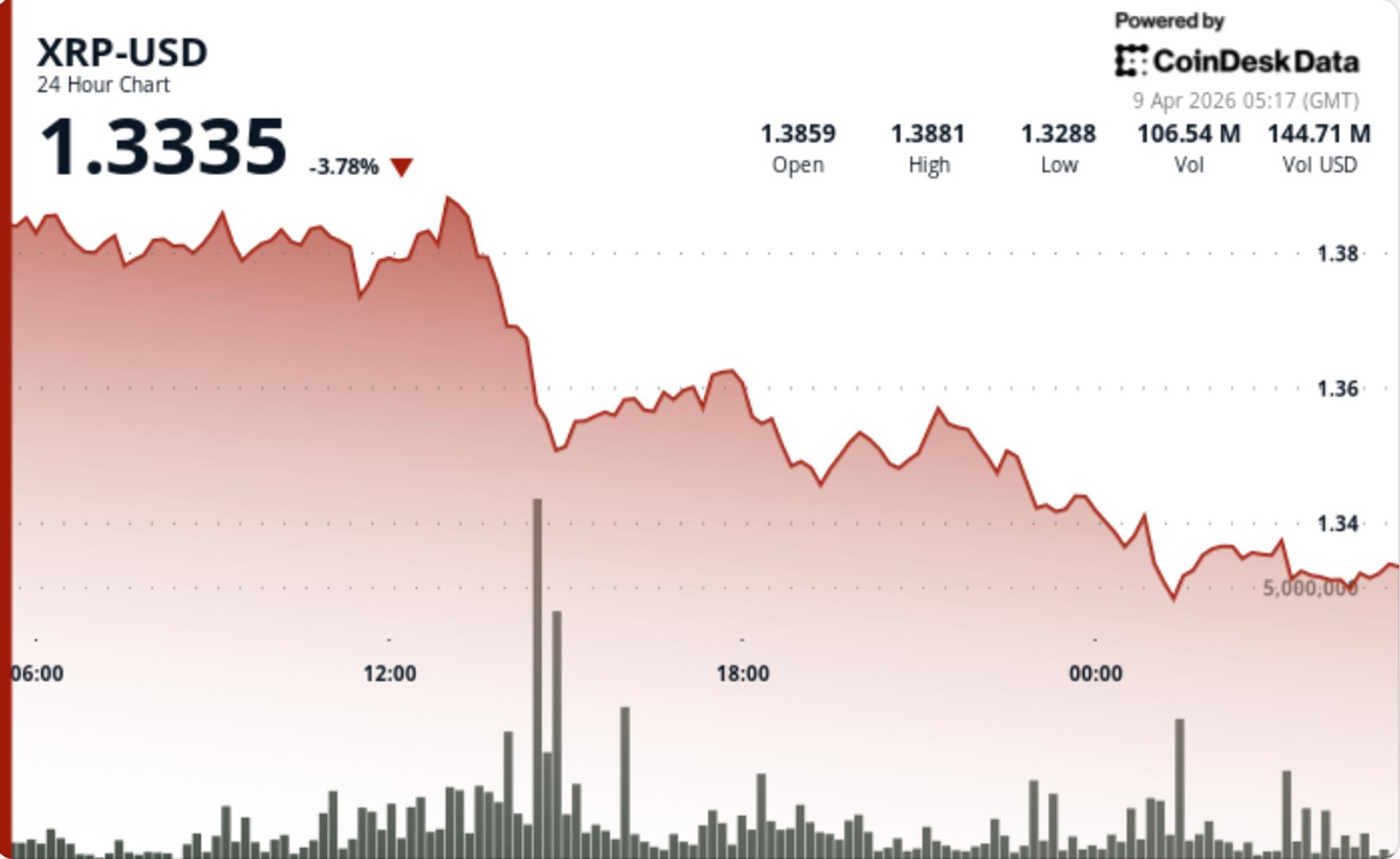
XRP declined 4% as market selling pressure intensified, creating a disconnect between institutional ETF inflows and retail market sentiment. The divergence highlights ongoing volatility in the cryptocurrency's price action despite positive institutional adoption signals.
Overview
XRP, the native token of the XRP Ledger, experienced a notable 4% price decline as market participants weighed conflicting signals from institutional and retail sectors. The cryptocurrency faced sustained selling pressure despite continued inflows into XRP-focused exchange-traded funds, signaling a complex market dynamic that traders and analysts are carefully monitoring. This divergence between institutional interest and immediate price action reflects the broader tension within crypto markets as traditional finance increasingly embraces digital assets through regulated investment vehicles.
The decline occurred within a broader context of cryptocurrency market volatility, where macro factors, regulatory developments, and technical patterns all influence short-term price movements. XRP's situation is particularly noteworthy because it demonstrates how modern crypto markets operate with multiple competing forces: institutional capital entering through ETFs provides structural support and legitimacy, while traditional market mechanics—including profit-taking, short-selling, and momentum trades—continue to drive tactical price action. Understanding this duality is critical for investors seeking to navigate the evolving digital asset landscape.
As of mid-April 2026, XRP's market capitalization and trading volumes reflect an asset class at an inflection point. The presence of regulated ETF products allows institutional investors to gain XRP exposure without directly managing private keys or navigating decentralized exchanges. However, these same institutional investors often employ sophisticated trading strategies that can amplify volatility during periods of uncertainty. The simultaneous occurrence of ETF inflows and price declines suggests market participants are pricing in factors beyond simple supply-and-demand dynamics.
Background
XRP has maintained a complex relationship with global financial markets and regulatory authorities for nearly a decade. Launched in 2012, the token was designed to facilitate fast, low-cost cross-border payments through the XRP Ledger, positioning itself as infrastructure for financial institutions. Unlike Bitcoin, which emphasizes decentralization and censorship resistance, or Ethereum, which prioritizes smart contract functionality, XRP's value proposition centers on practical utility in payment settlement.
The regulatory landscape for XRP shifted significantly following legal proceedings between Ripple Labs (the company most closely associated with XRP development) and the U.S. Securities and Exchange Commission. These legal battles, which spanned several years, created uncertainty around XRP's regulatory classification and future use cases. The ongoing clarification of XRP's status—particularly the question of whether it should be classified as a security or commodity—has profound implications for its listing on major exchanges and integration into institutional products.
The introduction of XRP ETFs represents a watershed moment for the token's mainstream adoption. ETFs provide regulated, transparent investment vehicles that appeal to institutional allocators who may be uncomfortable with direct cryptocurrency holdings or decentralized platforms. Through ETFs, pension funds, hedge funds, and other institutional investors can build XRP positions while maintaining compliance with internal investment mandates and regulatory requirements. This legitimization through traditional investment vehicles has expanded the addressable market for XRP significantly.
Historically, XRP has been subject to dramatic price swings, reflecting the immature nature of cryptocurrency markets and the concentration of ownership among early adopters and project stakeholders. Price volatility has moderated somewhat as markets matured and liquidity improved, but XRP remains substantially more volatile than traditional fiat currencies or equity markets. The current period represents an interesting moment where institutional adoption is measurably increasing while retail sentiment and technical factors continue to create downside pressure.
Key Developments
ETF Inflows and Institutional Adoption
The establishment and growth of XRP ETFs marks a turning point in how traditional financial institutions engage with cryptocurrency. ETF inflows represent genuine institutional capital entering the XRP ecosystem, typically from allocators who view cryptocurrency as an emerging asset class worthy of portfolio allocation. These flows are distinct from speculative trading, as they often reflect longer-term positioning decisions by investment committees making conscious choices to increase their digital asset exposure.
ETF products have proliferated across multiple markets, with different jurisdictions offering varying regulatory structures. Some ETFs employ direct Bitcoin-equivalent models, holding actual XRP in custody structures, while others may use derivatives or futures contracts to achieve exposure. The specific mechanics of individual ETF products influence how inflows ultimately impact XRP's on-chain activity and market dynamics. Nevertheless, ETF creation and redemption mechanisms generally result in proportional purchases or sales of the underlying asset, creating a direct link between fund inflows and spot market activity.
The consistent nature of ETF inflows despite price weakness suggests institutional investors maintain conviction in XRP's medium to long-term prospects. This convex institutional interest provides a stabilizing force that prevents catastrophic downside moves. However, ETF inflows alone are insufficient to overcome sustained selling pressure from other market participants, as evidenced by the recent 4% decline. This disconnect reveals that institutional buyers are accumulating at current levels, anticipating either future price appreciation or simply maintaining strategic allocations despite near-term headwinds.
Selling Pressure and Market Dynamics
The selling pressure evident in XRP's recent price action stems from multiple sources operating simultaneously. Technical traders following chart patterns may have triggered stop-loss orders or initiated short positions as resistance levels were breached. Profit-taking from earlier gains represents another natural source of selling, particularly among retail investors who may have accumulated positions at lower price levels. Additionally, broader cryptocurrency market movements or macro-economic concerns may have prompted general risk-off sentiment that affects XRP along with other digital assets.
Shorting activity deserves particular attention when analyzing sustained selling pressure. In regulated markets with leverage available, sophisticated traders can amplify their selling impact through borrowed tokens and derivatives positions. Shorting creates a mechanism through which traders can profit from declining prices, introducing negative pressure independent of fundamental changes in the asset's utility or adoption. The presence of XRP futures contracts and margin trading venues provides infrastructure for this activity, making short pressure a meaningful force in price determination.
Retail sentiment indicators, while difficult to quantify precisely, also influence market direction through social media activity, retail trading platform usage, and sentiment analysis tools. Periods when retail interest wanes often coincide with price declines, as passive holders reassess their conviction and momentum traders exit positions. The maturity of XRP's investor base has likely increased as institutional participation grows, potentially reducing some of the extreme volatility driven by uninformed retail trading. However, retail participants still represent a meaningful portion of overall trading volume.
Market Impact
Price Action and Technical Considerations
The 4% decline, while notable, remains within the normal volatility band for XRP and similar cryptocurrencies. However, the context matters significantly. If this decline represents the beginning of a larger downtrend, it could have cascading effects across XRP-related investments and trading positions. Technical analysts will examine whether key support levels have been violated, whether volume patterns suggest the selling is exhausting or accelerating, and whether reversal patterns are forming that might signal recovery.
Volatility itself carries economic significance beyond simple price fluctuation. High volatility reduces XRP's utility as a payment mechanism, since parties transacting in XRP-denominated settlements face considerable uncertainty about the value of their transactions. This creates a tension between XRP's intended use case—efficient cross-border settlement—and the market realities that generate price volatility. The presence of ETFs may actually moderate this volatility to some extent by providing a transparent, regulated mechanism for hedging XRP exposure.
Price action relative to Bitcoin and other major cryptocurrencies provides additional context. If XRP is declining while Bitcoin remains stable or appreciates, this suggests XRP-specific factors are driving the move. Conversely, broad-based cryptocurrency weakness suggests macro factors dominate individual token dynamics. Understanding these relative movements helps distinguish between system-wide conditions and asset-specific concerns.
Impact on Ecosystem Participants
Developers, validators, and enterprises building on the XRP Ledger pay close attention to token price movements, as these affect transaction costs denominated in XRP and the incentive structure for network participation. Lower prices may increase demand from cost-conscious users seeking efficient transactions, but may also reduce financial incentives for validators and developers who receive XRP-denominated compensation. The balance between these competing effects influences investment in ecosystem development.
Institutions holding XRP in their treasuries or customer custody face mark-to-market losses during periods of price weakness. This can impact quarterly financial results and influence institutional decision-making about continued engagement with digital assets. However, institutions with long-term conviction typically view price volatility as an opportunity to accumulate at attractive valuations rather than a reason to liquidate positions.
Risks and Considerations
Regulatory and Legal Uncertainties
Despite progress in regulatory clarity, XRP faces ongoing regulatory uncertainty in certain jurisdictions. Classification decisions made by regulators in major markets can significantly impact XRP's utility and trading environments. Exchanges may face pressure to delist or restrict XRP trading in response to regulatory directives, restricting market liquidity and accessibility. These regulatory risks remain difficult to quantify but represent genuine tail risks that sophisticated investors monitor carefully.
Legal proceedings, while less directly impactful than they were during peak SEC litigation, continue to influence market sentiment around XRP. Any adverse legal developments could trigger panic selling, particularly among retail investors less informed about the underlying merits of XRP as a digital asset. Conversely, positive regulatory developments could catalyze significant appreciation if investors view regulatory clarity as removing a key discount factor from XRP's valuation.
Market Structure Risks
ETF products, while providing accessibility, also introduce new categories of risk. ETF sponsors must manage custody arrangements, operational security, and regulatory compliance. Failures in any of these dimensions could damage investor confidence in XRP broadly and in institutional adoption more generally. The concentration of XRP holdings across a small number of major ETF sponsors creates potential systemic risk if any major custodian experiences operational issues.
Liquidity risks persist despite improved overall market depth. During periods of rapid price movement or market stress, bid-ask spreads can widen considerably, potentially amplifying losses for traders attempting to exit positions. The presence of circuit breakers and trading halts in some venues provides protection against extreme scenarios but cannot fully eliminate liquidity risks in decentralized markets.
Competitive and Technological Risks
XRP faces competition from other digital assets seeking to serve similar payment and settlement use cases. Stablecoins, central bank digital currencies, and other layer-one blockchains all represent potential alternatives that could diminish XRP's competitive positioning. Technology development on competing platforms may outpace development on the XRP Ledger, attracting developer talent and capital away from the ecosystem.
The XRP Ledger's consensus mechanism and technology stack, while proven reliable, may face challenges from newer platforms offering different technical trade-offs. As blockchain technology evolves, staying competitive requires continuous investment in development and innovation. Slower relative development velocity could gradually erode XRP's market position over multi-year timeframes.
What to Watch
Key Technical Levels
Traders and analysts will monitor whether the 4% decline represents a momentary pullback or the beginning of more substantial weakness. Specific support levels derived from recent price action, moving averages, and historical resistance points will provide indicators of where sustained buying might emerge. Equally important is observing whether volume patterns confirm or deny the thesis that selling pressure is intensifying or exhausting.
Breakouts above resistance levels could signal institutional buyers are accumulating aggressively, potentially driving sharp appreciation. Conversely, breaches of support levels might trigger additional stop-loss selling and further downside momentum. The technical picture remains fluid and depends on developments in the coming days and weeks.
ETF Flow Data
Publicly available data on ETF inflows and outflows will provide real-time insight into institutional positioning. Sustained inflows despite price weakness would reinforce the narrative that institutional investors maintain conviction. Flows that reverse and turn negative would suggest institutional interest may be cooling, potentially indicating broader weakness ahead. ETF flow data offers a relatively objective measure of institutional participation, less subject to manipulation or bias than other sentiment indicators.
Regulatory Developments
Any announcements regarding regulatory classification, exchange listing decisions, or legal proceedings will materially impact investor sentiment. Markets often reprice assets dramatically in response to regulatory clarity, whether positive or negative. Monitoring regulatory calendars and official guidance from relevant agencies in major markets provides critical context for understanding where regulatory surprises might emerge.
On-Chain Metrics
On-chain data such as transaction volume, active addresses, and holder concentration offers insights into fundamental usage and interest in XRP. If declining price coincides with declining on-chain activity, this suggests reduced practical demand for the token's utility. Conversely, stable or growing on-chain activity despite price weakness might indicate undervaluation, as the fundamental basis for demand remains intact.
Conclusion
XRP's recent 4% decline amid simultaneous ETF inflows exemplifies the complexity of modern cryptocurrency markets, where multiple competing forces generate price action and where institutional and retail participants operate with different time horizons and motivations. The divergence between positive institutional flows and tactical selling pressure underscores that short-term price movements often deviate from longer-term structural trends in digital asset adoption and institutional engagement.
For investors, this moment presents a classic dilemma: whether recent weakness represents an opportunity to accumulate at attractive valuations or a warning sign that fundamental headwinds are building. The presence of ETF inflows suggests institutional investors lean toward the former interpretation, using price weakness to increase their allocations. However, the concurrent selling pressure indicates meaningful skepticism among other market participants who may prioritize technical factors or short-term macro concerns over longer-term institutional adoption narratives.
The ultimate direction of XRP's price will likely be determined by how institutional inflows evolve relative to retail and technical selling, how regulatory clarity develops, and whether the XRP Ledger ecosystem continues expanding its real-world utility. In the near term, continued monitoring of ETF flows, technical support levels, and regulatory announcements will provide the most actionable information for traders and investors managing XRP positions.
XRP's journey from speculative digital asset to increasingly regulated institutional investment reflects broader maturation of cryptocurrency markets. This transition brings both opportunities and risks, with periods of volatility and divergent market signals likely to persist as market structure evolves. Sophisticated market participants understand that patience and conviction matter significantly when navigating these transition periods, and that short-term price noise often obscures longer-term structural developments.
Original Source
CoinDesk