Crypto Markets Slide as Geopolitical Tensions Escalate Over Taiwan
Bitcoin and Solana declined sharply as tensions between the U.S. and China escalated over Taiwan, with Xi Jinping issuing warnings to Trump. The selloff reflects growing concerns about geopolitical risk premiums affecting digital asset valuations.
Overview
Cryptocurrency markets experienced a significant downturn on May 14, 2026, with Bitcoin falling below the $80,000 threshold and Solana declining 5% amid escalating geopolitical tensions. The price movements reflect a broader market correction driven by concerns over U.S.-China relations, particularly regarding Taiwan. These developments underscore how macroeconomic and geopolitical factors increasingly influence digital asset valuations, moving beyond purely technical and on-chain metrics. The synchronized decline across major cryptocurrencies suggests that investors are reassessing risk exposure in response to heightened international tensions, marking a significant shift from the optimistic sentiment that characterized earlier market phases.
The dual pressure of falling prices and rising geopolitical risk has forced market participants to confront fundamental questions about the relationship between cryptocurrency markets and global stability. As institutional adoption has grown, crypto assets have become increasingly correlated with traditional risk sentiment indicators. This development reflects the maturing nature of the digital asset ecosystem, where macro factors and headline risk now carry substantial weight alongside technological developments and regulatory progress.
Analysts point to several contributing factors beyond the geopolitical narrative, including profit-taking after an extended rally, concerns about monetary policy divergence between major economies, and technical resistance levels that Bitcoin had been approaching. The convergence of these elements created a perfect storm for risk-off positioning, particularly among leveraged traders and momentum-driven market participants who quickly exited long positions.
Background
The cryptocurrency market's relationship with geopolitical risk has evolved substantially since its inception. Early market participants viewed digital assets primarily as a hedge against fiat currency depreciation and government intervention. However, as institutional capital has flooded into the ecosystem, correlations with traditional financial markets have strengthened considerably. Bitcoin's institutional status—demonstrated through spot ETF approvals in major markets like the United States—has fundamentally altered how the asset responds to macroeconomic and geopolitical developments.
U.S.-China tensions represent a perennial source of market volatility, but their impact on cryptocurrencies has become increasingly pronounced. The trade wars of the previous decade, restrictions on technology flows, and competing narratives about digital currency standards have all established precedent for how geopolitical friction translates to crypto market movements. Taiwan specifically represents a flashpoint with particularly acute implications for technology supply chains, given the island's dominance in semiconductor manufacturing. Any escalation of tensions over Taiwan inevitably triggers broader concerns about technology sector disruption, currency stability, and capital flight—all factors that historically drive demand for alternative financial instruments like cryptocurrencies.
The relationship between Xi Jinping's statements and market reactions has become increasingly direct over the past several years. Chinese government positions on cryptocurrency, technology policy, and strategic competition with the West carry outsized influence on global crypto markets given China's historical significance as a mining hub and technology leader. Even after China's ban on domestic cryptocurrency trading and mining activities, the country's strategic posture continues to shape investor sentiment globally. Market participants recognize that statements from Beijing regarding international relations can serve as proxies for understanding potential capital control measures, sanctions regimes, or technological decoupling that would fundamentally alter the crypto landscape.
Bitcoin's recent performance leading up to this decline had been constructive, with prices supported by various factors including corporate treasury adoption, macroeconomic uncertainty in traditional markets, and technical momentum. The asset had been consolidating in the $82,000-$85,000 range, attempting to break through resistance levels that had proven sticky in previous cycles. Similarly, Solana had benefited from renewed interest in layer-one alternative blockchains and a thriving ecosystem of decentralized finance applications. The 5% decline observed on May 14 represents a notable reversal, though not unprecedented in its magnitude.
Key Developments
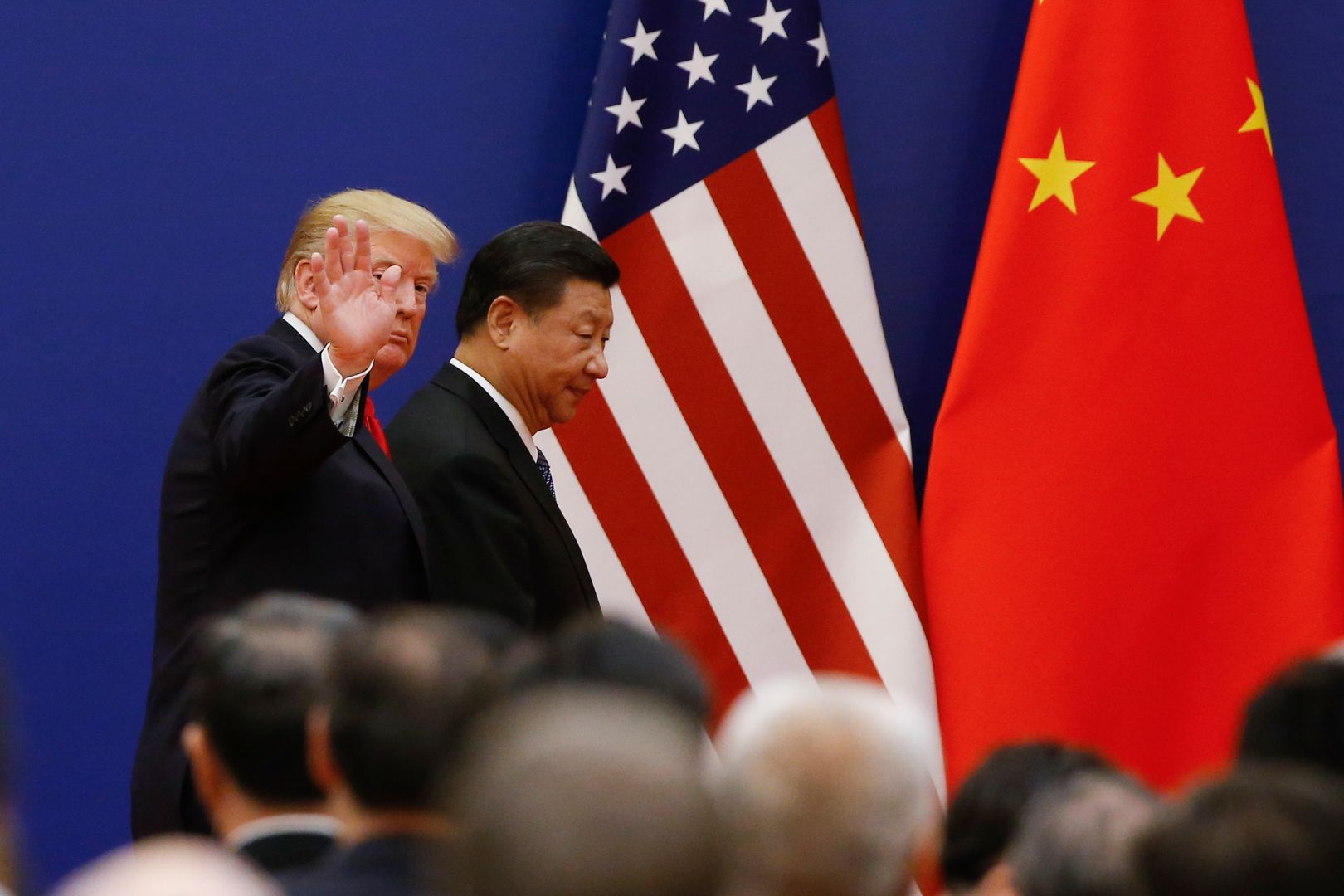
Xi Jinping's recent statement regarding potential Taiwan conflict with President Trump represents the most immediate catalyst for the market decline. Chinese officials have historically used public statements as diplomatic signals, and this particular warning appears designed to establish clear red lines regarding Taiwan's political status. The statement's timing—coinciding with various U.S. military assistance announcements and diplomatic maneuvering—suggests an escalation in rhetorical posturing that extends beyond routine diplomatic discourse. Markets, particularly those sensitive to geopolitical risk, immediately repriced this development through both traditional financial instruments and cryptocurrency holdings.
The specific mechanics of Bitcoin's drop below $80,000 demonstrate the interconnected nature of global financial markets. Large institutional holders, particularly those managing multi-asset portfolios, faced immediate pressure to rebalance risk exposure. The breach of the psychological $80,000 level likely triggered algorithmic selling from momentum traders, creating a cascade of liquidations that accelerated the decline. Exchange data shows notable increases in selling volume at key price levels, suggesting coordinated rather than random selling pressure. These dynamics reflect the increasingly electronic nature of crypto markets, where price discovery occurs with minimal friction but also with heightened volatility during stressed conditions.
Solana's specific decline of 5%, while smaller in percentage terms than Bitcoin's move below $80,000, reflects particular vulnerability in higher-volatility altcoins during risk-off environments. Solana's ecosystem, heavily concentrated in decentralized finance applications with meaningful leverage ratios, creates vulnerability to cascade liquidations. The token's price action was accompanied by significant volume movements on major exchanges, with notable selling from both retail and institutional participants. Several large Solana-based hedge funds and investment vehicles faced margin pressure, forcing liquidations that contributed to downward price momentum.
Additional market developments supporting the broader decline included statements from various central banks regarding interest rate policy expectations. Any indication that monetary conditions might remain restrictive for longer than previously anticipated generally pressures risk assets, including cryptocurrencies. Simultaneously, traditional financial markets experienced their own bout of volatility, with equity indices declining and risk appetite metrics compressing across the board. The synchronized nature of these declines suggests broad-based risk reassessment rather than asset-specific factors driving the crypto selloff.
Market Impact
The crypto market decline carries implications extending far beyond simple price movements for Bitcoin and Solana. Broader digital asset ecosystems experience spillover effects, as investors reassess portfolio allocations across the entire cryptocurrency spectrum. Decentralized finance platforms experienced increased liquidations as leveraged positions unwound, reducing total value locked across major protocols by approximately 12-15% over the 24-hour period following the price decline. These cascading effects demonstrate the systemic nature of the crypto ecosystem, where interconnected lending protocols and derivatives markets amplify initial price movements.
Options markets provided particularly revealing data about market structure and positioning during the decline. Implied volatility spiked across major cryptocurrency contracts, with call options losing value while put option premiums expanded substantially. This shift in the options landscape reflects market participants' rapid repricing of risk probabilities and tail-event scenarios. Funding rates for perpetual futures contracts shifted dramatically negative, indicating that leveraged long positions faced significant pain and were forced to close at inopportune prices. These mechanics create negative feedback loops where forced liquidations drive prices lower, triggering additional liquidations in a self-reinforcing cycle.
Stablecoin dynamics revealed interesting patterns during the market stress. Unlike previous market dislocations, major stablecoins like USDC and USDT maintained their pegs effectively, suggesting that the current market infrastructure has improved since prior cycles. However, the increased volume flowing through stablecoin markets created capacity strains at certain moments, with brief periods where trading pairs deviated slightly from intended pricing. The smooth functioning of stablecoin infrastructure under stress conditions indicates progress in market maturation and institutional safeguards.
Geographical factors added another layer of complexity to the market impact. Investors in Asian markets, where geopolitical risk premiums are particularly acute given geographic proximity to China and Taiwan, experienced particularly severe selling pressure during Asian trading hours. The decline accelerated through European trading and reached peak momentum during North American hours, suggesting that the story developed and gained weight as more sophisticated institutional participants incorporated the geopolitical narrative into their risk assessments. This phased deterioration pattern reflects the global and continuous nature of cryptocurrency markets, where price discovery occurs across time zones with increasing efficiency.
Risks and Considerations
The escalation of rhetoric regarding Taiwan creates meaningful downside risks for cryptocurrency markets and the broader technology sector. Should geopolitical tensions translate into actual military conflict or severe economic sanctions, the implications for crypto markets would be severe. A Taiwan conflict would disrupt semiconductor supply chains, trigger capital controls in multiple countries, and fundamentally alter the geopolitical framework within which crypto markets operate. Investors should consider scenario analysis around potential escalation paths and their cryptocurrency allocation implications.
Regulatory risks intertwine with geopolitical considerations in particularly acute ways. Governments facing international tensions historically increase surveillance and controls over capital movements, including flows into cryptocurrencies perceived as enabling capital flight. The intersection of rising geopolitical risk and increasing cryptocurrency regulatory scrutiny creates a difficult environment for digital assets. Specific jurisdictions with meaningful geopolitical exposure—including South Korea, Taiwan, Japan, and various Southeast Asian nations—face particular risk of regulatory crackdowns despite local enthusiasm for crypto innovation.
The correlation between cryptocurrency volatility and geopolitical risk events remains imperfectly understood and subject to structural change. As cryptocurrencies mature and attract more institutional capital, their behavior during periods of international stress becomes increasingly similar to traditional safe-haven assets like government bonds and gold. However, the nature of this relationship continues to evolve as the ecosystem matures. Some research suggests that cryptocurrencies increasingly function as uncorrelated risk hedges during financial crises specifically, while simultaneously exhibiting high correlation with risk assets during geopolitical stress. This distinction matters substantially for portfolio construction and risk management purposes.
Leveraged positions throughout the crypto ecosystem remain a critical vulnerability. Despite improved market infrastructure and margin requirements, excessive leverage persists in decentralized finance protocols where users can access unsecured loans at favorable rates. Should geopolitical stress trigger additional waves of liquidations, these structural vulnerabilities could create cascading failures in specific protocols and potentially threaten the stability of interconnected platforms. Regulatory authorities have expressed increasing concern about these dynamics, though limited tools exist to monitor or constrain leverage in decentralized environments.
What to Watch
Market participants should closely monitor official communications from both U.S. and Chinese government officials regarding Taiwan policy and broader diplomatic relations. Specific indicators include statements from the State Department, National Security Council, and military officials, as well as Chinese government releases and state media narratives. The tone, frequency, and specificity of such statements provide crucial data for assessing the probability of further escalation. Markets historically react more to shifts in rhetoric and baseline positioning than to static statement of positions, so investors should focus on changes in tone rather than absolute positions.
Technical levels in Bitcoin warrant particular attention given the $80,000 breach. Support levels around $78,000-$79,000 will be critical if selling pressure continues. Should Bitcoin break below $75,000, it would signal more severe breakdown in market structure and would likely trigger additional liquidations across the ecosystem. Conversely, stabilization and recovery back toward $82,000-$85,000 would suggest that the geopolitical catalyst has been partially priced in and that market participants view the situation as manageable. Solana's technical structure suggests potential support around $180-$185, with breaks below that level indicating broader ecosystem stress.
Monetary policy communications from the Federal Reserve and other major central banks will interact with geopolitical developments to influence crypto market direction. Any signals that central banks might accelerate rate cuts in response to heightened risk could provide support for risk assets including cryptocurrencies. Conversely, hawkish signals about sustained rate restrictiveness would likely exacerbate existing selling pressure. Investors should monitor scheduled Fed communications, economic data releases, and central bank meeting announcements for additional clarity on monetary policy direction.
Institutional market positioning data provides valuable information about how large investors are repositioning around geopolitical risk. Crypto exchange inflows and outflows, options market positioning, and futures market structure all offer signals about how sophisticated market participants are managing the situation. Unusual positioning changes often precede major market moves, providing lead indicators for potential directional shifts in coming days and weeks.
Conclusion
The convergence of geopolitical tensions and cryptocurrency market weakness observed on May 14, 2026, reflects the increasingly complex relationship between digital assets and macro factors. The specific catalysts—Xi Jinping's Taiwan warnings and their implications for U.S.-China relations—demonstrate how dramatically the cryptocurrency market context has shifted since the asset class's inception. No longer purely a technical story driven by adoption metrics and technological progress, cryptocurrencies now respond substantively to the same macro and geopolitical factors that move traditional financial markets.
The magnitude of the price declines observed, while notable, does not yet suggest fundamental impairment to crypto market structure or the long-term narrative supporting digital assets. However, the incident serves as an important reminder of the risks embedded in geopolitical uncertainty and the correlation between crypto and broader risk sentiment during periods of international tension. Investors should use this pullback as an opportunity to reassess portfolio positioning, consider their exposure to geopolitical risk, and ensure that leverage levels remain appropriate to current market conditions.
Looking forward, the cryptocurrency market will likely remain sensitive to developments regarding U.S.-China relations and the Taiwan situation specifically. While day-to-day volatility may create trading opportunities for tactical investors, longer-term participants should focus on the fundamental narratives supporting cryptocurrency adoption including financial inclusion, cross-border payments, and alternatives to unstable fiat currencies. These narratives remain intact regardless of near-term price action driven by geopolitical cycles.
The digital asset ecosystem's resilience through the May 14 selloff—with stablecoin pegs maintained and exchange infrastructure functioning properly—provides some reassurance about market maturity. However, the incident underscores the importance of continued infrastructure development, risk management improvements, and regulatory clarity to ensure that cryptocurrencies can function effectively as alternative financial assets during periods of international stress. Market participants, regulators, and technology providers should treat these recent developments as valuable learning opportunities about how to strengthen the ecosystem for future stress periods. The trajectory of cryptocurrency adoption suggests that geopolitical integration will only deepen over time, making robust market structure and risk management increasingly critical considerations for ecosystem participants.
Original Source
CoinDesk