Bitcoin Retreats as Oil Surge Reignites Inflation Fears
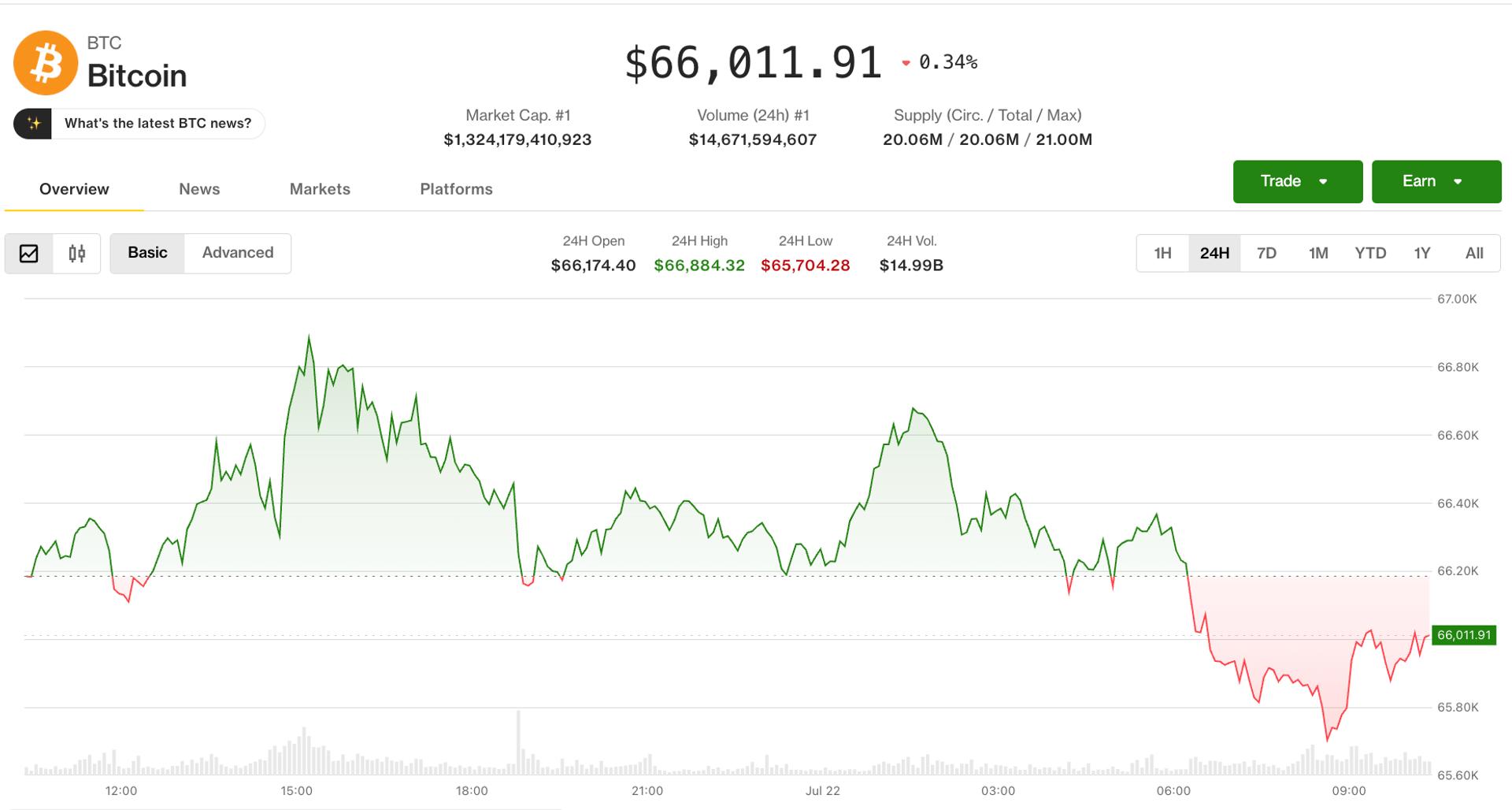
Bitcoin has retreated from its one-month highs as crude oil prices topped $85 per barrel, reigniting concerns about persistent inflation and its implications for both traditional and cryptocurrency markets. The correlation between energy prices and macroeconomic uncertainty has forced investors to reassess their risk exposure, with Bitcoin's pullback reflecting broader market hesitation ahead of potentially hawkish policy signals.
Overview
Bitcoin's recent pullback from its highest levels in a month marks a critical inflection point in the cryptocurrency market, driven primarily by macroeconomic headwinds that extend far beyond the digital asset space. As crude oil prices breached the $85-per-barrel threshold, investors across multiple asset classes reassessed their inflation outlooks and portfolio positioning. The simultaneous weakness in Bitcoin alongside commodity strength suggests that traditional risk-off dynamics are reasserting themselves in markets that have grown increasingly interconnected over the past several years.
The timing of this retreat is particularly significant given the relatively bullish sentiment that had characterized cryptocurrency markets through mid-July 2026. Bitcoin had managed to establish new monthly highs, breaking through key resistance levels and attracting fresh capital from institutional participants who had grown more confident in the asset class's macroeconomic narrative. However, the oil price surge served as a stark reminder that external forces—particularly those tied to energy markets and inflation dynamics—retain considerable power to reshape investor behavior across all asset classes.
This development underscores a fundamental reality of modern financial markets: cryptocurrencies, despite their positioning as alternatives to traditional systems, remain deeply embedded within the broader macroeconomic ecosystem. Bitcoin's performance increasingly correlates with expectations around interest rates, inflation, and currency dynamics, meaning that the asset cannot truly decouple from the traditional economy regardless of its technological independence. The current market action reflects this reality, with Bitcoin traders pivoting to risk-off positioning as inflation concerns resurface with renewed intensity.
Background
The relationship between energy prices and inflation expectations has become one of the most closely watched dynamics in global financial markets since the disruptions of the early 2020s. Crude oil serves as a bellwether for numerous economic indicators, from transportation costs to manufacturing input expenses to consumer purchasing power. When oil prices surge, especially beyond the $80-per-barrel level, markets instinctively price in higher inflation expectations and brace for potential central bank policy tightening. This mechanical relationship has held relatively consistent regardless of the underlying cause of the oil price movement.
Bitcoin's previous positioning in anticipation of monetary easing had been one of the primary narratives supporting its recent strength. Investors had increasingly embraced the thesis that persistent economic weakness would ultimately force central banks to abandon their inflation-fighting stance and return to accommodative policies. Under this scenario, Bitcoin's appeal as an inflation hedge and bearer of no yield would make it an attractive portfolio component. However, the oil price surge introduces a competing narrative: rather than monetary easing driven by economic weakness, markets may face a stagflationary scenario combining weak growth with persistent inflation, a dynamic that historically has not favored speculative assets like Bitcoin.
Historically, Bitcoin has struggled during periods of stagflation or when inflation is driven by supply-side shocks rather than demand-side overheating. The reason is relatively straightforward: supply-driven inflation tends to prompt central banks toward restrictive policy responses, higher real interest rates prove corrosive to the appeal of non-yielding assets, and economic weakness reduces risk appetite across all speculative markets. The current oil price dynamic threatens to create precisely this type of environment, particularly if the crude surge reflects structural energy supply constraints rather than temporary disruptions.
The inflationary backdrop of 2025 and early 2026 had already proven more persistent than many market participants initially expected. Despite aggressive central bank tightening cycles in major developed economies, inflation metrics in numerous jurisdictions remained elevated relative to policy targets. This stubborn inflation had generated considerable debate about whether rate hikes had already peaked or whether additional tightening would be required. The oil price surge reignites this debate with particular intensity, as it threatens to keep inflation elevated for longer than had been priced into recent market positioning.
Key Developments
The specific catalyst for oil prices breaching the $85-per-barrel level in late July 2026 reflects a constellation of supply and demand factors that have accumulated over recent months. Geopolitical tensions in key oil-producing regions, including the Middle East and Eastern Europe, have created persistent supply concerns that manifest whenever market risk sentiment weakens. Simultaneously, demand indicators from major consuming nations have proven more resilient than some analysts anticipated, keeping upward pressure on crude prices despite earlier economic slowdown concerns.
From a technical analysis perspective, the $85 level represents a significant psychological and resistance point in crude markets. A decisive breach of this level, particularly if accompanied by strong volume, signals to market participants that the broader uptrend in energy prices remains intact. This technical break-through effect amplifies the macroeconomic concerns already present in markets, creating a feedback loop where rising energy prices prompt inflation expectations to rise, which in turn prompts additional buying in defensive assets and selling in risk assets like Bitcoin.
Bitcoin's retreat from its one-month high occurred with notable volatility, suggesting that the sell-off was not driven by orderly portfolio rebalancing but rather by more acute panic or re-positioning among leveraged market participants. Key technical support levels in the Bitcoin market appear to have been tested during this pullback, with particular attention focused on whether major institutional investors would defend certain price levels. The pattern of the pullback—sharp and relatively quick—contrasts with the more gradual appreciation that characterized Bitcoin's climb to the monthly highs, suggesting an asymmetry in conviction between buyers at higher levels and sellers responding to macroeconomic headlines.
Trading volume metrics across major Bitcoin exchanges showed notable elevation during the pullback, consistent with panic liquidations or aggressive de-risking rather than calm profit-taking. Perpetual futures markets, which enable leveraged speculation, showed evidence of significant long position liquidations as traders with borrowed margin attempted to reduce their exposure. This pattern creates additional downward pressure on spot prices and amplifies the magnitude of price movements beyond what the underlying cash flow dynamics might otherwise justify.
The correlation between Bitcoin and traditional risk assets, including equities, strengthened during this pullback period, a development that contradicts the long-standing narrative that Bitcoin provides diversification benefits. This renewed correlation with stocks and other risk assets reinforces the hypothesis that Bitcoin is increasingly functioning as a leveraged bet on macroeconomic growth and accommodative monetary policy rather than as an independent store of value. When growth expectations weaken and inflation risks rise simultaneously—the stagflationary scenario—both Bitcoin and equities come under selling pressure.
Market Impact
The immediate market impact of Bitcoin's retreat extended well beyond Bitcoin itself, affecting the broader cryptocurrency ecosystem and rippling into cryptocurrency-adjacent markets and securities. Altcoins, which typically amplify both upward and downward movements relative to Bitcoin, experienced steeper declines during the pullback, with many smaller-cap tokens losing 15-25% of their value over the course of a few days. Cryptocurrency exchange spot trading volumes surged as retail participants attempted to lock in gains or cut losses, while derivatives markets experienced the aforementioned cascade of liquidations.
From a market structure perspective, the pullback revealed certain fragilities in Bitcoin's ownership base that had developed during the recent rally. The presence of significant leveraged longs—whether through derivatives, margin trading, or structured products—meant that a relatively modest price decline could spiral into forced liquidations. This dynamic is particularly concerning because it suggests that some portion of Bitcoin's recent strength may have been driven by borrowed money rather than by genuine conviction from new market entrants. When leverage unwinds, the process creates feedback loops that accelerate price declines beyond fundamental levels.
The impact on cryptocurrency investment products was also notable, with certain Bitcoin-focused exchange-traded products experiencing notable outflows during the pullback period. Retail investors who had recently turned to these products as a more convenient way to gain Bitcoin exposure appear to have reconsidered their allocations in light of the inflation concerns and macro uncertainty. Inflows that had been steady through much of July reversed course, suggesting a deterioration in sentiment even among the population of investors supposedly committed to longer-term accumulation strategies.
Broader markets responded to the same inflation concerns that drove Bitcoin lower, with equities also experiencing pressure and nominal yields on government bonds rising sharply. The inverted correlation that many investors had hoped would characterize Bitcoin's behavior in a growth-driven bull market failed to materialize, with Bitcoin moving in tandem with stocks rather than providing offsetting gains. This development disappointed tactical allocators who had recently increased cryptocurrency allocations based on assumptions about inflation hedging and monetary easing.
Risks and Considerations
The primary risk facing Bitcoin in this macroeconomic environment is the potential for sustained stagflation—a scenario combining weak economic growth with persistent inflation. This dynamic, which characterized certain periods in the 1970s and early 1980s, historically has been the most challenging environment for speculative and non-yielding assets. If oil prices remain elevated not temporarily but as a structural feature of markets, inflation expectations may remain anchored at levels that prompt central banks to maintain restrictive policies. In such an environment, Bitcoin's appeal as a long-term hold diminishes considerably.
A second major risk involves the potential for central bank policy mistakes or miscommunication that could accelerate the inflation backdrop. If central banks, interpreting recent economic data as signs of sufficient disinflation, begin to cut rates while inflation remains persistently elevated, markets could rapidly revise their expectations downward for rate cuts and stabilize at higher-for-longer rate environments. Such a scenario would represent a policy error that would likely weigh heavily on risk assets across the board, including Bitcoin.
The dependency of Bitcoin on institutional capital flows creates a vulnerability that becomes increasingly apparent during periods of macroeconomic uncertainty. Institutions facing pressure from their own investors to demonstrate prudent risk management may be forced to liquidate speculative positions regardless of long-term conviction in Bitcoin as an asset class. The presence of redemptions at large asset managers and endowments could create cascading selling pressure that dissipates only after Bitcoin prices have declined to levels that attract new institutional buyers—a process that could take considerable time.
On the positive side, certain risks also cut in the opposite direction. If oil prices spike sharply enough to provoke genuine stagflation fears, central banks may ultimately choose to prioritize growth concerns over inflation concerns and pivot toward easing. In that scenario, Bitcoin could rebound sharply as the preferred beneficiary of expected monetary accommodation. Additionally, if inflation proves to be genuinely structural and persistent, Bitcoin's long-term case as an inflation hedge remains intact even if the path to higher prices involves additional near-term volatility. The key question is whether the current inflation backdrop is cyclical or structural—a distinction that will shape Bitcoin's direction over coming months.
What to Watch
Investors monitoring this situation should focus first and foremost on energy prices and particularly on crude oil's ability to hold above the $85-per-barrel level. If oil retreats materially, inflation expectations may cool and provide relief for risk assets including Bitcoin. Conversely, if oil continues to climb toward $90 or higher, the stagflation narrative will likely strengthen and additional selling pressure could emerge. The energy markets themselves are worth monitoring for signs of supply improvements or demand weakness that might ease pressure on crude prices.
Second, central bank communications deserve close attention, particularly from the U.S. Federal Reserve but also from other major central banks. Any signals suggesting that rate cuts may be further delayed or that tightening may continue would weigh heavily on Bitcoin. Conversely, hints that growth concerns warrant policy accommodation could create sharp reversals in risk asset positioning. The language used in central bank statements and communications has become increasingly important to market participants seeking to anticipate policy direction.
Third, Bitcoin's technical levels warrant close monitoring, particularly around key support levels that, if broken decisively, could trigger additional selling. Historically, breaks through major technical supports create new selling waves as stop-loss orders are triggered and trend-following strategies switch from long to short positioning. Protecting these technical levels through sufficient bid support from buyers will be critical to preventing the current correction from accelerating further.
Fourth, volatility index levels and broader equity market dynamics merit attention, as Bitcoin's newfound correlation with stocks means that developments in equity markets will likely influence cryptocurrency price action. Any significant equity weakness could translate directly into Bitcoin weakness, while equity strength could provide support. The development of Bitcoin as a risk-on asset rather than a risk-off hedge has profound implications for how the asset should be positioned within broader portfolios.
Finally, institutional flow data and on-chain metrics warrant monitoring for signs of either capitulation selling or accumulation buying at lower prices. Large Bitcoin transfers to known accumulator addresses or evidence of institutional purchases through derivatives markets could signal that major players view current prices as attractive entry points, potentially supporting a reversal of the recent weakness.
Conclusion
Bitcoin's retreat from its one-month highs, driven by oil prices topping $85 per barrel and resurging inflation concerns, represents a significant corrective movement that reflects the asset class's vulnerability to macroeconomic conditions. The episode reinforces a critical lesson for Bitcoin advocates and detractors alike: despite its technological independence and positioning as an alternative system, Bitcoin remains embedded within the broader macroeconomic ecosystem and cannot truly decouple from inflation dynamics, central bank policy, and risk sentiment.
The current market action should prompt reflection among investors about the assumptions underlying their Bitcoin allocations. If Bitcoin is held primarily as a hedge against monetary debasement or currency depreciation, the asset's recent correlation with equities and inverse correlation with real interest rate expectations deserves scrutiny. The asset's recent performance suggests that it is functioning more as a leveraged play on accommodative monetary policy than as an inflation hedge, a distinction with profound implications for how the asset should be sized within portfolios.
Looking forward, Bitcoin's price action will likely remain volatile as markets grapple with the underlying question of whether the current inflation backdrop is cyclical or structural. If stagflation emerges as the dominant macro theme, Bitcoin may experience an extended period of weakness or consolidation. However, if inflation ultimately proves manageable and central banks return to accommodative policies, recent weakness could represent an attractive accumulation opportunity for long-term holders.
The key for market participants is to maintain perspective amid short-term volatility and recognize that Bitcoin's longer-term thesis remains fundamentally intact even if near-term price action remains choppy. The oil market's direction, central bank communications, and broader risk sentiment will likely dominate Bitcoin's price trajectory over the coming weeks, with technical levels serving as important guideposts for tactical traders. Ultimately, the current episode demonstrates that Bitcoin has evolved into a sophisticated financial asset deeply integrated with global macroeconomic conditions—for better and worse.
Original Source
CoinDesk