XRP's Technical Strength Belies Price Weakness: What Investors Must Know
Despite mounting bullish technical signals including favorable chart patterns and increasing institutional interest, XRP continues to struggle with downward price pressure. This divergence between positive fundamentals and weak price action raises critical questions about market sentiment and regulatory headwinds affecting the Ripple-backed asset.
Overview
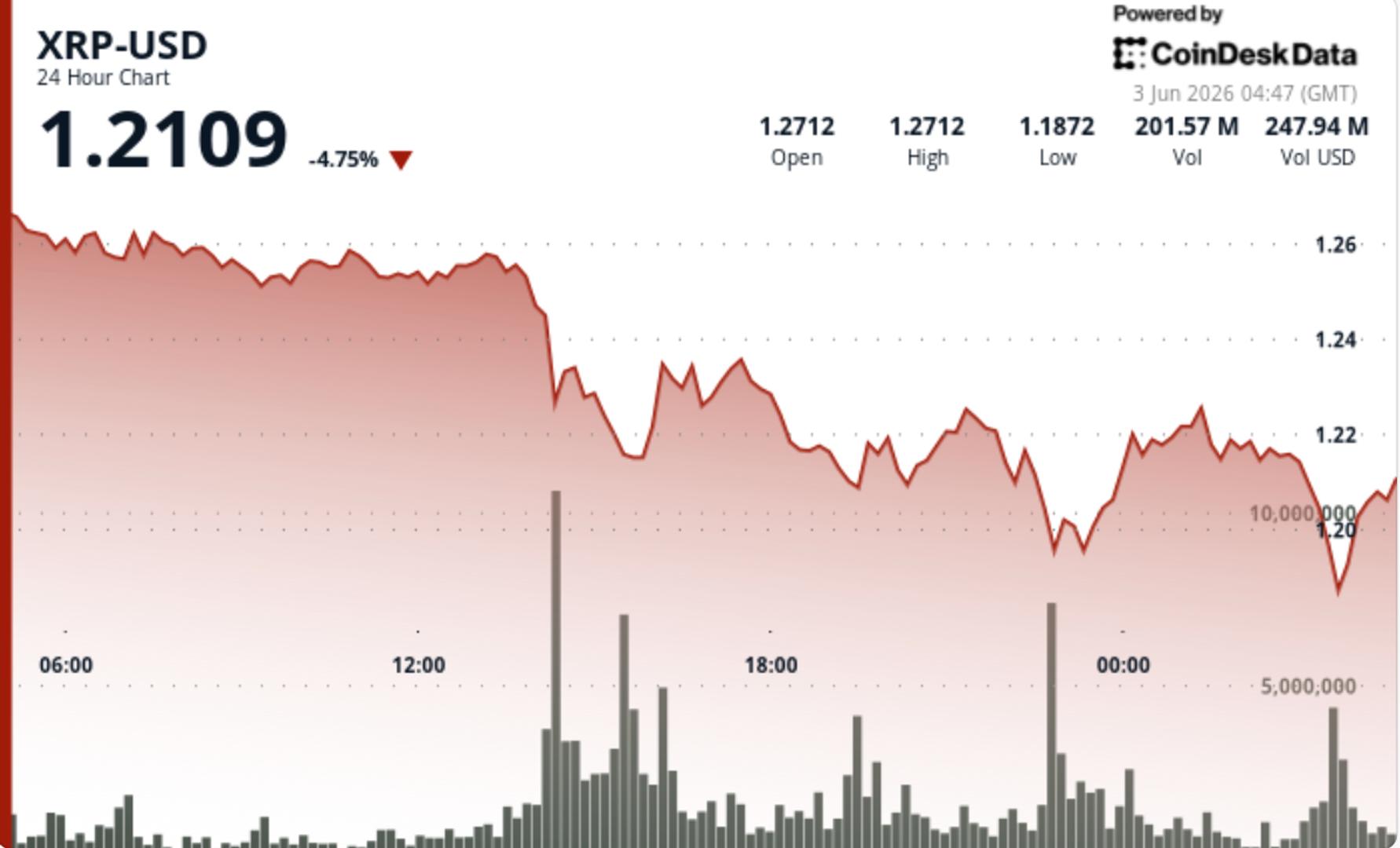
XRP presents a paradoxical market situation where technical indicators and fundamental developments paint an increasingly bullish picture, yet the token's price trajectory tells a starkly different story. As of June 2026, traders and analysts have noted an accumulation of positive signals—including recovering on-chain metrics, growing adoption in emerging markets, and improving technical chart patterns—that historically precede significant price rallies. Yet XRP has remained trapped within consolidation ranges, repeatedly failing to establish sustained upward momentum despite these accumulating bullish factors. This disconnect between signal and price action represents one of the most compelling trading puzzles in the current cryptocurrency market, with implications that extend far beyond XRP itself to broader questions about market efficiency, sentiment cycles, and the lasting impact of regulatory uncertainty on asset valuation.
The phenomenon underscores a critical reality in modern crypto markets: timing matters as much as direction. Even assets with genuinely improving fundamentals can languish during extended bearish sentiment phases or when macroeconomic headwinds dominate microeconomic narratives. Understanding this divergence requires examining not just what the technical indicators suggest, but why price action might remain disconnected from these signals—a multifaceted analysis that touches on market psychology, regulatory risk assessment, liquidity dynamics, and the competitive landscape in which XRP operates.
For investors considering XRP exposure, this environment presents both opportunity and significant risk. The accumulation of bullish signals suggests a foundation for potential future rallies, yet the persistent price weakness warns that additional catalysts may be necessary to trigger meaningful upside movement. The coming weeks and months will likely prove decisive in determining whether these signals represent genuine harbingers of a reversal or merely false positives in an extended consolidation phase that could persist for quarters.
Background
XRP's journey in the crypto market has been marked by extreme volatility and unprecedented regulatory scrutiny. As the native token of the Ripple blockchain ecosystem—designed to facilitate fast, low-cost international payments—XRP achieved mainstream prominence during the 2017-2018 bull market when it briefly ranked among the top three cryptocurrencies by market capitalization. However, the subsequent years brought mounting regulatory pressure, most notably the December 2020 filing of an enforcement action by the U.S. Securities and Exchange Commission (SEC) that alleged Ripple's sales of XRP constituted unregistered securities offerings.
This regulatory battle fundamentally reshaped XRP's market dynamics and investor perception. The lawsuit, which persisted through 2023 before a favorable judgment for Ripple in several key aspects, created a period of pronounced uncertainty that suppressed XRP's price recovery relative to the broader cryptocurrency market during the 2021 bull run and subsequent cycle. Even as the litigation progressed and Ripple achieved partial victories, including a ruling that XRP transactions themselves are not inherently securities offerings, the broader regulatory cloud continued to weigh on sentiment. Institutional investors, bound by compliance constraints, remained cautious about significant XRP allocations. Many cryptocurrency exchanges, facing regulatory pressure, delisted XRP or suspended services for users in certain jurisdictions.
By 2026, the immediate regulatory threat has substantially diminished. Ripple and the SEC reached a settlement framework that, while not constituting a complete regulatory victory for either side, provided sufficient clarity for market participants to resume normal operations. Exchanges have progressively relisted XRP trading pairs, and institutional interest has gradually returned. Within this improving regulatory environment, technical analysts and on-chain observers have begun identifying what they characterize as legitimately bullish structural signals in XRP's price and network data—signals that, under normal market conditions, would historically precede meaningful rallies. Yet these signals have not, to date, catalyzed the expected price responses, raising important questions about whether market sentiment has fundamentally shifted or whether investors remain understandably cautious about regulatory surprises.
Key Developments
The accumulation of bullish signals visible in XRP markets manifests across several distinct but complementary analytical frameworks. Technical chart patterns have become increasingly constructive, with XRP establishing higher lows during recent consolidation phases—a pattern that suggests underlying buyer strength at lower prices. Various moving average crossovers that frequently precede directional moves have aligned bullishly, and momentum indicators including the Relative Strength Index (RSI) have begun registering oversold conditions followed by reversals, another classic precursor to rallies.
On-chain metrics have simultaneously improved in ways that data-focused analysts find compelling. XRP transaction volume has recovered to levels not seen since 2022, suggesting renewed network utilization and genuine demand for the token's core payment functionality. Large transaction volumes (often analyzed as indicators of institutional or significant participant activity) have increased substantially, and the velocity of XRP across the network—measuring how actively the token circulates—has risen to multi-year highs. These metrics collectively suggest that network adoption may be genuinely expanding beyond speculative trading to encompass legitimate use cases in international remittance corridors and emerging market payment systems where Ripple has invested significant development resources.
Fundamental developments have further contributed to the bullish backdrop. Several major financial institutions have publicly explored or announced integrations with Ripple's infrastructure, particularly in Asia and the Middle East where cross-border payment efficiency holds tremendous value. Central bank digital currency (CBDC) projects in multiple nations have begun interfacing with or drawing architectural inspiration from Ripple's technology. Additionally, the Ripple ecosystem's expansion has included significant developments in tokenized asset markets and decentralized finance (DeFi) applications built on Ripple-connected sidechains, broadening the token's utility profile beyond its original international payments thesis.
Regulatory clarity has improved markedly, with the SEC settlement establishing parameters within which Ripple operates and reducing the probability of severe future regulatory shocks. This certainty has allowed institutional investors to model XRP within their portfolios with greater confidence. Yet despite these developments—each of which, in isolation, would historically suggest bullish conditions—XRP's price has remained frustratingly range-bound, repeatedly testing resistance levels without decisively breaking higher and failing to sustain recovery attempts when they occur.
Market Impact
The persistence of bullish signals amid price weakness creates significant market inefficiencies and competitive dynamics that reshape how traders and investors approach XRP. In traditional financial markets, such divergences typically resolve quickly as arbitrageurs and price-discovery mechanisms eliminate misalignments between underlying conditions and asset valuations. However, cryptocurrency markets—characterized by fragmented global liquidity, varying regulatory treatments across jurisdictions, and the simultaneous operation of spot and derivatives markets across multiple exchanges—function less efficiently than traditional capital markets. This fragmentation allows genuine divergences between signal and price to persist far longer than traditional finance would permit.
For XRP specifically, this divergence has created a distinct market microstructure. Traders attempting to exploit the bullish technical signals have positioned long through spot purchases and derivatives positions, yet face immediate headwinds from holders attempting to exit positions established during the 2021 bull market or institutional investors expressing caution despite improved fundamentals. This perpetual tension between buyers recognizing improving conditions and sellers driven by loss-aversion, regulatory concerns, or competing investment opportunities has locked XRP into a grinding sideways consolidation. The pattern resembles what technical analysts term a "coil" or "spring" formation—extended periods of minimal directional movement that, when finally broken, often produce explosive moves in one direction or the other.
The market impact extends beyond XRP to influence investor confidence in technical analysis itself. When widely-recognized bullish signals fail to produce expected results, they undermine confidence in technical analysis frameworks among newer or less experienced traders. This phenomenon may actually be self-reinforcing: if bullish technical signals lose predictive power (temporarily) because their failure to predict price action undermines confidence in technical strategies, then fewer traders act on those signals, creating a self-fulfilling prophecy wherein technical patterns cease to work precisely because fewer market participants believe in them.
Broader cryptocurrency markets have also been affected by XRP's dynamics, as the token represents a significant component of altcoin portfolios and is frequently utilized in trading pairs against other assets. The persistent weakness in XRP has thus dampened retail investor enthusiasm for the altcoin season that many market observers expected in early 2026. This secondary effect has constrained capital flows into smaller and mid-cap altcoins, as investors rotate into larger cryptocurrencies with less troubled regulatory histories or stronger price momentum.
Risks and Considerations
While bullish signals have accumulated, substantial risks and structural headwinds threaten to persist indefinitely without triggering meaningful price recovery. Regulatory risk, though diminished, remains non-zero. Future legislative actions, potential SEC appeals or refinements to settlement terms, or regulatory actions from other jurisdictions could reignite the uncertainty that suppressed XRP during 2021-2023. This latent regulatory concern likely maintains a subtle discount on XRP valuations relative to cryptocurrencies with less troubled regulatory pasts, and investors remain appropriately cautious about concentration risk.
Competitive pressures represent another significant headwind. Bitcoin and Ethereum remain the cryptocurrencies with the strongest network effects, brand recognition, and institutional adoption pathways. XRP's international payments thesis, while valuable, faces competition from both established money transfer services (like SWIFT with its modernization initiatives) and emerging blockchain-based alternatives. Stablecoins optimized for cross-border transfers have proliferated, and many financial institutions have proven willing to adopt stablecoin-based solutions rather than volatile cryptocurrency assets for payment infrastructure. This competitive displacement risk—distinct from regulatory risk but equally significant—could permanently suppress XRP adoption relative to technological potential.
The accumulation of technical signals itself carries risk, as does the inverse risk that false technical signals could induce losses for traders acting on them. Extended consolidation periods frequently conclude with breakdown moves (directional reversals downward) rather than breakout moves, particularly in asset classes with bearish sentiment. The risk that XRP's current pattern represents a bearish consolidation formation rather than a bullish one cannot be dismissed, especially given the psychological weight of the 2021 bull market peak and the subsequent years of underperformance relative to Bitcoin and Ethereum.
Macroeconomic considerations also merit attention. If broader cryptocurrency valuations face pressure from monetary tightening, rising interest rates, or recession fears, then XRP's bullish technical signals may prove irrelevant to broader price action. Assets operating within severely bearish macro regimes can maintain constructive technical patterns for extended periods without price appreciation, as the macro headwinds overwhelm micro-level technical strength. The current macro environment, while not severely restrictive for risk assets, contains sufficient uncertainty that macro headwinds could yet reassert themselves and suppress XRP prices regardless of improving fundamentals.
What to Watch
Several key developments in coming weeks and months will likely prove determinative in whether XRP's accumulating bullish signals translate into meaningful price appreciation. The behavior of XRP at critical technical levels will provide important signals; if the token definitively breaks above previous resistance levels that it has tested multiple times and holds gains for several weeks, this would suggest the accumulation of bullish signals is finally translating into genuine price discovery and breakout potential. Conversely, repeated failures at resistance levels would suggest the bearish sentiment remains dominant regardless of bullish technical patterns.
On-chain metrics warrant continued monitoring, particularly large transaction volumes, whale activity (transactions of particularly large magnitude), and changes in the distribution of XRP holdings across wallets. If the improved on-chain metrics that emerged over recent months prove temporary or reversionary, the fundamental basis for bullish positions weakens substantially. Additionally, the behavior of institutional investors—monitored through derivatives data, exchange inflows/outflows, and public announcements—will indicate whether the improved regulatory environment is genuinely translating into increased institutional allocation to XRP.
Exogenous developments including regulatory announcements, partnerships with major payment processors or financial institutions, and competitive developments in the stablecoin and blockchain payments landscape will all influence XRP's prospects. Additionally, the performance of Bitcoin and Ethereum will establish the macro backdrop; if broader cryptocurrency markets enter bear phases, XRP's bullish technical patterns may prove insufficient to overcome macro headwinds. Central bank digital currency progress in major economies could represent a significant tailwind for Ripple's technology positioning and XRP valuations, or conversely, CBDCs could disintermediate XRP if they prove capable of replicating XRP's functionality without requiring a volatile cryptocurrency asset.
Conclusion
The persistent divergence between XRP's accumulating bullish technical signals and the token's continued price weakness represents a classic market inefficiency with implications for investors, traders, and the broader cryptocurrency ecosystem. Technical patterns, on-chain metrics, and fundamental developments have genuinely improved, creating legitimate bullish conditions that would historically precede significant rallies. Yet price action has remained stubbornly weak, suggesting that either these signals are false positives in what remains a bearish regime, or that additional catalysts are necessary to overcome latent skepticism from the market.
For investors considering XRP allocations, the current environment presents attractive risk-reward characteristics for appropriately-sized positions; the accumulation of bullish signals suggests meaningful upside potential if price discovery eventually occurs, yet the persistent weakness provides opportunities to accumulate at reasonable valuations. However, the extended duration of this divergence warrants caution; extended periods during which signals diverge from price action can be emotionally draining and financially damaging if they represent false signals rather than genuine predictors of mean reversion.
The resolution of this divergence will likely depend on additional catalysts—regulatory surprises (positive or negative), institutional adoption announcements, or macro developments—combined with the inevitable human psychology cycles that drive market sentiment. Investors maintaining patient, disciplined approaches and appropriately-sized positions aligned with their risk tolerance will be best positioned to benefit from XRP's eventual repricing, should it materialize, while minimizing downside exposure should bearish sentiment prove more durable than current bullish signals suggest. The coming months will prove decisive in determining whether XRP's bullish signals represent genuine harbingers of recovery or merely technical noise within an extended consolidation phase.
Original Source
CoinDesk