XRP Price Falls 4.5% as Critical Support Level Surrenders to Selling Pressure
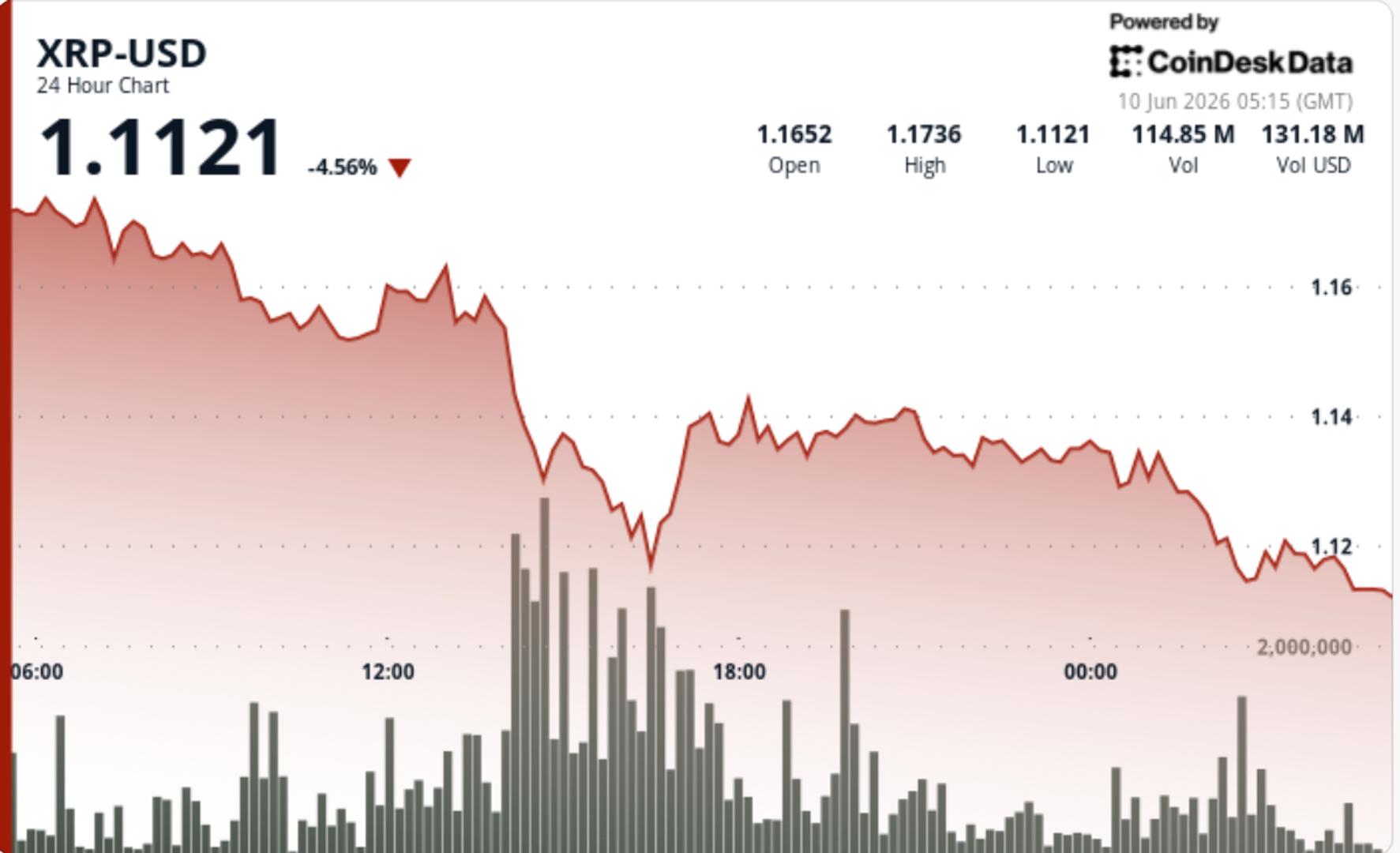
XRP experienced a significant 4.5% decline as heavy selling pressure overwhelmed buyers and broke through a critical technical support level. The pullback marks another test of investor confidence in the digital asset amid broader cryptocurrency market volatility.
Overview
Ripple's XRP token declined sharply by 4.5% on June 10, 2026, as intense selling pressure shattered another key technical support level. The move signals growing weakness in the asset's near-term momentum and raises questions about whether further downside could unfold in the coming days. The collapse of this support barrier represents the latest in a series of technical breaks that have pressured XRP holders throughout the current trading cycle.
This decline occurred within the broader context of cryptocurrency market fluctuations, where institutional and retail investors are reassessing their exposure to digital assets. The breakdown of multiple support levels within a compressed timeframe suggests that selling momentum has intensified rather than subsiding. Technical analysts tracking XRP have noted that the breach of this particular support zone is significant because it had held through several previous tests, making its failure particularly notable for traders positioning for the next major move.
The 4.5% drop represents a meaningful pullback for an asset that has experienced considerable volatility in recent months. For long-term holders, such moves can be anxiety-inducing, though they also present tactical opportunities for those with higher risk tolerance. For short-term traders, the breakdown confirms the prevailing downtrend and validates bearish positioning established in prior sessions.
Background
XRP has been a central figure in the cryptocurrency market for over a decade, created by Ripple Labs as a digital asset designed to facilitate cross-border payments and value transfer. The token has experienced boom-and-bust cycles characteristic of the broader crypto ecosystem, with periods of extraordinary gains followed by extended consolidation and decline phases. Understanding the current technical breakdown requires context on XRP's longer-term trajectory and the various support and resistance levels that have emerged through multiple market cycles.
The asset had been attempting to consolidate in a specific price range prior to this latest breakdown, with traders watching several technical levels closely. The most recent support level that gave way on June 10 was particularly important because it had demonstrated resilience across multiple tests over the previous trading sessions. When a support level breaks after demonstrating strength, it often triggers a cascade of defensive selling as traders implement stop-loss orders and reassess their thesis for holding the asset.
Ripple's regulatory environment has also played a significant role in XRP's price action throughout 2026. The ongoing legal proceedings and regulatory clarifications have created an environment of uncertainty that affects sentiment and attracts different categories of investors depending on the perceived regulatory trajectory. Additionally, competition from other blockchain platforms offering payment solutions and cross-border settlement capabilities has intensified, creating fundamental headwinds that technical traders must contend with.
Historically, XRP has shown strong correlation with Bitcoin's price movements, though it also has unique drivers related to Ripple's business partnerships and regulatory announcements. The current breakdown should be analyzed both within XRP's own technical context and in relation to broader cryptocurrency market movements that may have contributed to the selling pressure.
Key Developments
The immediate catalyst for the 4.5% decline appears to be a confluence of technical factors and broader market conditions. Heavy selling volume accompanied the price breakdown, indicating that this was not a shallow pullback driven by algorithm-triggered liquidations but rather a genuine shift in market participation toward the bearish side. Volume patterns are crucial for determining whether support breaks are decisive or simply short-term fakeouts that precede reversals.
Market participants noted that the support level which broke on June 10 had been established through multiple tests and consolidations over the previous month. When technical levels that have held through repeated tests finally break, the psychological impact on traders can be substantial. Stop-loss orders clustered below these levels may have been triggered, creating additional selling pressure as automated trading algorithms and defensive positioning converged to accelerate the decline.
Beyond the immediate technical picture, the broader cryptocurrency market environment contributed to XRP's weakness. Macro factors including interest rate expectations, stock market performance, and macroeconomic uncertainty have influenced risk appetite across all asset classes. When broader market sentiment turns cautious, cryptocurrencies typically face disproportionate selling pressure as investors move toward lower-risk positioning.
Regulatory headlines also potentially influenced XRP's price action on this particular trading day. Any negative developments in the regulatory landscape—whether affecting Ripple specifically or the broader cryptocurrency ecosystem—can trigger rapid repricing as participants reassess their risk exposure. The complexity of Ripple's regulatory situation means that news flow around legal proceedings or compliance developments can move markets meaningfully.
Institutional traders monitoring XRP for potential entry points following the breakdown may have accelerated the decline by establishing short positions betting on further weakness. The interplay between long holders taking losses and new short sellers piling in created self-reinforcing downward momentum that pushed the asset through the broken support level into fresh lows.
Market Impact
The 4.5% decline, while not the largest single-day move in XRP's history, carries psychological weight in the context of the series of support breaks that have characterized the current trend. For holders, the persistent failure to hold support levels reinforces the perception that the trend is firmly downward. For traders positioned with stop-losses, the breakdown created a difficult situation where protective orders were likely triggered at poor prices as volume surged through the technical zone.
The psychological impact of repeated support breaks cannot be overstated in technical analysis. When a level holds through multiple tests, market participants place increasing conviction in that support. When it finally breaks, the confidence collapse is proportional to the conviction that preceded the break. This dynamic likely exacerbated XRP's decline beyond what the initial selling might have caused in isolation.
Liquidity analysis suggests that trading was concentrated and potentially spiky during the breakdown period. Low liquidity environments are prone to exaggerated price moves as modest selling can move prices significantly. If the collapse of support occurred during a period of reduced market participation or concentrated liquidity, the 4.5% decline may actually represent a more severe capitulation than the percentage alone suggests.
The impact on different trader cohorts was substantially different. Long-term holders faced decisions about whether to hold or exit positions at a loss. Short-term traders already positioned bearishly realized profits on winning trades. Traders with buy orders placed below the broken support level but above the new lows had to decide whether to increase their bids or abandon their accumulation plans. Meanwhile, those with leverage or margined positions faced margin calls if they were holding longs through the breakdown.
The broader XRP ecosystem also felt the impact, as negative price action affects sentiment across the Ripple community, including partners, token holders, and developers building on the platform. Extended periods of price decline can slow adoption initiatives and reduce funding for development projects as the opportunity cost of deploying capital elsewhere becomes more attractive.
Risks and Considerations
The immediate risk following a support breakdown is typically further downside as sellers gain confidence and momentum traders pile into the emerging trend. The next significant level of support becomes crucial—if that also breaks, a cascade of additional selling could follow. Traders and investors need to identify the next support zones and understand the implications if those also fail to hold.
Volatility risk is elevated in the period following a major technical breakdown. The recent support break likely increased uncertainty among market participants about where the next equilibrium price lies. This uncertainty often translates to wider bid-ask spreads, more erratic price movements, and conditions that favor short-term traders over those with longer time horizons.
There's also a risk that the breakdown was more significant technically than it appears fundamentally. XRP's underlying business case and Ripple's partnerships remain intact regardless of short-term price action, but extended periods of price weakness can affect narratives and sentiment in ways that create additional headwinds beyond pure technical considerations. The psychological dimension of trading cannot be separated from the mechanics of supply and demand.
Regulatory risk remains a crucial consideration for XRP specifically. Any adverse regulatory developments could accelerate selling beyond what technical factors alone would drive. Conversely, positive regulatory clarity could trigger a sharp reversal. Investors need to carefully monitor the regulatory environment and understand how potential developments could affect their positions.
The risk of cascading liquidations in leveraged trading environments should not be underestimated. If the initial breakdown triggered margin calls that forced liquidation of long positions, those forced sales could have amplified the selling pressure. Future rallies attempting to recover this lost ground may also be vulnerable to traders shorting into weakness or covering shorts too aggressively.
What to Watch
The immediate focus should be on whether the next support level holds. Technical analysts will be monitoring specific price zones that could serve as meaningful support. If those levels also break, it could signal a more severe downtrend than the current 4.5% decline suggests. Conversely, if support holds at the next major zone, it could indicate that the selling was exhaustion-driven and a bounce is likely.
Volume patterns during any attempted recovery will be crucial. If volume dries up during a rebound, it suggests the recovery is fragile and subject to reversal. Strong volume on any recovery attempt would indicate renewed buying interest. Volume analysis provides insights into the conviction behind any price moves and helps distinguish between sustainable trends and false starts.
Traders should monitor the technical structure and assess where key resistance levels lie on any recovery attempt. These potential resistance zones become important because they define the difficulty level for any countertrend move. If price rallies meet resistance early, it confirms the downtrend. If recovery attempts penetrate expected resistance, it suggests the selling may have been exhaustion-driven.
Broader cryptocurrency market movements will provide essential context for XRP's performance. Bitcoin's movement in particular deserves close attention given XRP's historical correlation with the largest digital asset. If Bitcoin stabilizes and rallies, it could provide support for XRP's recovery. If Bitcoin continues to face pressure, XRP may struggle even if XRP-specific factors improve.
Regulatory news flow and any developments related to Ripple's legal proceedings should be monitored carefully. Positive clarity on regulatory questions could provide fundamental support for a recovery. Conversely, adverse legal or regulatory developments could accelerate further declines.
On-chain metrics and network activity data should be examined to determine whether fundamental usage of the XRP network is holding up or declining alongside the price. Network strength, transaction volume, and active address metrics provide insights into underlying demand that can be divorced from price speculation.
Conclusion
XRP's 4.5% decline on June 10, 2026, represents more than just another day of volatility in a volatile asset class. The breakdown of a key technical support level that had demonstrated resilience across multiple tests signals a significant shift in the near-term momentum. The confluence of technical breakdown, heavy selling volume, and broader market weakness created conditions for a more severe price decline than the percentage suggests.
For technical traders, the signals are clear that downtrend momentum is intact and further testing of lower support levels is a meaningful risk. For fundamental investors in the Ripple thesis and XRP adoption, the price weakness creates tactical challenges even if the long-term narrative remains intact. The decision to hold, increase positions at lower prices, or exit the asset entirely depends on individual risk tolerance and conviction regarding XRP's future prospects.
The cryptocurrency market has demonstrated that support levels eventually break given sufficient selling pressure, and the recent breakdown of XRP's support zone is part of this natural market process. What happens next will depend on the depth of conviction among remaining holders and potential new buyers willing to purchase at lower prices. The immediate risk is continued weakness, while the longer-term opportunity exists at more attractive valuations if the fundamental thesis for XRP remains compelling.
Investors and traders should use this period of weakness to carefully reassess their positions and risk management. Protective strategies should be implemented before the next support level is tested, and entries for accumulation should only be considered if subsequent support holds firm and volume patterns suggest stabilization. The market will eventually find an equilibrium, but the journey to that point may involve additional testing of investor conviction and risk management discipline.
Original Source
CoinDesk