Bitcoin Surges Above $64K on Iran Peace Deal Optimism
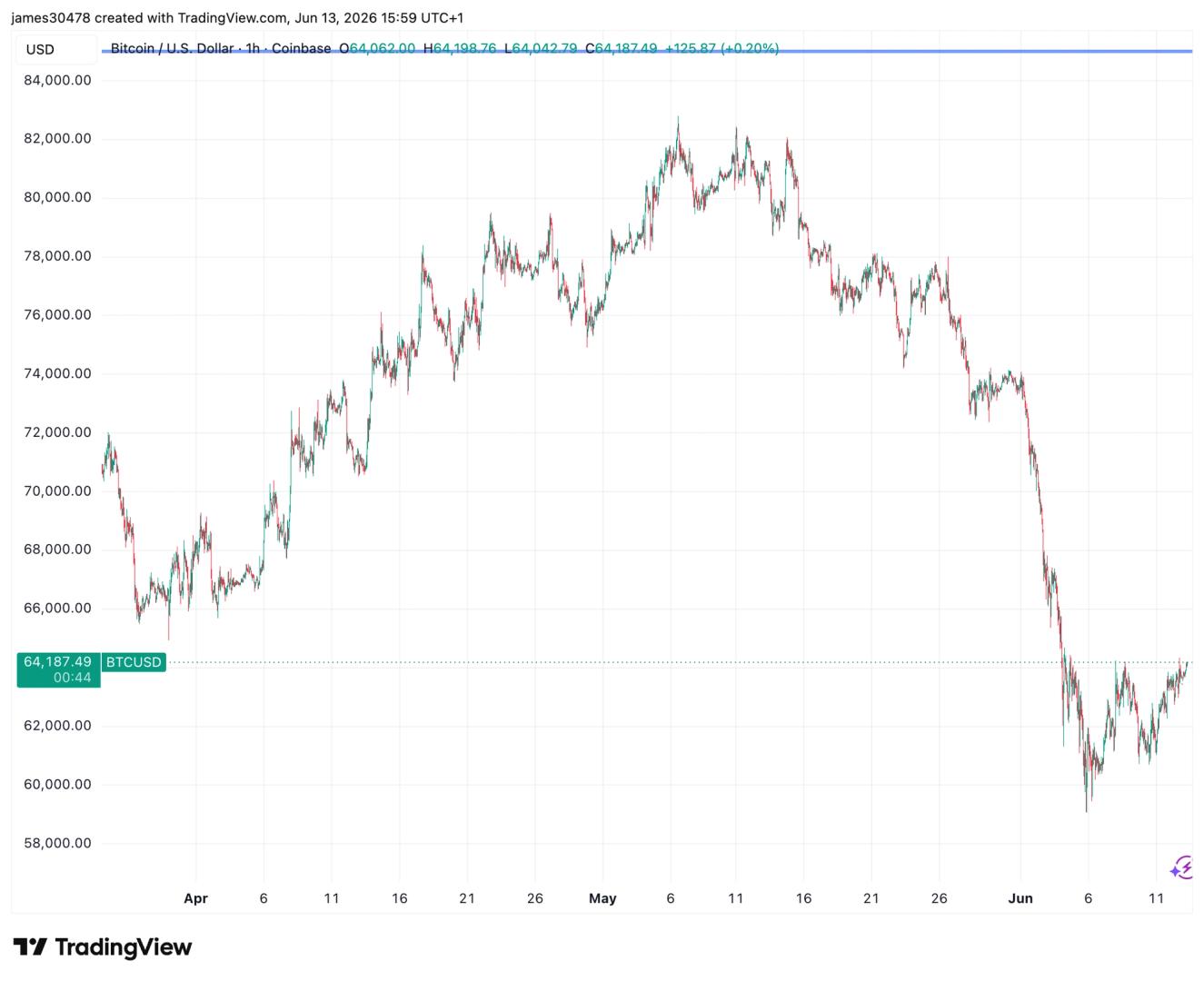
Bitcoin climbed above $64,000 following comments from Pakistan's prime minister suggesting an Iran peace deal is imminent. The move reflects growing investor appetite for risk assets amid easing geopolitical tensions, signaling potential shifts in global energy markets and economic stability.
Overview
Bitcoin has surged above the $64,000 mark in recent trading, marking a notable milestone driven by unexpected geopolitical developments in the Middle East. The catalyst for this rally stems from remarks made by Pakistan's Prime Minister, who publicly stated that a peace agreement between Iran and neighboring countries appears imminent. This development has sparked renewed optimism in markets, with investors interpreting the potential resolution of regional tensions as a positive signal for global economic stability and risk appetite. The cryptocurrency's strong performance underscores the complex relationship between macro-geopolitical events and digital asset valuations, demonstrating how traditional geopolitical risk factors continue to influence crypto market dynamics despite the asset class's decentralized nature.
The timing of this rally is particularly significant given Bitcoin's volatility trajectory over the past several months. Major institutional investors and traders have been closely monitoring the relationship between geopolitical stability and crypto valuations, seeking to understand how international tensions translate into blockchain asset prices. Bitcoin's positive response to the Iran peace deal news suggests that market participants view reduced global conflict risk as supportive for broader risk appetite, which typically benefits higher-beta assets like cryptocurrencies. This connection between international relations and digital assets has become increasingly relevant as Bitcoin matures as an asset class and attracts institutional capital.
The $64,000 level represents a psychologically important threshold for Bitcoin, marking a recovery toward previous resistance levels. This breakthrough reflects both immediate positive sentiment from the peace deal news and longer-term structural bullish factors that have been supporting Bitcoin's price trajectory. Analysts have noted that the combination of technical breakout patterns, favorable macroeconomic conditions, and reduced geopolitical uncertainty creates a confluence of factors that could support further upside momentum in the near term.
Background
Understanding the connection between geopolitical events and Bitcoin's price requires examining the broader context of how traditional and digital markets respond to global tensions. Historically, periods of elevated geopolitical uncertainty have driven investors to seek safe-haven assets, with gold typically benefiting most from such risk-off sentiment. However, in recent years, Bitcoin has increasingly been viewed as a complementary hedge to traditional safe-haven assets, with some investors treating the cryptocurrency as a digital alternative store of value during periods of international instability. The relationship between geopolitical risk and Bitcoin pricing has evolved considerably since the cryptocurrency's inception, becoming more nuanced as institutional investors incorporate crypto into their portfolio hedging strategies.
The Middle East and broader South Asian region have historically been focal points for geopolitical instability that ripples through global markets. Iran, in particular, has been at the center of numerous international disputes affecting energy markets, trade flows, and global security dynamics. Previous tensions involving Iran have triggered sharp movements in oil prices, with crude oil surges typically creating inflationary pressures that impact broader economic growth expectations. Bitcoin, while not directly correlated with oil prices, is influenced by the broader macro environment and investor risk sentiment that geopolitical tensions create. Therefore, any development suggesting a reduction in Middle Eastern tensions naturally attracts positive attention from cryptocurrency investors and traders.
Pakistan's role as an intermediary in regional diplomacy has become increasingly important in recent years. The country's strategic position between South Asia, Central Asia, and the Middle East makes Pakistani diplomatic initiatives particularly consequential for regional stability. When Pakistan's leadership comments on peace prospects, particularly regarding Iran, the statements carry significant weight in international relations circles. The prime minister's remarks about an imminent Iran peace deal represent a potential watershed moment for the region, suggesting that diplomatic channels are producing tangible results and that a resolution to longstanding conflicts may be achievable.
Bitcoin's sensitivity to geopolitical developments reflects several underlying factors. First, periods of uncertainty tend to increase demand for alternative currencies and stores of value, as investors lose confidence in traditional fiat currencies and institutions. Second, geopolitical stability concerns often drive shifts in global monetary policy, which directly affects interest rates and inflation expectations—both crucial factors for Bitcoin's valuation. Third, military conflicts and international tensions typically require government spending increases that can lead to currency debasement and inflation, scenarios where Bitcoin's fixed supply appeals to investors. Understanding these mechanisms helps explain why Bitcoin would respond positively to news suggesting geopolitical tensions may be easing.
Key Developments
Pakistan's Prime Minister made the pivotal statement regarding Iran peace negotiations during recent diplomatic engagements, signaling that breakthrough progress has been achieved in ongoing discussions. The remarks, while not providing extensive details, suggested that multiple parties involved in the regional dispute have moved closer to agreement on fundamental issues. Such statements from high-level government officials typically represent carefully considered diplomatic messaging, suggesting that the confidence reflected in the prime minister's words is based on substantive progress in behind-the-scenes negotiations. The specificity of the claim about an imminent deal—rather than vague references to ongoing talks—indicates that diplomatic momentum has genuinely accelerated.
The broader context for these peace negotiations involves numerous stakeholders with divergent interests, making any breakthrough particularly notable. Regional powers including Saudi Arabia, United Arab Emirates, and other Gulf nations have significant interests in Iran's behavior and regional role. International powers including the United States and European nations also maintain considerable influence over the trajectory of Iran-related negotiations. The fact that diplomatic progress is being made despite these multiple competing interests suggests that the negotiating parties may have identified mutually acceptable frameworks for resolution. Bitcoin's positive response reflects investor optimism that such diplomatic breakthroughs signal a genuine shift toward regional stability.
The timing of the Prime Minister's announcement appears to have caught many market participants by surprise, suggesting that the diplomatic progress was not widely anticipated. This element of positive surprise often triggers more pronounced market reactions than gradual, expected developments. Cryptocurrency markets, being globally interconnected and operating 24/7, immediately processed this new information and reflected it in Bitcoin's price movements. The speed with which Bitcoin rose above $64,000 following the announcement demonstrates how quickly digital asset markets react to fundamental developments, a characteristic that distinguishes crypto trading from traditional equity markets with limited trading hours.
Specific details about the nature of the proposed peace agreement remain limited, with the Prime Minister's statement emphasizing the imminence of formal negotiations rather than revealing the specific terms under discussion. This information vacuum has allowed market participants to fill in the gaps with optimistic assumptions, supporting stronger price movements than might occur if concrete, potentially compromise-laden terms were already public. The market's positive interpretation of vague but optimistic diplomatic signals reflects the risk-on sentiment that currently prevails in financial markets more broadly.
Market Impact
Bitcoin's surge to and through the $64,000 level triggered cascading effects throughout cryptocurrency markets, with altcoins generally following Bitcoin's lead. Ethereum, the second-largest cryptocurrency by market capitalization, also appreciated notably alongside Bitcoin's gains, suggesting that the positive sentiment extended beyond Bitcoin to the broader digital asset ecosystem. The co-movement of major cryptocurrencies during periods of significant news events is typical, as market participants adjust their overall exposure to risk assets. The broader crypto market's gains likely encouraged retail and institutional investors who had been sitting on the sidelines, potentially extending the rally's duration and magnitude.
Traditional financial markets also responded positively to the Iran peace deal news, with equity indices and risk assets generally appreciating. The simultaneous rallies in Bitcoin and traditional risk assets suggest that the geopolitical news triggered a genuine shift toward risk-on sentiment rather than a flight to safety. This divergence from the typical pattern where Bitcoin rallies during risk-off periods highlights how the cryptocurrency's nature and investor base have evolved. Modern Bitcoin is increasingly owned by investors for participation in broader market upside rather than purely as a volatility hedge, explaining why the asset rallies when optimism about geopolitical risks increases.
Energy markets, particularly crude oil, showed mixed reactions to the peace deal news, with some traders taking profits on previous geopolitical risk premiums that had been embedded in oil prices. A decline in oil prices following news of potential Iran peace would generally be supportive for economic growth expectations, a factor that typically benefits risk assets including Bitcoin. The relationship between oil prices, inflation expectations, and Bitcoin valuations creates complex but important linkages that market participants monitor closely. Lower energy costs support economic activity and reduce inflation pressures, both factors that have historically supported Bitcoin valuations by reducing the appeal of alternative hedges against currency debasement.
Volatility metrics in cryptocurrency markets, particularly the Crypto Fear and Greed Index, shifted toward greed territory following the announcement and Bitcoin's breakthrough above $64,000. This shift reflects not just the positive price movement but also growing investor optimism about the sustainability of higher prices. When volatility indices shift from fear to greed, it typically indicates that investors are increasing their risk exposure and extending the duration of their investment positions, creating conditions where momentum can build and support further price appreciation. The psychological impact of Bitcoin breaking through key technical resistance levels cannot be underestimated, as such breakouts often trigger algorithmic trading responses and encourage investors who had been waiting on the sidelines.
Risks and Considerations
While the immediate market reaction to the Iran peace deal news has been decidedly positive, several risks and considerations deserve careful examination. First, the sustainability of the peace agreement remains uncertain until formal terms are negotiated and agreed upon by all parties involved. History demonstrates that peace negotiations often encounter unexpected obstacles or face domestic opposition from factions opposed to compromise. If the diplomatic progress stalls or talks collapse, market sentiment could quickly reverse, resulting in sharp Bitcoin price declines. Investors should therefore remain cautious about assuming that preliminary optimistic statements guarantee durable peace outcomes.
Second, the geopolitical situation in the Middle East remains complex and multifaceted, with numerous other potential flashpoints beyond Iran that could trigger instability. Even if Iran-specific tensions ease, broader regional conflicts or international incidents could undermine the positive sentiment currently supporting risk assets. Bitcoin's price could prove vulnerable to renewed geopolitical anxiety if unexpected negative developments occur in the region or globally. Prudent investors should recognize that a single positive geopolitical development, while encouraging, does not eliminate the underlying structural risks that characterize Middle Eastern politics.
Third, Bitcoin's rally appears to be driven partly by sentiment and technical factors rather than fundamental changes to the cryptocurrency's underlying technology or adoption. If the positive sentiment reverses due to disappointing news about the peace negotiations or other macro developments, Bitcoin could face significant downward pressure. The asset's price remains subject to behavioral finance dynamics where sentiment shifts can produce sharp reversals. Investors should distinguish between sustainable fundamental value appreciation and sentiment-driven price movements that may prove temporary.
Fourth, the U.S. Federal Reserve's ongoing monetary policy stance and inflation trajectory remain important factors for Bitcoin valuations that could overshadow geopolitical developments. If economic data suggests that inflation remains elevated, the Fed might maintain higher interest rates for longer than previously anticipated, creating a headwind for Bitcoin and other risk assets. The interaction between geopolitical developments and macroeconomic policy decisions creates a complex investment environment where multiple factors can rapidly shift valuations.
Fifth, regulatory developments and institutional adoption dynamics continue to evolve in ways that could amplify or dampen geopolitical sentiment's impact on Bitcoin prices. Increasing regulatory scrutiny in major jurisdictions could limit institutional participation and reduce capital flows into Bitcoin despite positive geopolitical news. Conversely, pro-crypto regulatory developments could amplify the positive impact of geopolitical improvements by encouraging institutional investment.
What to Watch
Investors and cryptocurrency market participants should closely monitor developments related to the Iran peace negotiations in coming weeks and months. Specific milestones to watch include announcements of formal negotiating sessions, statements from other involved parties regarding their positions, and any public communications from international mediators or observers regarding negotiation progress. These developments will provide clarity on whether the initial optimism expressed by Pakistan's Prime Minister represents genuine diplomatic momentum or proves to be premature.
The trajectory of oil prices will serve as an important barometer for market confidence in the sustainability of geopolitical improvements. If crude oil prices continue declining as the peace deal becomes more concrete, it would suggest that markets genuinely expect reduced supply disruptions and increased regional stability. Conversely, if oil prices spike on renewed geopolitical concerns, it would indicate that market participants perceive increased risks to the peace process. Bitcoin traders should monitor oil price movements as a potential leading indicator of shifts in geopolitical sentiment.
Congressional and other governmental reactions to the Iran peace deal, particularly from parties skeptical of Iran, will significantly influence the outcome's durability. If U.S. policymakers or regional allies express skepticism about the proposed terms or the wisdom of the agreement, it could undermine the diplomatic progress and trigger renewed geopolitical tensions. Bitcoin investors should pay attention to political commentary and official statements from key stakeholders, as these often precede market-moving developments.
Macroeconomic data releases, particularly regarding inflation and labor market conditions, will continue to play important roles in determining whether positive geopolitical sentiment can sustain Bitcoin's rally. If economic data suggests stronger inflation trends or labor market tightness that might prompt the Fed to maintain higher interest rates, the positive impact of the Iran peace deal news could be overwhelmed by macroeconomic concerns. Investors should monitor the U.S. economic calendar closely to assess whether the macro backdrop will support or hinder cryptocurrency valuations.
Bitcoin's technical performance and ability to sustain positions above key resistance levels will provide important signals about the strength of the current rally. If Bitcoin establishes firm support above $64,000 and moves higher to test previous highs, it would suggest that the geopolitical sentiment shift has produced durable price changes. Conversely, if Bitcoin declines below $64,000 on subsequent negative news or profit-taking, it would indicate that the rally may have been primarily sentiment-driven.
Conclusion
Bitcoin's surge above $64,000 following Pakistan's Prime Minister's statement about an imminent Iran peace deal illustrates the ongoing sensitivity of cryptocurrency markets to geopolitical developments. The rally reflects investor optimism that reduced regional tensions will support broader risk appetite and economic growth expectations. However, investors should recognize that while the immediate market reaction has been decidedly positive, numerous risks and uncertainties remain regarding the durability and implications of the potential peace agreement. The cryptocurrency market's response to geopolitical news demonstrates how Bitcoin has matured from a niche asset to one that responds to macroeconomic and geopolitical factors in ways increasingly similar to traditional risk assets.
The intersection of diplomacy, geopolitics, and cryptocurrency valuations continues to create fascinating dynamics for market participants. Bitcoin's positive response to geopolitical improvement news—contrary to its historical role as a safe-haven asset appreciated during risk-off periods—reflects the evolving nature of the crypto investor base and the role of Bitcoin in diversified portfolios. As institutional adoption continues and cryptocurrency market capitalization grows, the asset's correlation with broader economic and geopolitical factors will likely deepen, further integrating crypto into traditional financial system dynamics.
Moving forward, the critical question for Bitcoin investors is whether the positive sentiment triggered by the Iran peace deal announcement can be sustained through the actual negotiation and implementation of a durable agreement. Market history suggests that initial optimism about geopolitical breakthroughs often proves excessive, with disappointing details or unexpected obstacles to implementation causing sentiment reversals. Prudent investors should treat the current rally as encouraging but maintain healthy skepticism about the sustainability of geopolitical improvements and their long-term support for risk asset valuations. By carefully monitoring diplomatic developments, macroeconomic data, and technical price action, investors can better position themselves to navigate the intersection of geopolitics and cryptocurrency markets.
Ultimately, Bitcoin's $64,000 breakthrough represents a significant milestone that reflects genuine positive sentiment shifts, but also highlights the cryptocurrency market's increasing integration with broader financial system dynamics and geopolitical factors. The sustainability of these gains will depend on whether the underlying geopolitical developments prove durable and whether macroeconomic conditions continue to support risk asset appreciation.
Original Source
CoinDesk