Bitcoin Resilient as Fed Meeting Looms Over AI Sector Turmoil
Bitcoin has demonstrated resilience amid broader AI sector weakness, with markets now focusing on an upcoming Federal Reserve meeting that could reshape near-term crypto momentum. The outcome may determine whether digital assets can sustain gains or face renewed pressure from macroeconomic headwinds.
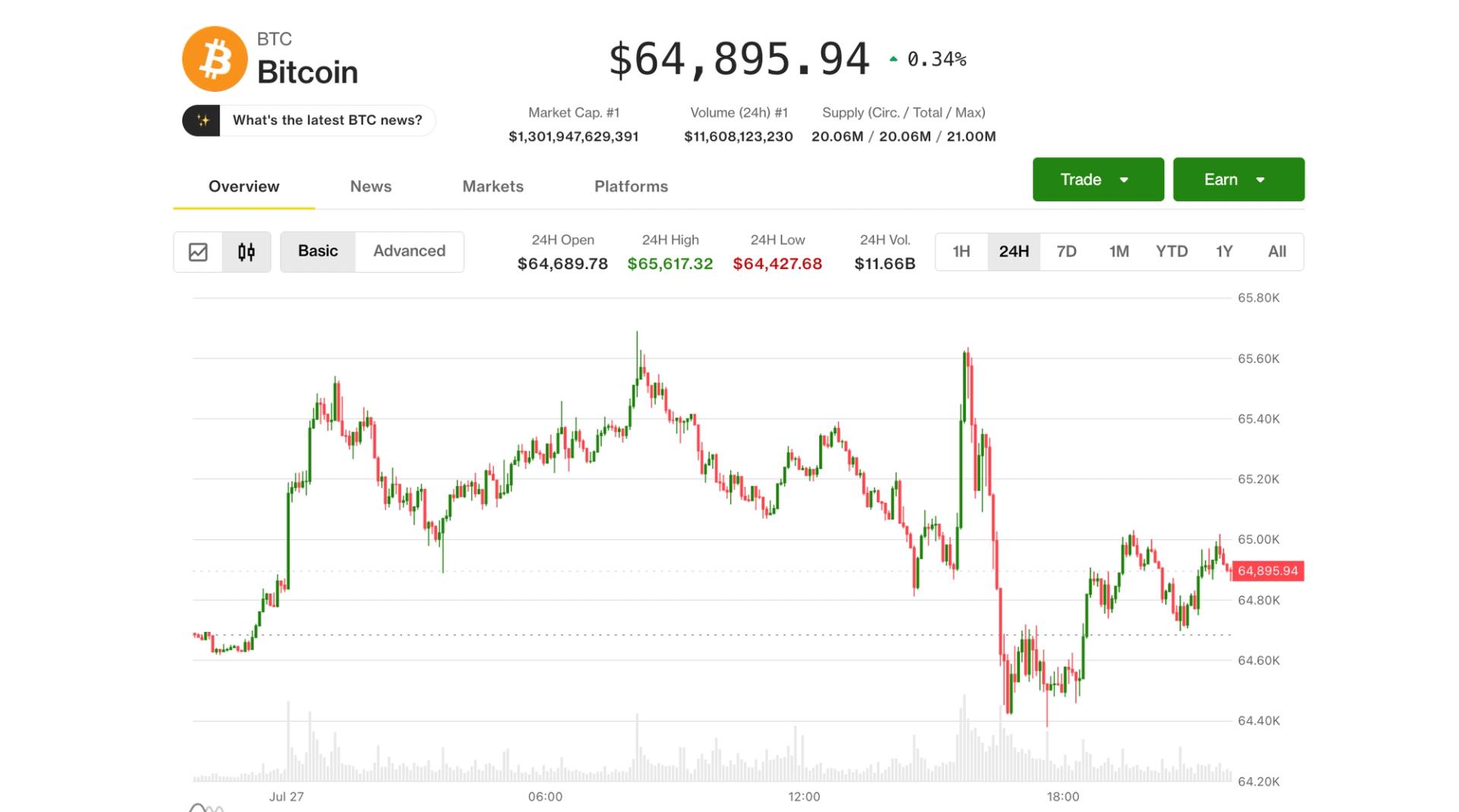
Overview
Bitcoin has managed to hold steady despite significant turbulence rippling through artificial intelligence-related assets, signaling a potential decoupling between the world's largest cryptocurrency and equity market volatility. After weeks of elevated uncertainty, market participants are now bracing for a critical Federal Reserve decision that could fundamentally alter the trajectory of crypto markets in the months ahead. The resilience shown by Bitcoin against broader selloff pressures reflects growing sophistication among institutional investors who view the leading digital asset as increasingly independent from traditional equity correlations, particularly during periods of macroeconomic stress.
The current market environment presents a complex picture where multiple forces are at play simultaneously. On one hand, technology sector weakness—particularly among high-flying artificial intelligence companies—has triggered widespread portfolio rebalancing and profit-taking. On the other hand, Bitcoin's ability to maintain price levels above key support suggests that investors continue to recognize intrinsic value and medium-term growth potential in the cryptocurrency space. This divergence has important implications for understanding how capital is flowing within digital asset markets and what investors expect from forthcoming monetary policy decisions.
The significance of the upcoming Federal Reserve meeting cannot be overstated. Interest rate policy, inflation expectations, and guidance on future monetary actions will directly influence risk appetite across all asset classes, including cryptocurrencies. A more dovish Fed could provide significant tailwinds to Bitcoin and the broader crypto market, while hawkish signals might reignite the kind of volatility that has periodically plagued digital assets throughout 2026. Understanding these dynamics is essential for investors seeking to navigate an increasingly interconnected global financial system.
Background
The cryptocurrency market's relationship with traditional macroeconomic factors has evolved substantially over the past several years. Once viewed primarily as a speculative asset disconnected from traditional financial systems, Bitcoin and other digital currencies now respond meaningfully to shifts in real interest rates, inflation expectations, and central bank policy. This evolution reflects Bitcoin's increasing adoption as a store of value and its growing presence in institutional investment portfolios. As of mid-2026, major financial institutions have integrated Bitcoin into their asset allocation strategies, creating new channels through which macroeconomic signals influence crypto prices.
The artificial intelligence boom that characterized markets in recent years has created an interesting dynamic where technology sector strength and crypto sector performance have occasionally diverged. While AI-focused equities surged based on anticipated future earnings and technological breakthroughs, cryptocurrency markets were influenced by different factors: adoption rates, regulatory developments, technical innovation within blockchain protocols, and macroeconomic conditions. The current AI selloff therefore presents a natural experiment in understanding how independent Bitcoin's price movements have become from technology sector dynamics.
Previous cryptocurrency cycles have shown that Federal Reserve policy represents one of the most powerful macro drivers of digital asset valuations. During periods of rising interest rates, real yields on traditional fixed-income investments increase, making risk-free or low-risk returns more attractive relative to speculative assets like Bitcoin. Conversely, when the Fed signals rate cuts or maintains accommodative policy, investors seeking yield are forced to take on more risk, which tends to benefit emerging asset classes. The Fed's current policy stance—characterized by carefully managed rate cuts in response to moderating inflation—has created a supportive environment for Bitcoin, despite near-term equity market weakness.
The regulatory landscape has also evolved significantly, with major developed economies increasingly accepting cryptocurrency as a legitimate asset class. This institutional acceptance, combined with the development of regulated financial products like Bitcoin exchange-traded funds, has fundamentally changed how institutional capital approaches digital assets. No longer is Bitcoin investment limited to cryptocurrency-native institutions and retail investors; major pension funds, endowments, and asset managers now allocate capital to Bitcoin as part of their strategic asset allocation. This structural shift in the investor base has profound implications for how Bitcoin responds to market stress.
Key Developments
Bitcoin's performance during the recent AI sector selloff reveals important shifts in market structure and investor behavior. Rather than moving in lockstep with broader technology equity weakness, Bitcoin has maintained a relatively independent price trajectory, fluctuating within a well-defined trading range that suggests strong institutional support at current price levels. This behavior contrasts sharply with previous market downturns where Bitcoin exhibited high correlation with risk assets, experiencing sharp selloffs alongside equity markets. The current resilience suggests that Bitcoin has established itself as a more autonomous asset, with its own supply and demand dynamics increasingly separate from traditional equity market moves.
Analysts have noted that the AI sector's recent weakness stems from multiple factors: stretched valuations among AI-focused companies, profit-taking after massive rallies, concerns about the sustainability of AI adoption timelines, and broader economic uncertainties. The selloff has hit multiple AI-adjacent sectors, from semiconductor companies benefiting from AI infrastructure buildout to pure-play AI software providers. Notably, this broadbased weakness has not transmitted to Bitcoin with the same intensity, suggesting that different investor cohorts are evaluating Bitcoin based on its own merits rather than as a proxy for technology sector health.
The upcoming Federal Reserve meeting has assumed outsized importance because it represents a decision point on interest rate policy at a critical juncture. Markets currently price in the possibility of additional rate cuts if economic data continues to soften, or a pause in the rate-cutting cycle if inflation remains sticky. The Fed's communication regarding the pace and magnitude of future rate adjustments will significantly influence how investors position themselves across risk assets. Bitcoin investors specifically are watching for any indication that the Fed may need to reverse course and raise rates again, which would represent a significant headwind for digital assets seeking yield and return opportunities.
Emerging geopolitical and macroeconomic data have also influenced market expectations heading into the Fed meeting. Employment reports, inflation figures, and consumer spending data have painted a mixed picture of the U.S. economy, with some indicators suggesting underlying strength while others point toward potential weakness. This ambiguity has created space for market volatility and has increased the importance of central bank guidance. The Fed must balance its mandate to maintain price stability with its goal of supporting employment, and the balance it strikes in this particular decision will have cascading effects throughout financial markets, including cryptocurrency markets.
Technical developments within the Bitcoin ecosystem continue to progress independently of macro conditions. Network upgrades, improvements to layer-two scaling solutions, and increasing integration of Bitcoin into traditional finance infrastructure all contribute to long-term adoption trends. These developments remind investors that Bitcoin's value proposition rests not solely on macro factors but also on fundamental improvements to the technology, usability, and integration of cryptocurrencies into everyday financial life. The combination of improving fundamentals and supportive macro conditions creates a particularly favorable environment for Bitcoin's continued appreciation.
Market Impact
The dual pressures of AI sector weakness and anticipation surrounding the Fed meeting have created distinct market segments within cryptocurrency markets. Large-cap digital assets like Bitcoin have shown relative stability, while smaller and more speculative cryptocurrencies have experienced greater volatility. This tiering reflects a flight-to-quality phenomenon where institutional investors gravitate toward Bitcoin as the most mature and established cryptocurrency, much as they might shift toward blue-chip stocks during periods of uncertainty. The market impact of this bifurcation extends beyond price movements to include shifts in market structure, with Bitcoin's dominance within the cryptocurrency market cap increasing during volatile periods.
Trading volumes across major cryptocurrency exchanges have reflected heightened activity as investors reposition their portfolios. Futures markets have seen substantial open interest as traders implement various directional and hedging strategies. The options market, which provides insights into expected volatility, has priced in elevated uncertainty surrounding the Fed meeting, with implied volatility levels suggesting traders expect significant price movement in either direction. This options market pricing implies that the market recognizes the potential for the Fed decision to act as a significant catalyst for Bitcoin price movement.
Institutional investors have reportedly been net buyers of Bitcoin during the recent weakness, suggesting that the artificial intelligence sector selloff has actually created buying opportunities rather than triggering panic selling. This behavior reflects the increasing sophistication of institutional crypto investing, where fund managers recognize that temporary weakness in correlated assets like technology stocks can create attractive entry points for longer-term Bitcoin accumulation. The evidence of institutional buying support helps explain Bitcoin's resilience and suggests that the floor beneath current prices may be more durable than during previous market corrections.
Stablecoin volumes and metrics provide additional evidence of market dynamics. Growth in stablecoin supply on decentralized finance platforms suggests that investors are preparing for potential price movement by building cash positions, while volatility in stablecoin spreads against their dollar peg indicate periods of intense buying or selling pressure. The current environment shows modest growth in stablecoin reserves, consistent with a measured positioning ahead of a major macro event. This measured positioning contrasts with periods of extreme panic, where stablecoin volumes spike dramatically as investors rush to derisk.
The impact on other cryptocurrencies has been more pronounced, with many smaller digital assets declining more significantly than Bitcoin during the broader selloff. Ethereum and other smart contract platforms have held up better than smaller altcoins but have still underperformed Bitcoin, further supporting the narrative of a risk-off environment where capital concentrates in the safest available options. This market structure has important implications for the breadth of any recovery following a positive Fed decision, as capital may need to rotate from Bitcoin into riskier assets to drive broader gains across cryptocurrency markets.
Risks and Considerations
While Bitcoin has demonstrated resilience, numerous risks could disrupt this pattern and create downside pressure. A more hawkish-than-expected Federal Reserve decision, with signaling that interest rate cuts may be on hold or reversed, would likely trigger significant selling pressure across risk assets including Bitcoin. Investors should recognize that the current supportive environment for Bitcoin rests partly on expectations of accommodative monetary policy, and any shift in these expectations could quickly undermine the positive sentiment that has supported current valuations. The market's forward-looking nature means that disappointment on Fed policy could translate into immediate price pressure before economic data actually materializes.
Regulatory risks remain an ongoing concern for cryptocurrency investors. While major jurisdictions have become more accepting of digital assets, the regulatory landscape continues to evolve, with potential for new rules that could impact Bitcoin's utility or investment appeal. In the United States, regulatory clarity around crypto derivatives, custody, and taxation remains incomplete, creating uncertainty that periodically creates risk-off events. International regulatory developments, particularly in major economies like the European Union and United Kingdom, could also impact Bitcoin's growth trajectory if restrictive approaches are implemented.
Technical risks also merit attention. Bitcoin's price has risen significantly in recent quarters, and some analysts argue that valuations have stretched relative to historical patterns. A sharp correction could trigger cascading liquidations in leveraged positions, particularly if margin lending becomes constrained during periods of volatility. Investors using leverage to amplify returns face outsized risk in the current environment, and prudent risk management suggests maintaining conservative position sizing heading into the Fed decision.
Geopolitical uncertainties add another layer of complexity. International tensions, trade policy changes, or other unexpected geopolitical developments could trigger flight-to-safety dynamics that push investors toward traditional safe havens like U.S. Treasury securities rather than Bitcoin. While Bitcoin has historically served as a hedge against certain macro scenarios, it remains vulnerable to sudden shocks that create immediate demand for liquidity and traditional safety.
The evolution of artificial intelligence technology itself presents both opportunities and risks for cryptocurrency markets. If AI development accelerates faster than expected, computational demands could increase substantially, potentially benefiting Bitcoin mining operations that support network security. Conversely, if AI-driven capabilities create new tools for analyzing and predicting Bitcoin price movements, or if AI concentration of wealth creates new sources of systemic financial risk, the implications for cryptocurrency markets could be complex and unpredictable.
What to Watch
Investors should closely monitor the Federal Reserve's policy decision and guidance for signals about the future path of interest rates. Specifically, pay attention to dot plots and forward guidance that indicate how many rate cuts or hikes Fed officials expect over the coming quarters. The tone of the accompanying statement and commentary from Fed leadership will provide crucial insights into how officials view economic conditions and risks. Any signaling of greater confidence in inflation remaining at target levels could support continued rate cuts, creating a supportive environment for Bitcoin. Conversely, upside surprises to inflation data in the coming weeks would likely prompt more hawkish Fed communication.
Employment data deserves particular attention as the Fed considers its policy stance. The labor market has remained surprisingly resilient despite economic uncertainties, but any signs of cooling could prompt more aggressive rate cuts. Monthly employment reports, unemployment rate changes, and wage growth metrics will all influence market expectations and Bitcoin's near-term trajectory. A weakening labor market would typically support Bitcoin by pointing toward more accommodative monetary policy, but the timing and magnitude of employment weakness would determine the precise market impact.
Inflation metrics merit close observation, as persistent inflation could prevent the Fed from cutting rates as aggressively as markets currently expect. Consumer Price Index releases, particularly readings on core inflation that exclude volatile food and energy components, will shape market expectations. Any indication that inflation is proving sticky and resistant to continued rate cuts would likely pressure Bitcoin. However, if inflation continues to cool toward the Fed's target, this would support a continued accommodative policy stance and favorable conditions for Bitcoin investment.
Cryptocurrency-specific developments should not be overlooked in favor of macro factors. Adoption metrics, blockchain activity, and transaction volumes on major cryptocurrencies all reflect the health and growth of the underlying networks. Developments in Central Bank Digital Currency deployments globally could have significant long-term implications for how Bitcoin is perceived and valued. Additionally, technological upgrades to major blockchain networks and improvements to user experience should factor into long-term investment theses even as short-term price movements remain dominated by macro factors.
Monitoring stablecoin supplies, exchange flows, and on-chain metrics will provide real-time insights into how investors are positioning heading into and following the Fed meeting. Sharp increases in exchange deposits might signal capitulation and potential bottoms, while exodus of capital from exchanges might indicate profit-taking or preservation of gains. These metrics, while not perfect predictors, can help investors gauge sentiment and positioning among the most active market participants.
Conclusion
Bitcoin's resilience amid artificial intelligence sector weakness demonstrates the cryptocurrency's increasing maturity and independence as an asset class. The upcoming Federal Reserve meeting will likely serve as the primary determinant of near-term price action and risk appetite across cryptocurrency markets. A dovish outcome supporting continued rate cuts would likely provide tailwinds to Bitcoin valuations, while a hawkish surprise could trigger sharp selloffs. The key insight for investors is that Bitcoin has successfully established itself as an asset class with its own supply-demand dynamics increasingly separate from traditional equity correlations, though macroeconomic factors—particularly monetary policy—remain powerful drivers of valuations.
Investors should approach the current environment with careful attention to risk management and realistic expectations about volatility. While Bitcoin's fundamental case remains intact and supportive for long-term investment, the near-term trajectory will be heavily influenced by Federal Reserve policy and broader macroeconomic developments. Building positions gradually rather than attempting to time market movements, maintaining appropriate portfolio weighting based on risk tolerance, and understanding the various vectors through which macro policy influences Bitcoin will enhance the probability of successful investment outcomes.
The convergence of technological maturation, institutional adoption, and supportive macroeconomic conditions creates a potentially favorable environment for Bitcoin in coming quarters. However, this optimistic case depends on Fed policy remaining accommodative and economic conditions stabilizing. Market participants should remain alert to changes in these supporting conditions and be prepared to adjust positioning if macro developments warrant more defensive stances. For long-term investors who believe in Bitcoin's value proposition as a store of value and have appropriate risk management frameworks in place, current conditions—despite near-term uncertainty—appear generally supportive for continued accumulation and patient wealth building through cryptocurrency exposure.
Original Source
CoinDesk