Bitcoin Tumbles Below $63K Amid Iran Strike and Trump's China Rhetoric
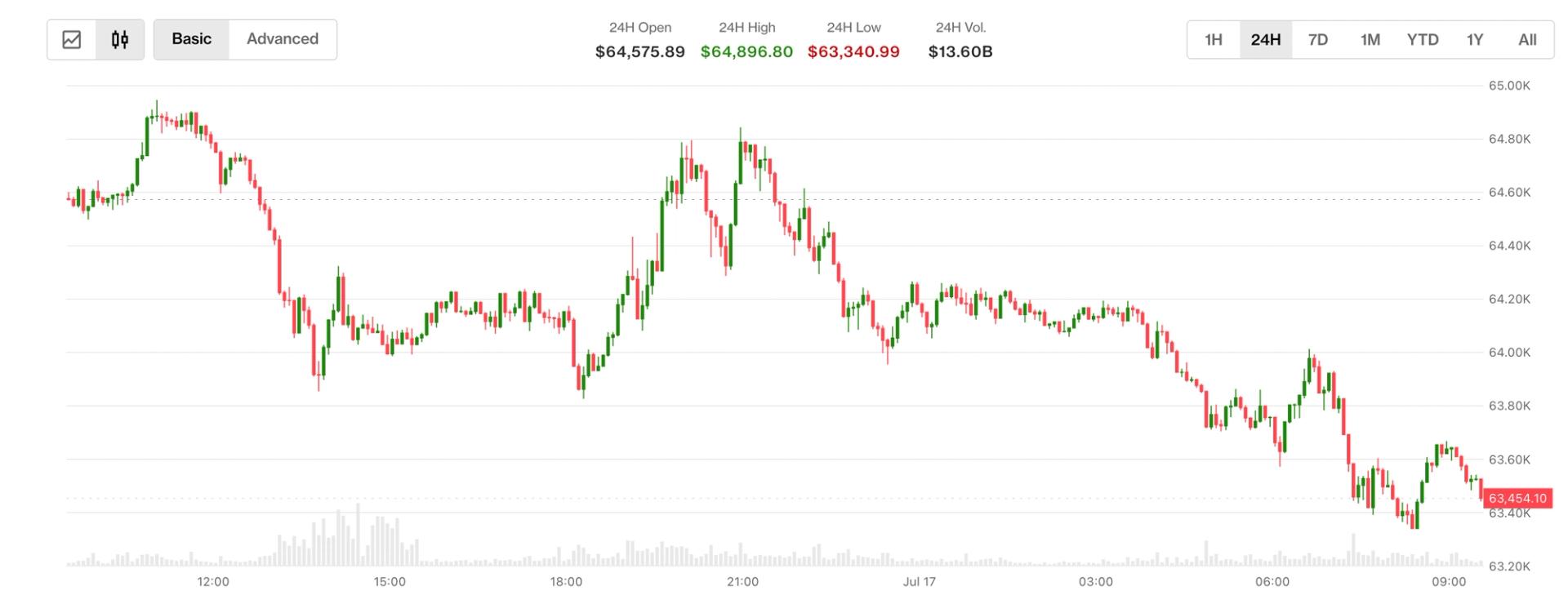
Bitcoin dropped below $63,000 following a U.S. military strike on Iran and renewed trade tensions sparked by Trump's comments on China, as geopolitical uncertainty weighs on risk assets. The confluence of international tensions and trade policy ambiguity has intensified market volatility, with investors reassessing exposure to cryptocurrencies amid broader macroeconomic headwinds.
Overview
Bitcoin's price has declined below the $63,000 threshold, marking a significant retreat from recent highs as geopolitical tensions escalate and policy uncertainty intensifies. The cryptocurrency market, often characterized as a safe haven during traditional financial turmoil, is instead reflecting broader risk-off sentiment driven by military developments in the Middle East and renewed concerns about U.S.-China trade relations. The U.S. military's recent strike on Iran and former President Donald Trump's latest commentary regarding China have created an environment of heightened uncertainty that is rippling across global financial markets, with cryptocurrencies experiencing particular volatility as investors recalibrate their portfolios and reassess risk exposure.
This latest pullback highlights the complex relationship between geopolitical events, macroeconomic policy, and cryptocurrency valuations. While Bitcoin has historically been positioned as a hedge against currency debasement and central bank intervention, its price action has increasingly aligned with broader risk-asset movements, particularly equities. The current market environment demonstrates that cryptocurrencies remain highly sensitive to shifts in risk appetite, especially when military confrontation or trade war escalation creates uncertainty about economic growth and capital flows. Understanding the specific drivers behind Bitcoin's decline and the market dynamics at play is crucial for investors seeking to navigate the current landscape.
Market observers are closely monitoring the interaction between these geopolitical factors and ongoing monetary policy considerations. Central banks around the world continue to navigate inflationary pressures and growth concerns, while geopolitical risk premiums are reasserting themselves across multiple asset classes. For the cryptocurrency community, this environment presents both challenges and opportunities, as traditional market correlations break down and new valuation frameworks emerge in response to unprecedented global conditions.
Background
The relationship between geopolitical events and Bitcoin's price has become increasingly complex over the past several years. Initially, cryptocurrency advocates promoted Bitcoin as "digital [gold](https://finance.yahoo.com/quote/GC=F)"—a store of value that would appreciate during periods of currency debasement, geopolitical conflict, or financial instability. This narrative has evolved significantly, particularly as institutional adoption has increased and Bitcoin's correlation with traditional assets has shifted. Today's market environment reveals that Bitcoin increasingly trades as a risk asset rather than a pure flight-to-safety instrument, responding to shifts in equity market sentiment, venture capital appetite, and broader risk appetite indicators.
Historically, major geopolitical events have produced mixed results for Bitcoin. During early conflicts and international tensions, Bitcoin often experienced modest price appreciation as investors sought to diversify away from fiat currencies and traditional financial instruments. However, the modern cryptocurrency market—characterized by tighter integration with traditional finance, increased leverage and derivatives activity, and participation by risk-sensitive institutional investors—responds differently to geopolitical shocks. When conflict or trade tensions create uncertainty about economic growth and corporate profitability, risk assets including cryptocurrencies often decline as investors reduce overall portfolio risk and move toward cash and government bonds.
The current macroeconomic backdrop further complicates Bitcoin's relationship with geopolitical events. Global economies continue to navigate post-pandemic normalization, inflation management, and the transition to a multipolar world order. Central banks have implemented aggressive interest rate policies to combat inflation, which generally creates headwinds for speculative assets like cryptocurrencies by raising the opportunity cost of holding non-yielding assets. When geopolitical shocks occur in this environment, they tend to reinforce risk-off sentiment, as investors simultaneously face economic uncertainty and tighter monetary conditions. This combination has historically produced significant pressure on Bitcoin prices, as demonstrated during previous periods of elevated geopolitical risk combined with contractionary monetary policy.
Original Source
CoinDesk