U.S. Regulator Warns Prediction Markets: No Shortcuts on Event Contracts
U.S. regulators have issued stern guidance to prediction market platforms, demanding strict compliance with event contract specifications and rejecting attempts to circumvent regulatory oversight. The warning targets both traditional and blockchain-based prediction markets that cut corners on contract definitions and settlement procedures.
Overview
The U.S. regulatory framework governing prediction markets has entered a new phase of enforcement clarity, as federal authorities have issued explicit warnings to market operators against compromising on event contract integrity. This regulatory posture represents a significant tightening of oversight following years of rapid innovation and occasional compliance lapses within the prediction market sector. The warning serves as both a cautionary note and a structural statement about where regulators intend to draw the line between legitimate market innovation and problematic shortcuts that undermine market confidence and consumer protection.
Prediction markets—platforms where participants trade contracts linked to real-world events and outcomes—occupy an increasingly important position in both traditional finance and decentralized blockchain ecosystems. These markets serve multiple functions: they aggregate diverse participant views into probabilistic forecasts that often outperform individual expert predictions, they provide hedging mechanisms for businesses with exposure to uncertain outcomes, and they facilitate price discovery on matters of public interest. However, this utility does not exempt them from regulatory scrutiny. The warning reflects a growing regulatory concern that some platforms are prioritizing rapid market expansion over the foundational infrastructure necessary to ensure contract settlement integrity, fraud prevention, and fair participant access.
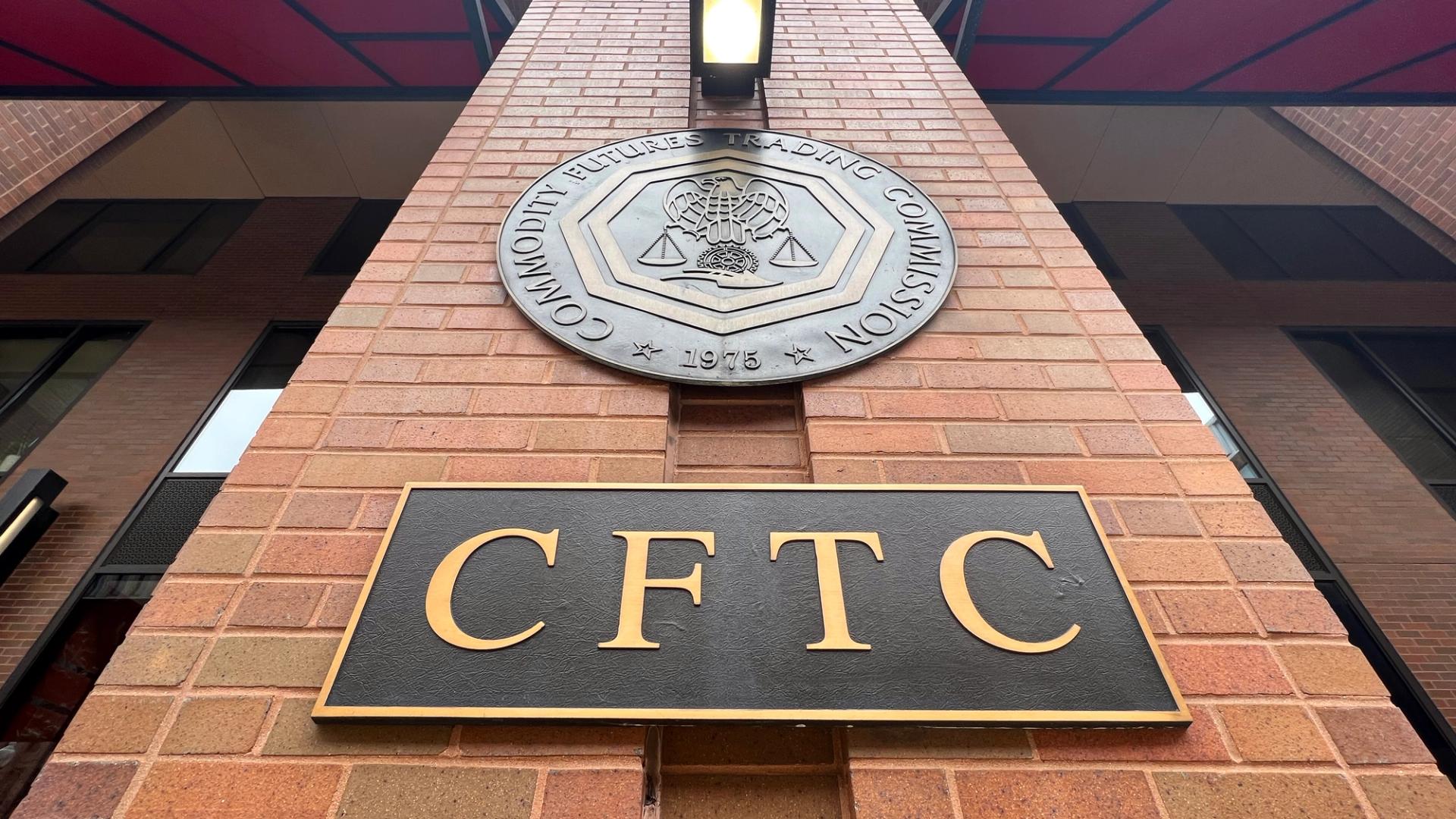
The regulatory stance emerges within a broader context of increased federal focus on digital assets and decentralized markets. Agencies including the Commodity Futures Trading Commission (CFTC), the Securities and Exchange Commission (SEC), and various state regulators have progressively expanded their engagement with blockchain-based markets and prediction platforms. This coordinated approach signals that regulators view prediction markets as sufficiently material to the broader financial ecosystem and consumer protection landscape to warrant sustained attention and active guidance.
Background
Prediction markets represent one of the most intellectually compelling applications of both traditional and decentralized finance mechanisms. The concept traces back to research in behavioral economics and information aggregation, with historical examples including grain futures markets in 19th-century Chicago and various proposition betting markets that have operated legally in jurisdictions worldwide. Modern prediction markets, however, have been transformed by digital technology and blockchain infrastructure, which enable global participation, reduced transaction costs, and automated settlement through smart contracts.
The CFTC has held primary regulatory authority over prediction markets in the U.S. since the Commodity Futures Modernization Act (CFMA) of 2000, which created a specific exemption allowing prediction markets to operate under certain conditions. These conditions were refined through various regulatory guidance documents and court proceedings over the following decades. Key requirements include: the prediction markets must be registered with the CFTC or qualify for an exemption, contracts must be based on genuinely uncertain events of public interest, settlement mechanisms must be transparent and verifiable, and platforms must maintain adequate capital reserves and compliance infrastructure.
The emergence of blockchain-based prediction markets in the 2015-2020 period introduced new complexities into this regulatory landscape. Platforms operating on decentralized networks like Ethereum could theoretically provide prediction market services without traditional intermediary infrastructure, raising questions about regulatory applicability, jurisdiction, and the practical mechanisms through which traditional compliance requirements could be enforced. Early platforms operated in a regulatory gray zone, with some taking aggressive positions that they fell outside CFTC jurisdiction entirely, while others adopted more cautious compliance postures.
Recent years have seen an evolution in regulatory thinking. Rather than attempting to shut down or ban prediction markets outright, federal regulators have increasingly attempted to accommodate innovation within a compliance framework. This approach has yielded some benefits—it has allowed platforms to operate more openly and attract institutional participants—but it has also created a landscape where compliance standards vary significantly between platforms and where certain platforms test the boundaries of regulatory expectations.
The regulatory warning now being issued reflects frustration with what authorities perceive as deliberate attempts by some platforms to evade specific compliance requirements. These concerns center not on innovation itself, but on what regulators view as systematic efforts to compromise on foundational safeguards without seeking explicit regulatory permission or accommodation.
Key Developments
The Core Warning and Regulatory Concerns
The regulatory warning explicitly addresses several categories of non-compliance or regulatory shortcuts that have apparently become sufficiently common to warrant coordinated federal guidance. The warning emphasizes that prediction markets cannot substitute vague outcome descriptions for precise contract specifications, cannot use opaque settlement mechanisms where external validation would be expected, and cannot relegate critical market governance decisions to decentralized voting processes that may lack adequate consumer protections.
One specific concern cited relates to event contract definitions. Prediction markets require precisely specified events to enable definitive settlement. A contract on "Will AI capabilities exceed human intelligence?" is problematic because the outcome depends on subjective interpretation of ambiguous metrics. By contrast, "Will the annual inflation rate exceed 4% as measured by the Consumer Price Index?" provides clear, externally verifiable settlement criteria. Some platforms have apparently attempted to operate with contract definitions that leave significant room for interpretation, potentially enabling manipulation or enabling platforms to influence settlement in ways that benefit specific participants or the platform itself.
A second major concern involves settlement transparency and independence. Traditional futures markets employ clearinghouses and independent third-party settlement mechanisms specifically to prevent manipulation and fraud. Some blockchain-based prediction markets have outsourced settlement to smart contracts programmed by the platform, creating conflicts of interest and reducing transparency about how settlement actually occurs. The regulatory warning emphasizes that platforms cannot simply declare a settlement outcome on-chain without external verification and transparent procedures for handling disputed or ambiguous outcomes.
Third, regulators have flagged concerns about market governance and administrative controls. Some decentralized prediction platforms vest governance authority in decentralized token-holder voting without implementing safeguards to ensure that governance decisions remain aligned with regulatory requirements. This creates a situation where participants themselves might collectively vote to approve non-compliant practices or to settle contracts in ways that violate regulatory standards. Regulators are essentially stating that compliance cannot be delegated to community voting if that voting mechanism lacks adequate consumer protection guardrails.
Specific Regulatory Requirements Being Emphasized
The warning reiterates several specific compliance requirements that platforms must meet. Capital and insurance requirements receive particular emphasis. Prediction markets handle participant funds and must maintain adequate capital reserves or insurance coverage to protect participants in case of platform failure, contract disputes, or market disruptions. Some platforms have operated with minimal capital reserves and no insurance coverage, essentially operating as unsecured custodians of participant assets.
Market surveillance and fraud prevention represent another critical area. Prediction markets are particularly vulnerable to manipulation schemes including coordinated trading to artificially move prices, manipulation of external information sources that feed into settlement, and information asymmetries where platforms or certain participants possess advance knowledge about outcomes. Platforms must implement surveillance systems to detect suspicious trading patterns and must have protocols for investigating and addressing suspected manipulation. The warning indicates that some platforms have effectively outsourced surveillance to participants themselves or relied on after-the-fact analysis rather than real-time monitoring.
Participant protection and disclosure standards are also being reemphasized. Participants must receive clear disclosure about the risks associated with prediction market contracts, must understand the settlement procedures, and must have recourse mechanisms if they believe a contract was settled incorrectly or that platform misconduct occurred. Some platforms have minimized disclosures and provided participants with limited recourse beyond accepting the platform's settlement decision.
Market Impact
The regulatory warning has already begun influencing market behavior and platform strategies. Platforms that had previously operated with minimal compliance infrastructure are now facing pressure to enhance their systems, which creates costs and may reduce their competitive advantages relative to more established players who already maintained higher compliance standards.
The impact extends beyond direct platform compliance costs. Institutional adoption and capital flows are affected because institutional participants—including hedge funds, asset managers, and corporations—face fiduciary duties and regulatory requirements of their own that obligate them to engage only with platforms meeting certain compliance standards. When a prediction market platform's compliance posture is questioned, institutional participants often reduce or eliminate their involvement, which can dramatically shrink available liquidity and reduce the market's ability to aggregate information effectively.
The warning also influences innovation and product development timelines. Platforms that had planned rapid feature expansion or new market types must now invest in additional compliance review before launch. This creates friction but potentially improves market resilience by ensuring that new products receive appropriate regulatory consideration before attracting significant participant capital.
Competitive dynamics within the prediction market ecosystem are shifting in response to regulatory clarity. Platforms that have consistently maintained high compliance standards are now positioned to explain their approaches credibly to both participants and regulators. Platforms that had cut corners face pressure to invest significantly in compliance infrastructure and may face reputational damage that takes time to recover from. This creates a potential "compliance divide" where well-capitalized platforms maintain high standards while smaller or newer platforms struggle with compliance costs and regulatory uncertainty.
The warning may also accelerate consolidation within the prediction market industry. Some platforms may find compliance costs unsustainable and may seek acquisition by larger players or may exit the market entirely. This consolidation could reduce competition but might also increase average compliance standards across remaining platforms.
Risks and Considerations
Risks of Regulatory Overreach
While the regulatory warning addresses legitimate compliance concerns, there are potential risks of regulatory overreach that could undermine the sector's potential benefits. Overly prescriptive rules could prohibit legitimate innovations in market structure or settlement mechanisms simply because they deviate from traditional futures market approaches. Prediction markets operating on blockchain networks can potentially implement novel governance and settlement approaches that are superior to traditional mechanisms. Regulations that mandate conformity to traditional approaches regardless of technical innovation could eliminate beneficial experimentation.
The requirement for centralized human oversight of all market governance decisions could create bottlenecks and reduce the efficiency gains that decentralized protocols can achieve. There may be legitimate ways to implement safety features in decentralized governance systems—such as timelocks, voting escrows, and emergency pause mechanisms—that achieve regulatory objectives without requiring centralized control. Regulators and platforms should collaborate on frameworks that achieve compliance objectives while preserving beneficial innovation.
Risks of Regulatory Arbitrage
Another concern is that regulatory clarity in the U.S. may drive certain market activity to jurisdictions with lighter-touch regulatory approaches. Offshore prediction market platforms based in countries with minimal financial regulation could potentially attract U.S. participants seeking to avoid compliance requirements or seeking platforms that take more aggressive positions on market governance. This would reduce rather than increase consumer protection, as offshore platforms typically offer less recourse for participants and less ability for U.S. regulators to ensure compliance.
Regulators may need to coordinate internationally to prevent regulatory arbitrage from undermining regulatory objectives. However, international regulatory harmonization on prediction markets remains limited, creating a window where sophisticated participants or platforms could potentially establish operations in lower-regulation jurisdictions.
Systemic Risks and Interconnection
As prediction markets grow and attract more sophisticated participants and larger capital pools, they become more interconnected with broader financial markets. Systemic risks could emerge if major prediction markets experience failures or manipulation that spills over into other market sectors. For example, if prediction markets on commodity prices influence agricultural hedging decisions, and if those markets are manipulated, the resulting false signals could distort physical commodity markets.
Regulators must balance the enforcement of compliance standards against the potential risks that overly stringent standards could drive prediction market activity to less-regulated platforms or completely offshore, where systemic risks might actually be worse due to lack of transparency and oversight.
What to Watch
Platform Compliance Response Timeline
Observers should monitor how different prediction market platforms respond to the regulatory warning in the coming months. Timeline for compliance investments will reveal which platforms take regulatory requirements seriously and which might attempt to minimize changes. Platforms announcing significant capital investments in compliance infrastructure, hiring of compliance personnel, or implementation of enhanced settlement procedures are signaling serious commitment to the regulatory framework. Platforms that delay or minimize responses may face increased regulatory scrutiny.
Regulatory Enforcement Actions
The warning is typically a precursor to enforcement actions against non-compliant platforms. Observers should watch for SEC and CFTC enforcement activities targeting platforms that fail to correct noted deficiencies. Early enforcement actions will significantly influence how the broader industry interprets regulatory requirements and will reveal regulators' actual priorities versus theoretical concerns.
Market Consolidation and M&A
The compliance requirements will likely drive industry consolidation as smaller platforms merge with or are acquired by larger, better-capitalized players. Monitoring acquisition announcements and market exit decisions will provide insight into which platforms judged compliance costs as unsustainable and which positioned themselves as consolidators during the transition period.
International Regulatory Coordination
Observers should also watch for international regulatory coordination developments. If the U.S., EU, Singapore, and other financial centers begin coordinating on prediction market standards, it would significantly raise the cost of regulatory arbitrage. Conversely, if regulatory divergence increases, it would create opportunities for sophisticated participants to engage in regulatory arbitrage.
Conclusion
The U.S. regulatory warning to prediction markets against cutting corners on event contracts represents a maturation of regulatory thinking in the digital asset space. Rather than attempting broad prohibitions on prediction markets or dismissing them as unregulatable, regulators have engaged in specific, practical guidance about the non-negotiable compliance requirements necessary to ensure market integrity and consumer protection.
The warning addresses legitimate regulatory concerns about event contract specifications, settlement transparency, capital adequacy, and market governance. These are not theoretical concerns but represent demonstrated issues that have affected actual platforms and participants. The regulatory position reflects appropriate acknowledgment that innovation in market structure and technology is valuable, but cannot come at the expense of foundational safeguards.
For the prediction market ecosystem, the warning creates near-term compliance costs and administrative burdens, but potentially establishes a clearer regulatory pathway that could actually expand institutional adoption and capital allocation to the sector. Institutions currently hesitant about prediction market participation due to regulatory uncertainty may increase their involvement once compliance frameworks are clearly defined and platforms demonstrably comply.
The ultimate success of this regulatory approach depends on several factors: whether regulators enforce their guidance consistently and proportionately, whether they remain open to regulatory innovations that achieve compliance objectives in novel ways, and whether they coordinate internationally to prevent regulatory arbitrage. If these conditions are met, the warning could mark the beginning of a mature regulatory regime that enables prediction markets to contribute more effectively to price discovery and information aggregation across financial markets and society more broadly.
Original Source
CoinDesk