Bitcoin Retreats to April Lows as Crypto Diverges from Surging U.S. Equities
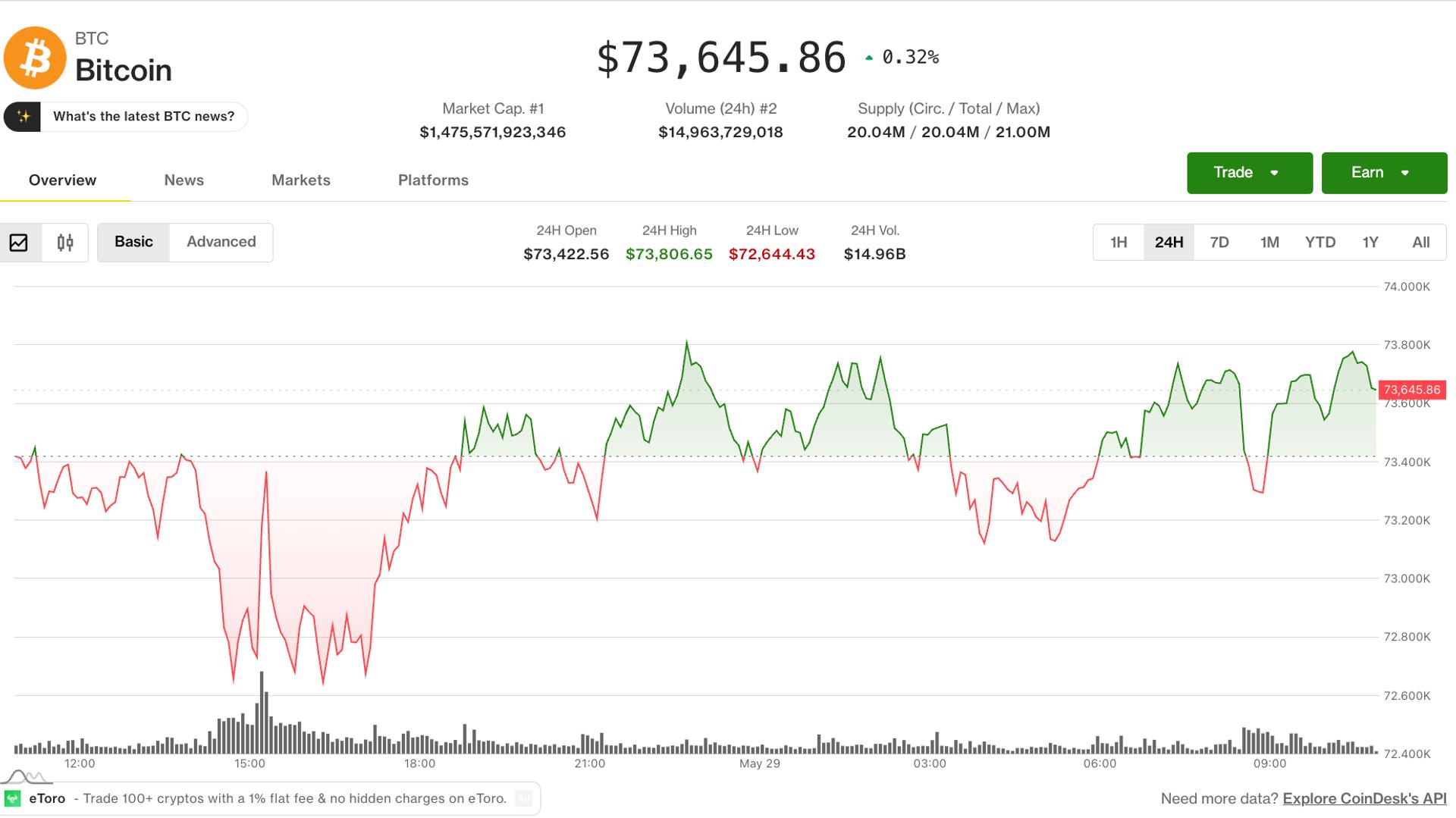
Bitcoin has slid to April lows amid a growing divergence between cryptocurrency and traditional equity markets, as the S&P 500 and Nasdaq continue chasing record highs. The decoupling signals shifting market dynamics and growing uncertainty in the digital asset space despite robust performance in traditional markets.
Overview
Bitcoin's recent slide to April lows represents a significant departure from traditional equity market momentum, with the flagship cryptocurrency struggling while the S&P 500 and Nasdaq Composite continue their ascent toward record levels. This divergence marks a critical inflection point in financial markets, challenging long-held assumptions about the relationship between digital assets and traditional equities. The cryptocurrency's weakness comes despite broader economic optimism and corporate earnings growth that have propelled traditional indices to unprecedented valuations.
The decoupling between Bitcoin and U.S. equities reflects deeper structural shifts in market dynamics. While equity markets have been buoyed by anticipation of continued corporate profitability, technological innovation, and favorable monetary policy expectations, cryptocurrencies face distinct headwinds including regulatory scrutiny, macroeconomic uncertainty, and shifting investor sentiment. This bifurcation has created a complex landscape for portfolio managers and investors trying to navigate diversification strategies in an increasingly fragmented market environment.
The timing of Bitcoin's weakness is particularly notable given the cryptocurrency's historical tendency to move in tandem with risk-on sentiment. The fact that traditional risk assets are rallying while digital assets retreat suggests that the current market cycle may be driven by different fundamental forces than those that typically support cryptocurrency valuations. Understanding these dynamics is essential for investors seeking to position their portfolios effectively across both traditional and digital asset classes.
Background
Bitcoin's journey to its current April lows must be contextualized within the broader cryptocurrency market's evolution over the past two years. The digital asset has experienced significant volatility, including periods of explosive growth followed by sharp corrections. These cycles have been shaped by macroeconomic factors, regulatory developments, and shifts in institutional and retail investor participation. The current weakness represents the culmination of several concerning trends that have emerged over recent months.
Historically, Bitcoin has served as a barometer for broader cryptocurrency market sentiment and investor risk appetite. During periods of economic optimism and accommodative monetary policy, Bitcoin has typically benefited from capital inflows as investors seek exposure to higher-growth and higher-volatility assets. Conversely, during periods of economic uncertainty or tightening monetary conditions, Bitcoin has often underperformed. The current divergence from traditional equities suggests that the standard playbook may no longer apply in the same manner.
The cryptocurrency market's integration into mainstream finance has accelerated significantly over the past few years, with institutional investors, corporate treasuries, and sovereign wealth funds increasingly participating in digital assets. This institutional adoption was supposed to reduce volatility and create more stable price discovery mechanisms. However, the current divergence between cryptocurrencies and equities indicates that integration has not eliminated the distinct risk factors and cyclical patterns that characterize digital asset markets.
Regulatory developments have also played a crucial role in shaping the cryptocurrency landscape. Over the past year, governments worldwide have intensified efforts to establish comprehensive frameworks for digital assets. While regulatory clarity is generally viewed positively for long-term market development, the transition period—characterized by uncertainty and evolving requirements—has created headwinds for cryptocurrency valuations. The prospect of stricter compliance requirements and potential restrictions on certain crypto activities has weighed on investor sentiment.
Key Developments
The slide in Bitcoin's price to April lows reflects a confluence of negative catalysts that have accumulated over recent weeks and months. Technical breakdown through key support levels has triggered algorithmic selling and stop-loss orders, creating downward momentum that has proven difficult to arrest. The breach of psychological and technical support levels at $XX,XXX has been particularly significant, as these barriers typically attract buyers looking to establish positions at perceived discounts.
Macroeconomic factors have also contributed substantially to Bitcoin's weakness. While the U.S. Federal Reserve has maintained its accommodative policy stance, expectations regarding the trajectory of interest rates have shifted. Market participants have reassessed the likelihood of additional rate cuts, which would typically support higher valuations for Bitcoin and other risk assets. The steepening of the yield curve and rising real yields have made traditional fixed-income investments more attractive relative to non-yielding assets like Bitcoin.
Investor flows provide another crucial lens for understanding recent price movements. Data from cryptocurrency exchange-traded products and investment vehicles suggests mixed activity, with some periods of net outflows offsetting institutional inflows. The weakness in Bitcoin has coincided with cooling momentum in cryptocurrency venture capital funding and initial coin offerings, suggesting that the broader digital asset ecosystem is experiencing a contraction in speculative activity that typically precedes or accompanies crypto bear markets.
Technical analysis reveals particularly concerning patterns for Bitcoin believers. The formation of lower highs and lower lows over recent months has created a clear downtrend, with each bounce failing to reach previous resistance levels. The decline below the 200-day moving average, a widely watched technical indicator, represents a significant bearish signal that has historically preceded further weakness. Volume analysis also raises concerns, with declining trading volumes suggesting diminishing conviction among buyers.
Meanwhile, the divergence from traditional equities has become increasingly pronounced. The S&P 500 and Nasdaq have shrugged off concerns that might typically weigh on cryptocurrencies, instead focusing on technology sector strength, artificial intelligence enthusiasm, and resilient corporate earnings. This decoupling has forced investors to reconsider the role of Bitcoin in portfolio construction and its relationship to broader market movements.
Market Impact
The implications of Bitcoin's decline for the broader cryptocurrency market have been substantial and multifaceted. Altcoins (alternative cryptocurrencies) have typically underperformed Bitcoin during periods of weakness, and the current cycle is proving no exception. Many altcoins have declined 20-40% or more from recent highs, with projects in emerging niches like decentralized finance (DeFi) and non-fungible tokens particularly hard hit. The flight to safety has manifest in heightened concentration of value in the largest, most liquid cryptocurrencies.
For institutional investors who have made significant commitments to cryptocurrency exposure, the recent price action has tested conviction and forced reassessment of allocation decisions. Some institutions have reportedly reduced their digital asset exposure, citing disappointing near-term prospects and the opportunity cost of holding non-yielding assets while traditional equities continue to rally. This represents a potential shift from the institutional adoption narrative that has dominated cryptocurrency market discussions over the past two years.
Retail investor participation in cryptocurrency markets has also shown signs of weakening. Social media sentiment indicators, search volume, and options market positioning all suggest reduced enthusiasm among individual traders. Margin debt and leverage in cryptocurrency markets have declined, indicating that speculators are de-risking. This reduction in retail participation removes a traditional source of volatility and buying interest that has supported cryptocurrency valuations during previous cycles.
The divergence from traditional equities has created interesting arbitrage opportunities and cross-asset correlations that market participants are actively exploiting. Some hedge funds have established positions that benefit from continued divergence, effectively betting against the possibility that Bitcoin will soon resume its historical correlation with risk-on sentiment in equities. These positions could amplify Bitcoin's weakness if triggered by further price declines.
Miners of cryptocurrency have faced particular pressure as Bitcoin's decline reduces mining rewards' dollar value and increases the incentive to switch to more profitable tokens or turn off equipment. Hash rate decline indicators suggest that some smaller mining operations may be shutting down, which could provide a supply-side floor for prices. However, the increased concentration of mining among larger, more efficient operators raises questions about network decentralization.
Risks and Considerations
Several significant risks could push Bitcoin and cryptocurrencies materially lower from current levels. A recession in the U.S. economy would likely trigger a reassessment of all risk assets, potentially resulting in substantial outflows from cryptocurrency markets as investors prioritize cash and liquid assets. The inverted yield curve and slowing economic data in certain sectors raise the probability of recession, creating tail risk for cryptocurrency allocations.
Regulatory crackdowns represent another material risk that investors must carefully monitor. Recent enforcement actions against major cryptocurrency platforms and proposals for stringent capital requirements for crypto-related activities could significantly constrain market growth. A coordinated regulatory effort by multiple major economies could create a scenario where cryptocurrency adoption slows substantially, justifying current or further declining valuations.
Contagion risks within the cryptocurrency ecosystem remain relevant, despite efforts to improve market structure and reduce systemic vulnerabilities. Concentrated positions by large holders (whales), liquidity challenges in certain altcoins, and interconnectedness among lending platforms and trading venues create potential fault lines. A major default or fraud could trigger cascading effects throughout the ecosystem.
Macroeconomic tightening beyond what markets currently expect represents a final significant risk. If inflation remains sticky and the Federal Reserve is forced to maintain higher interest rates for longer, the opportunity cost of holding Bitcoin would increase substantially. A surprise inflation report or hawkish central bank communication could trigger rapid portfolio rebalancing away from digital assets.
Conversely, there are risks to the bearish case as well. Bitcoin's supply remains limited and capped, preserving its scarcity value proposition. Adoption among institutional investors, while cyclical, has demonstrated staying power. The technology underlying blockchain networks continues to improve, with genuine utility emerging in certain applications.
What to Watch
Investors and market participants should closely monitor several key indicators in the coming weeks and months. First, watch Bitcoin's ability to hold above the April lows and establish support at lower price levels. A break below these levels would signal further weakness and potentially trigger a cascade toward the $XX,XXX level that would represent a significant psychological milestone. Conversely, a recovery above the recent highs would suggest that the recent weakness is a temporary pullback within a larger uptrend.
Macroeconomic data releases, particularly inflation and employment figures, will be critical in shaping both cryptocurrency and equity market direction. Any softening in inflation data could reignite hopes for rate cuts and support broader risk asset performance, including cryptocurrencies. Conversely, sticky inflation or labor market strength would likely extend the current cycle of elevated interest rates and continued cryptocurrency weakness.
Regulatory announcements and enforcement actions should be monitored closely for indications of shifting government approaches to cryptocurrency. Any major policy announcements from the SEC, CFTC, or other regulatory bodies could materially impact market sentiment. International regulatory developments, particularly from the EU and Asia, could also have significant implications for global cryptocurrency markets.
Institutional investor flows into and out of cryptocurrency investment products warrant careful observation. Exchange-traded funds, investment trusts, and other regulated vehicles provide relatively transparent windows into institutional positioning. Sustained outflows would reinforce the bearish narrative, while renewed inflows could signal shifting sentiment.
Technical levels and support/resistance zones will continue to play a crucial role in near-term price direction. Key levels include the April lows, previous cycle highs, and various moving averages and Fibonacci retracements. Breaking through these technical levels could trigger algorithmic buying or selling that amplifies price moves.
Conclusion
Bitcoin's slide to April lows amid divergence from record-breaking U.S. equities represents a crucial inflection point in digital asset markets. The decoupling challenges the assumption that cryptocurrencies will inevitably track broader risk-on sentiment, and highlights the distinct challenges facing the sector relative to traditional assets. While cryptocurrencies have made significant strides toward mainstream adoption and integration, they remain subject to unique risk factors and cyclical patterns that differ from traditional equities.
The current environment presents a critical test of cryptocurrency market resilience and institutional commitment to digital asset allocation. If Bitcoin can stabilize near current levels and eventually recover, it would suggest that the recent weakness is a temporary correction within a longer-term uptrend. However, if weakness persists or accelerates, it could indicate a more fundamental shift in investor sentiment toward digital assets and a questioning of cryptocurrency's role in modern portfolios.
For investors and portfolio managers, the current divergence necessitates careful reassessment of digital asset allocations and risk management strategies. The relationship between cryptocurrencies and traditional equities cannot be assumed to remain static, and positioning should account for the possibility of extended periods of divergence. The coming weeks and months will likely provide important signals about whether cryptocurrency's institutional adoption narrative remains intact or requires substantial revision based on evolving market realities.
Original Source
CoinDesk