SpaceX IPO Prices at $135, Raising $75 Billion in Historic Market Event
Elon Musk's SpaceX completed the largest initial public offering in history, pricing shares at $135 and raising $75 billion. The landmark offering reflects massive investor appetite for space exploration and commercial satellite ventures, positioning SpaceX as a cornerstone of the aerospace and technology sectors.
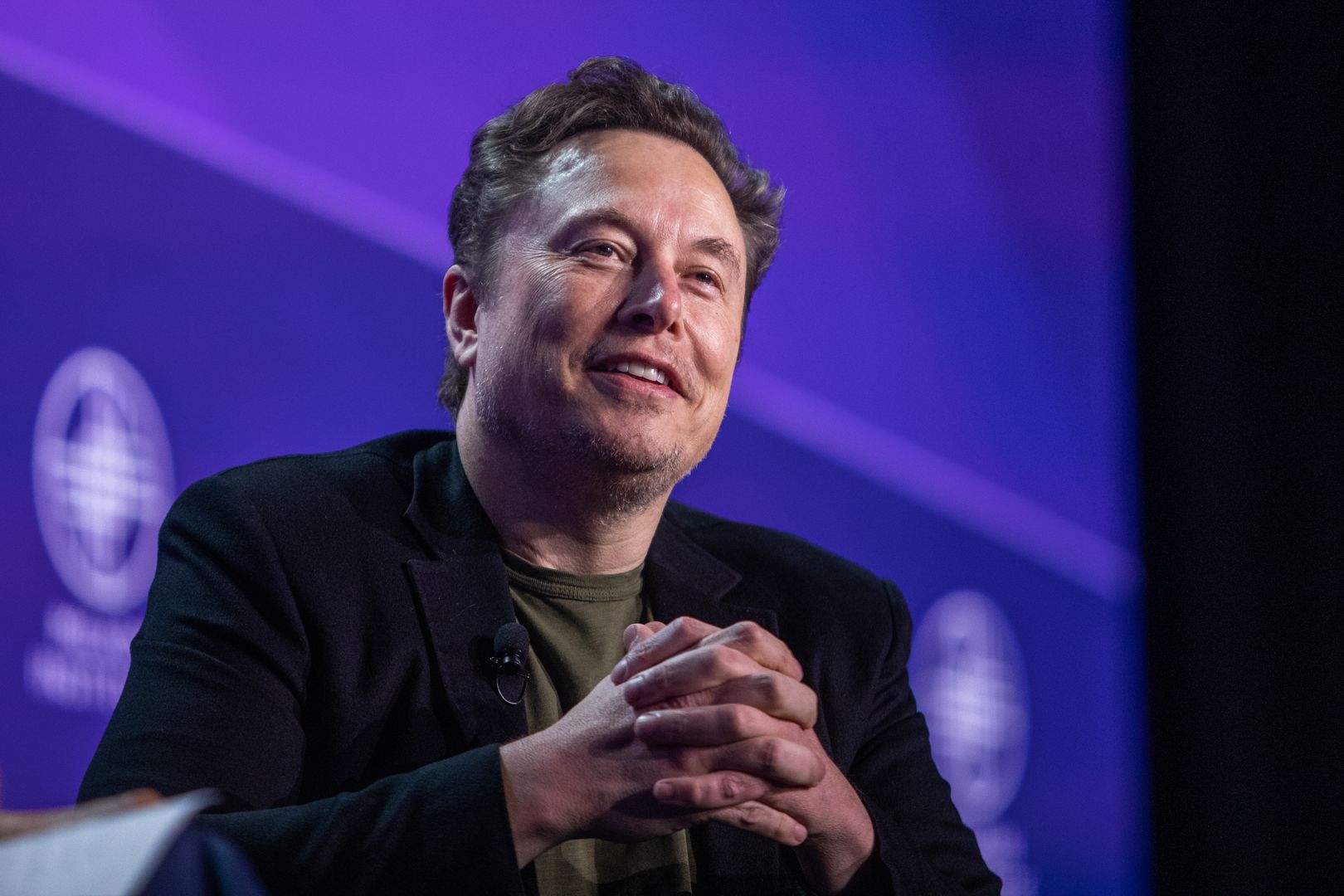
Overview
SpaceX has officially priced its initial public offering at $135 per share, raising an unprecedented $75 billion and creating what is now the largest IPO in history. The offering significantly surpasses previous records, underscoring the extraordinary investor demand for exposure to commercial space exploration and Elon Musk's most ambitious venture. The pricing reflects the company's valuation at approximately $1.8 trillion, making it comparable in market capitalization to some of the world's largest corporations. This historic milestone marks a pivotal moment not only for SpaceX but for the broader aerospace, technology, and venture capital industries, signaling a fundamental shift in how financial markets value companies in the emerging commercial space sector.
The IPO represents the culmination of nearly two decades of SpaceX's private operations, during which the company revolutionized rocket science, achieved orbital reflight, and established itself as a critical infrastructure provider for government and commercial customers alike. Prior to going public, SpaceX had raised funding through multiple private rounds and had become one of the most valuable private companies globally. The decision to go public now reflects both the maturity of the business and the company's need for additional capital to fund its ambitious expansion plans, including the full development of the Starship next-generation launch system and the rollout of global satellite internet through its Starlink constellation.
The IPO pricing came at the high end of the expected range, a testament to the strength of demand from institutional and retail investors. The offering included substantial allocations from major financial institutions, sovereign wealth funds, and pension funds, indicating broad confidence in SpaceX's long-term growth prospects. Notably, the company maintained significant founder control through a dual-class share structure, allowing Elon Musk and existing investors to retain operational and strategic influence over the company's direction.
Background
SpaceX was founded in 2002 by Elon Musk with the audacious goal of reducing space transportation costs and enabling human colonization of Mars. From its inception, the company operated as a private entity, funding its operations through a combination of venture capital investments, revenue from government contracts with NASA and the Department of Defense, and commercial launch services. Over the past two decades, SpaceX transformed from a struggling startup that nearly went bankrupt multiple times to the world's most advanced commercial spaceflight company. The company achieved numerous historic firsts, including the first commercially-developed liquid-fueled rocket to reach orbit, the first private company to send a spacecraft to the International Space Station, and the first vertical takeoff and landing of an orbital rocket booster.
The commercial space industry has experienced explosive growth in recent years, driven by declining launch costs, expanding satellite communication demand, and increasing governmental commitment to space-based infrastructure. Companies like SpaceX have democratized access to orbit, which was previously the exclusive domain of government space agencies. This transformation created an enormous addressable market for satellite communications, Earth observation, space tourism, and deep space exploration. Investors became increasingly interested in space industry equities, and several smaller space companies had already pursued public listings before SpaceX's announcement.
SpaceX's revenue streams have diversified significantly since its founding. The company derives substantial income from its Falcon 9 launch service, which has become the world's most frequently launched rocket, and from the operation of Starlink, a global satellite internet constellation that has already deployed thousands of satellites and is working toward full planetary coverage. Government contracts, particularly from NASA and the National Security Agency, have provided stable cash flows and validated the technical capabilities of the company's hardware and operations. The combination of government contracts and commercial services created a business model that demonstrated both profitability potential and strategic importance.
Musk's vision for SpaceX has always extended beyond earth orbit to lunar exploration, Mars settlement, and the eventual establishment of human civilization beyond Earth. The Starship program represents the next phase of this vision, with the company developing a fully reusable super-heavy launch system intended to carry up to 100 passengers to Mars and beyond. The capital raised through the IPO will accelerate development of Starship and enable SpaceX to pursue multiple ambitious objectives simultaneously, from expanding Starlink coverage to supporting lunar missions under NASA's Artemis program.
Key Developments
The IPO was oversubscribed multiple times, with demand exceeding the available shares by a significant margin. This overwhelming response necessitated an increase in the number of shares offered compared to the initial filing range, reflecting investor enthusiasm for exposure to SpaceX's growth trajectory. The underwriting syndicate, led by major investment banks including Goldman Sachs, Morgan Stanley, and JPMorgan Chase, managed the offering expertly despite the unprecedented scale. The pricing at the high end of the range, rather than even higher in response to demand, likely reflected a deliberate strategy to maintain stability in early trading and ensure a successful launch of the stock.
A significant portion of the offering was directed to institutional investors, including major asset managers, insurance companies, and pension funds seeking exposure to high-growth technology companies. However, retail investor demand was also notably strong, with individual investors applying for shares at record levels. This broad participation across investor classes suggests confidence in SpaceX's business model and future prospects that extends beyond the technology speculation that sometimes characterizes IPOs. The diversified investor base should provide stability for the stock price once trading commenced.
The company made strategic decisions about which insiders would have lock-up restrictions on their shares following the IPO, with typical 180-day lock-up periods applied to most shareholders. Notably, Elon Musk's shares were subject to extended restrictions, reflecting both legal requirements and strategic considerations regarding founder stability and market confidence. The company also established a strong cash position through the offering, providing resources to fund operations, capital expenditures, and potential acquisitions or strategic investments for several years without requiring additional equity raises.
Key presentations to investors highlighted SpaceX's competitive advantages, including the largest fleet of operational rockets, the most advanced reusability technology, the largest private satellite constellation, and the most experienced commercial spaceflight team. Management emphasized the company's growing revenue base, improving unit economics on launches, and the expansion of Starlink's commercial customer base. Forward-looking guidance suggested significant growth potential both in launch services and satellite communications, with particular emphasis on international expansion and new markets opening as costs continue to decline.
Market Impact
The SpaceX IPO had immediate and far-reaching impacts across multiple sectors of the financial markets. Technology stocks broadly benefited from the successful completion of a mega-cap IPO, which had been anticipated as a major event in capital markets. Other aerospace and defense companies saw their valuations reassessed in light of SpaceX's valuation, with traditional contractors finding their valuations questioned relative to SpaceX's growth profile. The IPO also provided a valuation benchmark for numerous private space companies still pursuing exits, either through IPO or merger with special purpose acquisition companies.
Satellite communications stocks experienced mixed reactions, with some companies viewing SpaceX's Starlink as competitive threat while others recognized expanding addressable market for space-based services. The IPO reinforced the narrative that satellite communications would play an increasingly important role in global connectivity, potentially attracting additional investment to the sector. Internet service providers and telecommunications companies began reassessing their network strategies in light of Starlink's expansion and pricing competitiveness.
The broader aerospace and defense sector benefited from renewed investor interest in space-related businesses. Established contractors supporting SpaceX, including suppliers of components and services, saw increased interest from investors seeking exposure to the space economy's growth. The IPO also highlighted the commercial viability of space-based infrastructure, encouraging additional venture capital and private equity investment in space sector startups across launch services, satellite manufacturing, in-space refueling, and space tourism.
Globally, the IPO sent a strong signal about the maturation and commercial viability of the space industry. International governments and private investors took note of the market's validation of SpaceX's business model, leading to accelerated efforts in various countries to develop competitive space capabilities and supportive regulatory frameworks. The IPO effectively positioned the United States' commercial space industry as the global leader and attracted talent and capital toward American space companies.
Risks and Considerations
Despite the record-breaking IPO success, SpaceX faces several significant risks that investors must carefully consider. Regulatory risk remains substantial, as SpaceX's operations depend on approvals from the Federal Aviation Administration, the Federal Communications Commission, and various national security agencies. Changes in regulatory approach, environmental assessments, or national security priorities could impact the company's ability to expand operations. Additionally, the regulatory environment for satellite mega-constellations like Starlink remains evolving, with potential requirements for debris mitigation, frequency coordination with international users, and spectrum management that could impose additional costs.
Competition in the launch services market is intensifying, with established contractors like United Launch Alliance investing heavily in advanced rockets, and new entrants like Relativity Space developing innovative manufacturing approaches. While SpaceX currently maintains a significant competitive advantage through reusability and operational efficiency, emerging competitors could erode market share if they successfully achieve comparable cost structures. International competitors, particularly from China and emerging space nations, also present long-term competitive challenges that could affect SpaceX's pricing power and market access.
The Starship program, while representing enormous potential upside, carries substantial technical and financial risk. The full development of Starship to operational capability for lunar missions and eventual Mars missions will require billions of additional investment and may encounter technical obstacles that delay timelines or increase costs. Delays in Starship deployment could impact revenue growth projections and investor confidence. Additionally, the integration of Starship into national security space programs involves complex government procurement and security vetting processes that could introduce unpredictability.
SpaceX's commercial Starlink business faces regulatory, competitive, and market risks. The FCC's approval of Starlink operations was not unanimous, and international regulatory approval remains incomplete in some regions. Competition from other satellite internet operators, including Amazon's Project Kuiper and traditional telecommunications operators, could pressure Starlink's pricing and market share. Additionally, cybersecurity risks associated with operating a global satellite constellation and providing critical communications infrastructure cannot be overlooked, particularly given the potential for nation-state targeting of space assets.
What to Watch
Investors should closely monitor the company's quarterly financial results for trends in launch cadence, Starlink subscriber growth, average revenue per Starlink subscriber, and cost per launch. These metrics will indicate whether the company is executing on its business plan and whether the original IPO thesis is holding up in actual operations. Management guidance regarding Starship development timelines, government contract value, and international expansion plans will provide important signals about future growth prospects.
Regulatory developments require careful attention, particularly decisions regarding Starship environmental impact assessments, additional FCC approvals for Starlink spectrum and operations, and any changes in government procurement processes for national security space contracts. International developments, including regulatory decisions by the European Union, China, India, and other nations regarding satellite internet and commercial spaceflight, could materially impact SpaceX's growth trajectory. Any changes in the competitive landscape, including successful demonstrations by competitors or new entrants, could affect SpaceX's market position.
The company's capital allocation decisions will significantly impact shareholder returns. How SpaceX deploys its substantial new cash position, whether through accelerated Starship development, international expansion, new initiatives, or strategic acquisitions, will shape the investment thesis. Any changes to the dual-class share structure, which was a contentious issue for some institutional investors, could also impact stock performance and investor sentiment. Additionally, developments in the broader space economy, including advances in in-space manufacturing, space mining, space-based solar power, and other emerging opportunities, could create new expansion vectors for SpaceX.
Geopolitical factors warrant monitoring, as space capabilities have increasingly become intertwined with national security strategies. Changes in U.S. space policy, defense spending priorities, or relationships with international allies and competitors could impact government contract opportunities and regulatory support for SpaceX operations. The company's involvement in government national security space programs makes it subject to geopolitical risk that is not typical for purely commercial enterprises.
Conclusion
The SpaceX IPO at $135 per share, raising $75 billion, represents a watershed moment for the commercial space industry and signals to global financial markets that commercial space ventures have achieved genuine scale and profitability. The historic offering validates Elon Musk's vision of reducing space transportation costs and enabling humanity's expansion beyond Earth. The overwhelming investor demand indicates strong confidence in SpaceX's business model, its market position, and its long-term growth prospects. The company now has the financial resources to accelerate development of next-generation systems while maintaining its leadership position in launch services and satellite communications.
The IPO's success reflects broader recognition that the space industry is transitioning from a primarily government-funded sector to a dynamic commercial marketplace with genuine investment returns. SpaceX's achievement of this scale and valuation opens doors for other space companies and accelerates the timeline for various ambitious space-based projects. Investors now have direct equity exposure to what may become one of the defining infrastructure providers of the 21st century, as humanity increasingly depends on space-based services for communications, navigation, Earth observation, and scientific exploration.
Success in the public markets, however, is not guaranteed, and SpaceX faces substantial challenges in executing on its ambitious roadmap while competing in increasingly crowded markets. The company must continue demonstrating technical progress on Starship, growing Starlink's subscriber base at profitable unit economics, and winning government contracts amid evolving security and policy landscapes. The coming years will be critical in validating the IPO thesis and determining whether SpaceX can maintain its leadership position while achieving the returns that justified the $1.8 trillion valuation. For investors, SpaceX represents exposure to transformational technology and potentially extraordinary returns, balanced against the substantial risks inherent in pioneering a new frontier.
Original Source
CoinDesk